Visit BiH
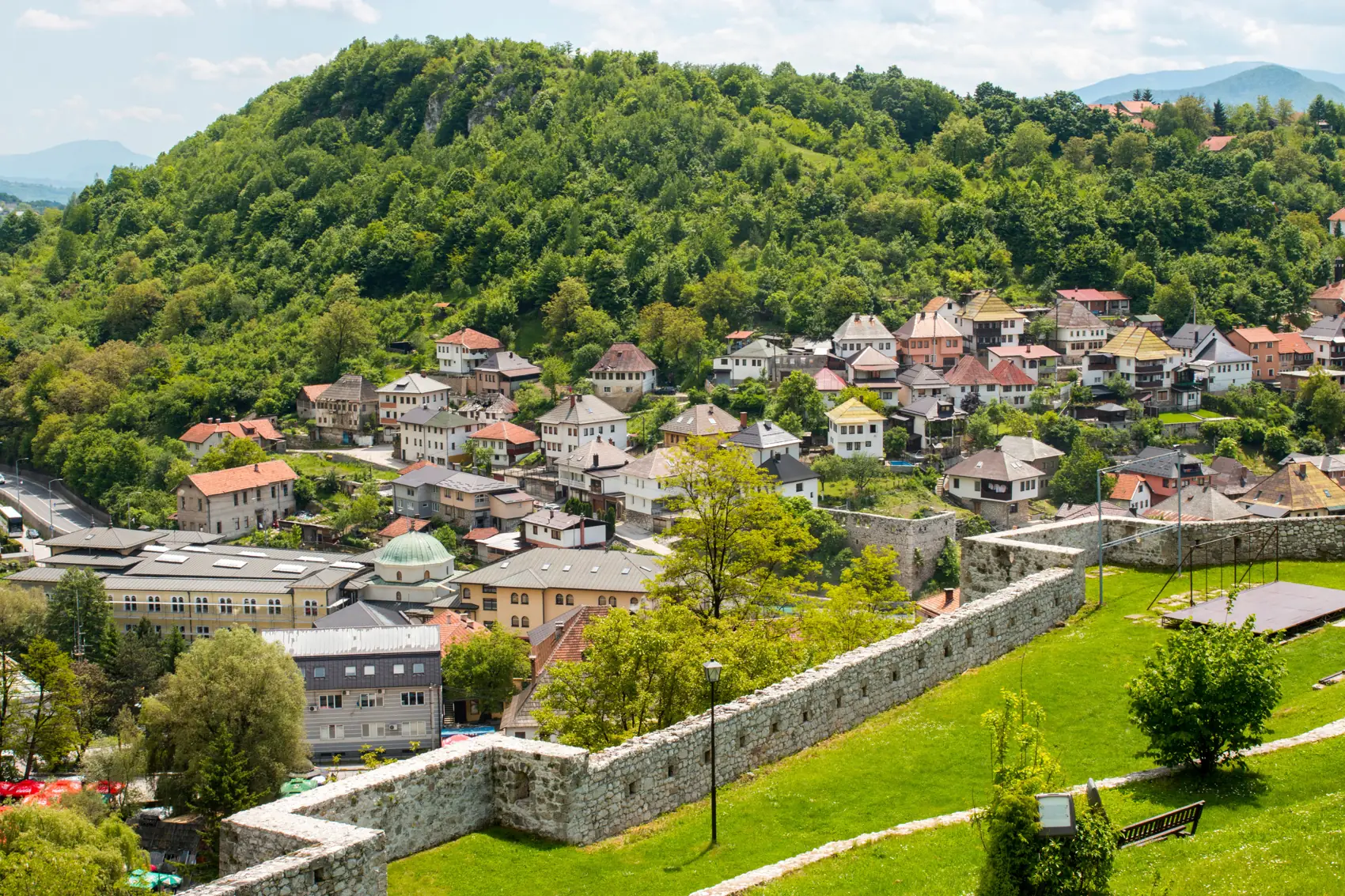
Travnik’s fortress on its green hill above the red roofs of the town

Travnik

  1. Home
  2. Places
  3. Central Bosnia
  4. Travnik

The town that governed Bosnia for a century and a half.

514mValley towns

Travnik in brief. Travnik is a town in central Bosnia and Herzegovina, in a narrow valley below the mountain Vlašić. From 1699 to 1850 it was the seat of the Ottoman viziers who governed Bosnia, and their mosques, tombs and clock towers still line its main street. Above it stands a medieval fortress. It is 90 km from Sarajevo, and allow half a day for the main sights.

A small town with a capital’s past

Travnik is one long street in a steep green valley, with a fortress at one end and a spring at the other. For a hundred and fifty years this was where Bosnia was governed from, and it shows: there are more mosques, tombs and fountains here than a town this size has any right to.

The viziers came and went quickly, and each left something behind. The result is a street you can read like a row of signatures: a painted mosque with shops underneath, domed tombs standing among the cafés, and two clock towers, where every other town in the country made do with one.

It is also the birthplace of Ivo Andrić, who won the Nobel Prize in 1961 and set one of his great novels in the Travnik of the viziers and consuls. People here will tell you it is all true.
Region
Central Bosnia
River
Lašva
Height
514 m
Known for
Viziers, ćevapi, Ivo Andrić
Best months
May to October
Time needed
Half a day
From Sarajevo
About 90 km

Seventy-seven viziers

  1. The viziers arrive1699Sarajevo has been burned by an Austrian army. The Ottoman governor of Bosnia moves his seat to a small town under a fortress in the Lašva valley.
  2. A capital in miniatureEach vizier builds: mosques, schools, fountains, tombs. Travnik ends up with two clock towers, more than any other town in the country.
  3. The consuls1807France and Austria open consulates here to keep an eye on each other. Ivo Andrić will later set a novel in exactly these years.
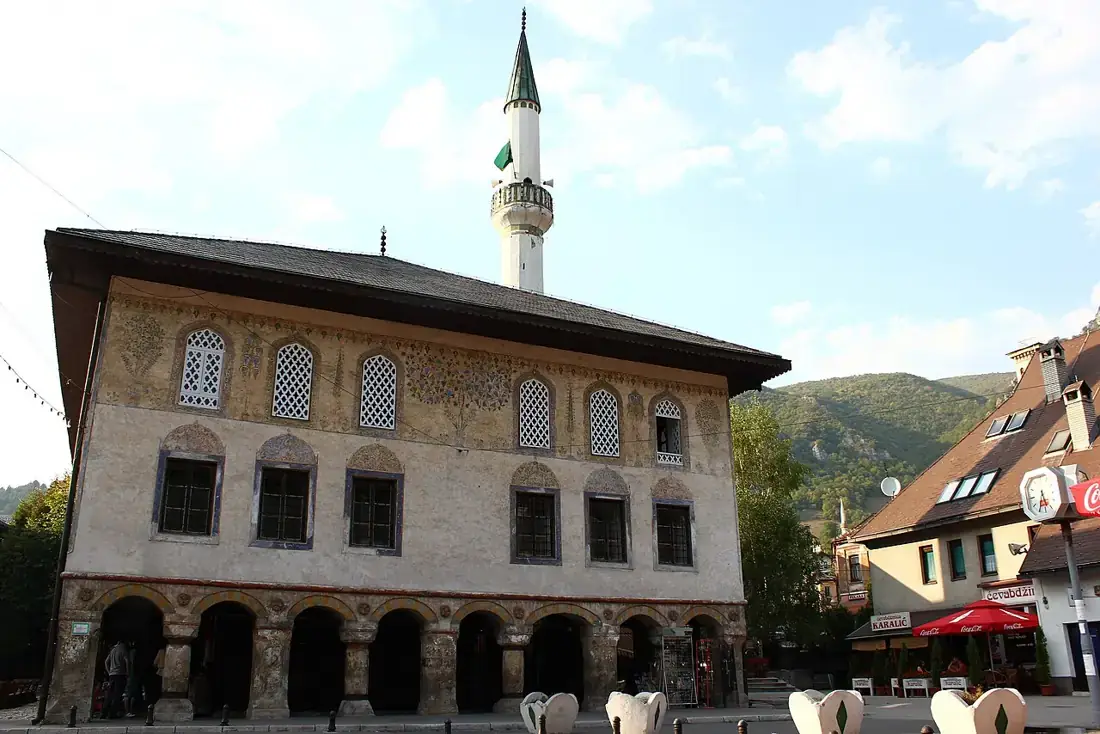
  4. The Coloured Mosque1815Rebuilt after a fire and painted, inside and out, with vines and cypresses. The ground floor is a row of shops.
  5. The viziers leave1850The seat returns to Sarajevo. Seventy-seven men held the post in a century and a half; few lasted two years. Their tombs still stand on the main street.

What to see in Travnik

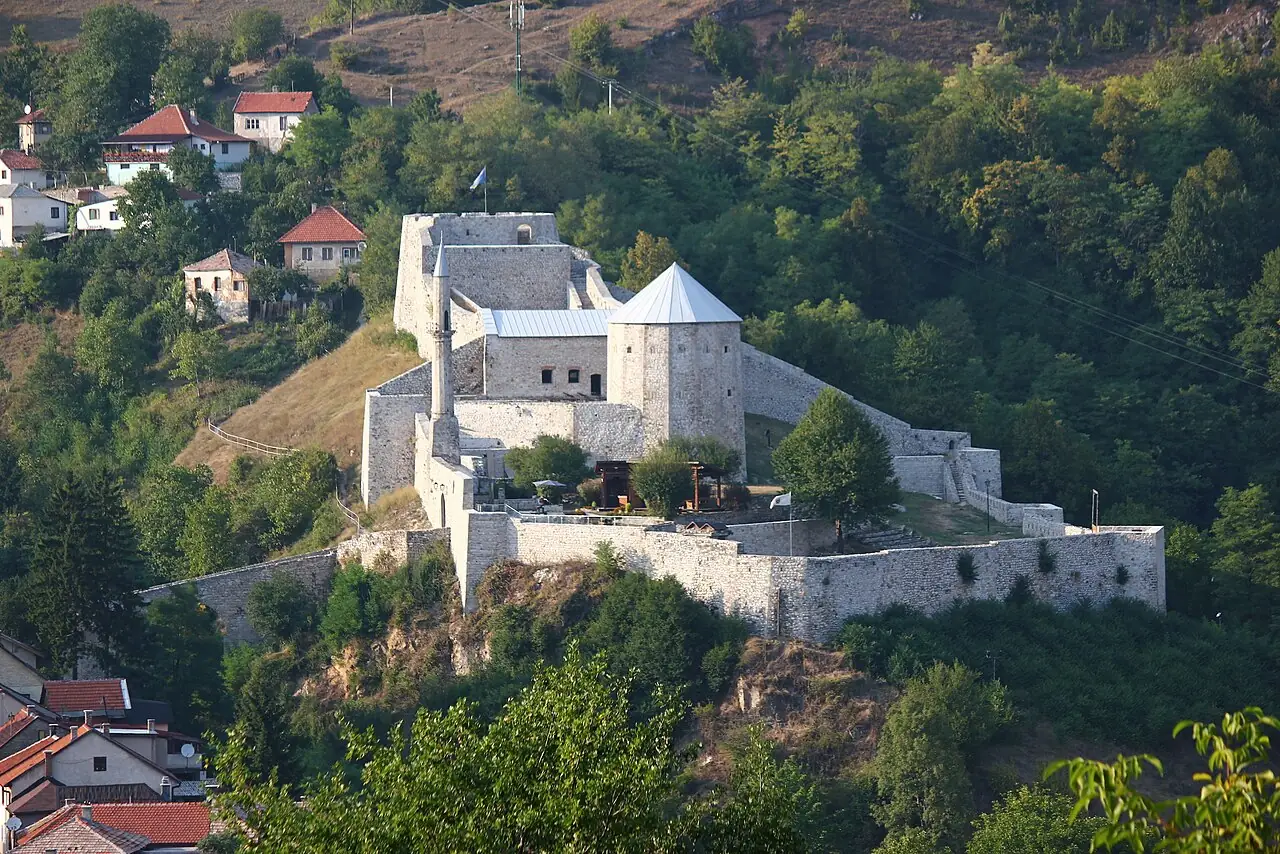
  • Travnik fortress on its rock above the roofs

    The fortress

    Built by the Bosnian kings in the 15th century and kept up by the Ottomans. A stone bridge leads in; inside are a small museum, a tower you can climb and the whole valley laid out below.

    Time needed
    45 minutes
    From the centre
    10 minutes uphill
    Entrance
    5 KM; pupils, students and pensioners 4 KM. Open 08:00–20:00 from April to September and 09:00–16:30 from October to March.
  • The painted façade of the Coloured Mosque

    The Coloured Mosque

    Šarena džamija, at the lower end of the main street. Its walls are painted with vines, flowers and cypress trees, and unusually its ground floor is a covered market.

    Time needed
    20 minutes
    From the centre
    On the main street
    Entrance
    Visitors are welcome between prayers. Cover shoulders and knees, and ask at the door.
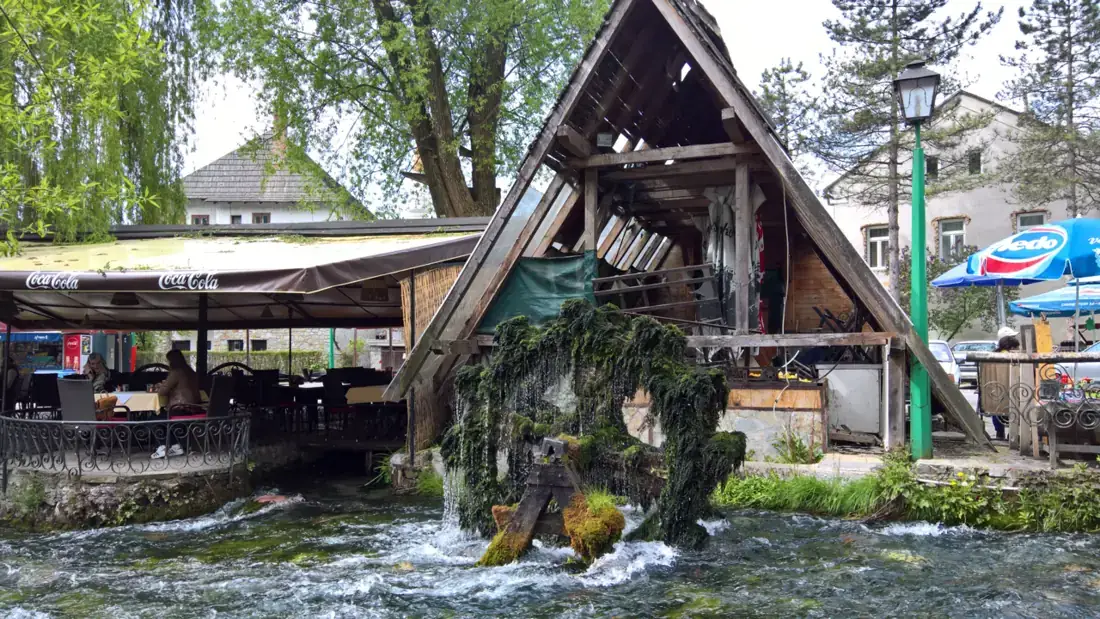
  • The old mill and café terraces at Plava voda

    Plava voda

    The “blue water”: a cold spring that bursts out below the fortress and runs through a line of cafés and grills. This is where Travnik eats its ćevapi.

    Time needed
    As long as lunch
    From the centre
    5 minutes on foot
    Entrance
    A public spring and its lanes. You pay for lunch, not for the water.
  • The viziers’ tombs

    Open-sided domed tombs, called turbeta, stand right on the pavement of the main street, among the shops. Several viziers are buried under them.

    Time needed
    15 minutes
    From the centre
    On the main street
    Entrance
    Seen from the street, under their stone canopies. There is nothing to go into.
  • Ivo Andrić’s birthplace

    The house where the writer was born in 1892, now a small museum of his life and books, with a restaurant in the courtyard.

    Entrance
    5 KM; pupils, students and pensioners 4 KM.
    Open
    Daily 09:30–17:00.
    Time needed
    30 minutes
    From the centre
    In the old quarter
  • The two clock towers

    One at each end of the old town. Finding both is a pleasant way to walk the whole street.

    Time needed
    A stroll
    From the centre
    Either end of town
    Entrance
    Seen from the street. Neither tower is set up for visitors to climb.
Travnik fortress above the town
Every vizier left something behind.

Good to know

On foot
Everything is along one street; allow an hour end to end
Fortress
5 KM, 4 KM for pupils, students and pensioners. Hours and prices are published by the Travnik museum at muzejtravnik.ba
Mosques
Open to visitors outside prayer times; cover shoulders and knees
Parking
Near the Coloured Mosque and at Plava voda
Step-free access
The main street, yes; the fortress, no
Money
Convertible marks; cash for cafés and the fortress
In winter
Cold and often snowy; Vlašić’s ski slopes are 30 minutes away
Half a day
Enough for the town; add lunch
Good with
Jajce, an hour further west

Where it is

12345

Outline from Natural Earth. Distances are by road and approximate.

Travnik lies in the Lašva valley, on the main road between Sarajevo and Jajce.

Getting to Travnik

FromDistanceHowTime
SarajevoAbout 90 kmCar or bus1½ hours
JajceAbout 65 kmCar or bus1 hour
ZenicaAbout 35 kmCar or bus40 minutes
Banja LukaAbout 135 kmCar or bus, through Jajce2½ hours
MostarAbout 160 kmCar3 hours

Buses run to Travnik from Sarajevo and Zenica through the day. There is no railway. Distances and times are approximate.

Half a day in Travnik

  1. The fortress

    Start at the top while it is cool. The view explains the town.

  2. The main street

    Walk down past the tombs and the clock tower to the Coloured Mosque.

  3. Plava voda

    Ćevapi beside the spring, then coffee in the shade.

  4. Andrić’s house

    The museum, and a last look at the valley before driving on.

Planning tips

Advice that comes up again and again from guides and regular visitors.

Where to stay and eat

Where to stay

Most visitors pass through, but there are small hotels on the main street and by Plava voda. For a mountain night, the hotels on Vlašić are half an hour up the road.

What to eat

Ćevapi, served here in a soft flatbread dipped in broth, with raw onion. Afterwards, Bosnian coffee, and Vlašić cheese to take away.

Near Travnik

Most people see Travnik on the way between Sarajevo and Jajce. It deserves the stop.

Questions people ask

What is Travnik known for?

For being the seat of the Ottoman viziers of Bosnia from 1699 to 1850, for its fortress and Coloured Mosque, for its ćevapi, and as the birthplace of the Nobel Prize-winning writer Ivo Andrić.

Is Travnik worth visiting?

Yes, especially as a stop between Sarajevo and Jajce. The fortress, the painted mosque and lunch at the Plava voda spring fill a very good half day.

How long do you need in Travnik?

Half a day. Two to three hours covers the fortress and the main street; add an hour for lunch.

How do you get to Travnik from Sarajevo?

By car or bus, about 90 km north-west, in around an hour and a half.

Why does Travnik have two clock towers?

Both were built under the viziers, when the town was the capital of Ottoman Bosnia and rich enough to afford two. It is the only town in the country that has a pair.

What are Travnik ćevapi?

Small grilled sausages of minced meat, served in a flatbread that has been dipped in broth, with chopped onion. Travnik’s are among the best known in the country.

Who was Ivo Andrić?

A writer born in Travnik in 1892, who won the Nobel Prize in Literature in 1961. His novel about Travnik in the time of the viziers is one of his best known books.

Travnik is the midday stop on day three of the seven-day route.

See the seven-day route

Photographs on this page

Photo credits

Travnik

PhotographPhotographerSource and licence
The fortress and the town, main pictureNot named on the fileSupplied by Visit Bosnia and Herzegovina
Travnik panorama; the fortress; the Coloured MosqueJulian NyčaWikimedia Commons, CC BY-SA 3.0
Plava vodaEuropemasterWikimedia Commons, CC BY-SA 4.0
Nearby thumbnailsSee the home page creditsVarious

All credits for the site are on the photo credits page.

Menu