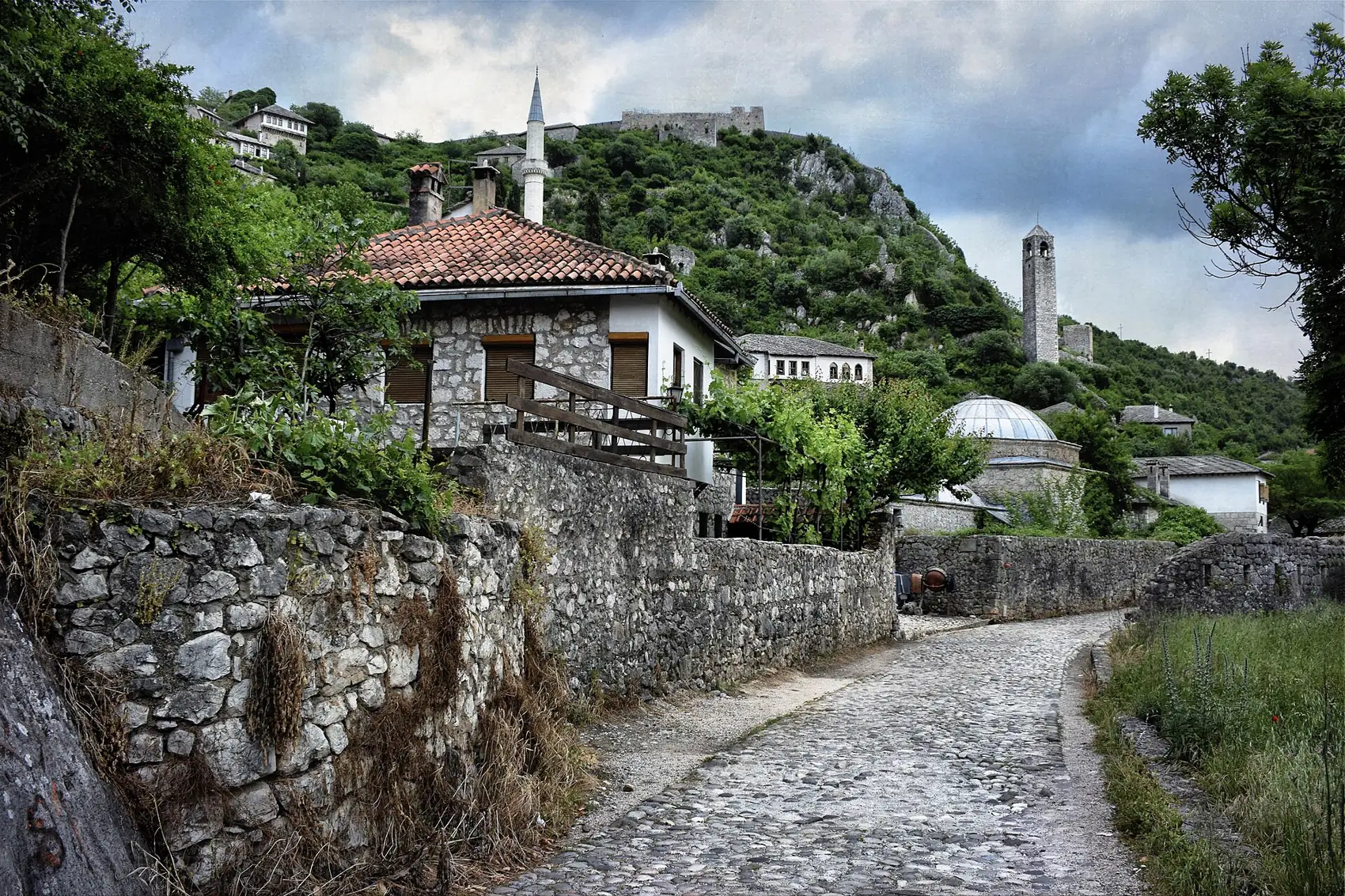
- StoneEverything here is built from the ground it stands on: bridges, towers, whole villages of pale limestone. In the midday sun the towns are almost white.
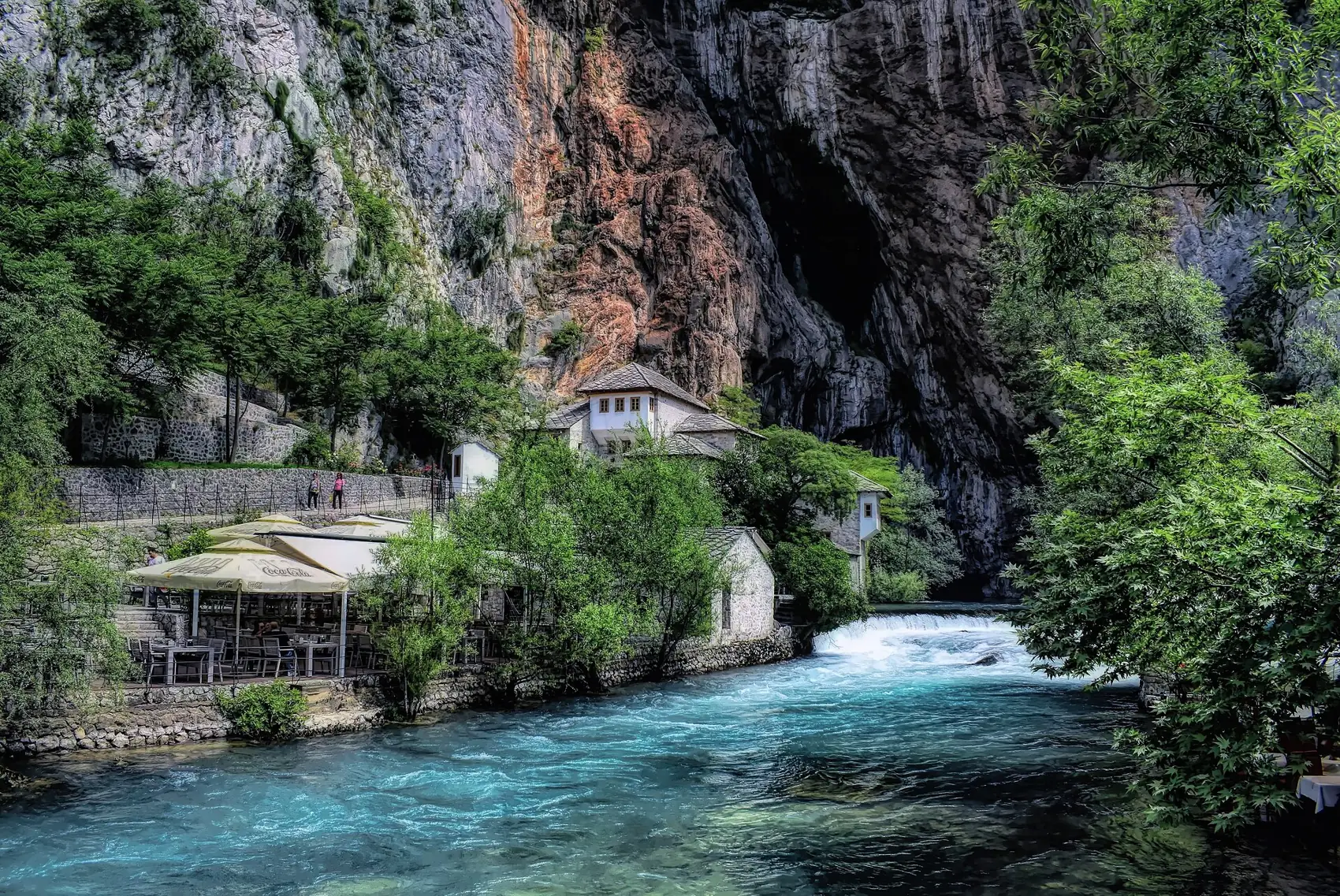
- WaterThe rock is full of holes, so rivers vanish underground and burst out again, cold and green, at the foot of cliffs.
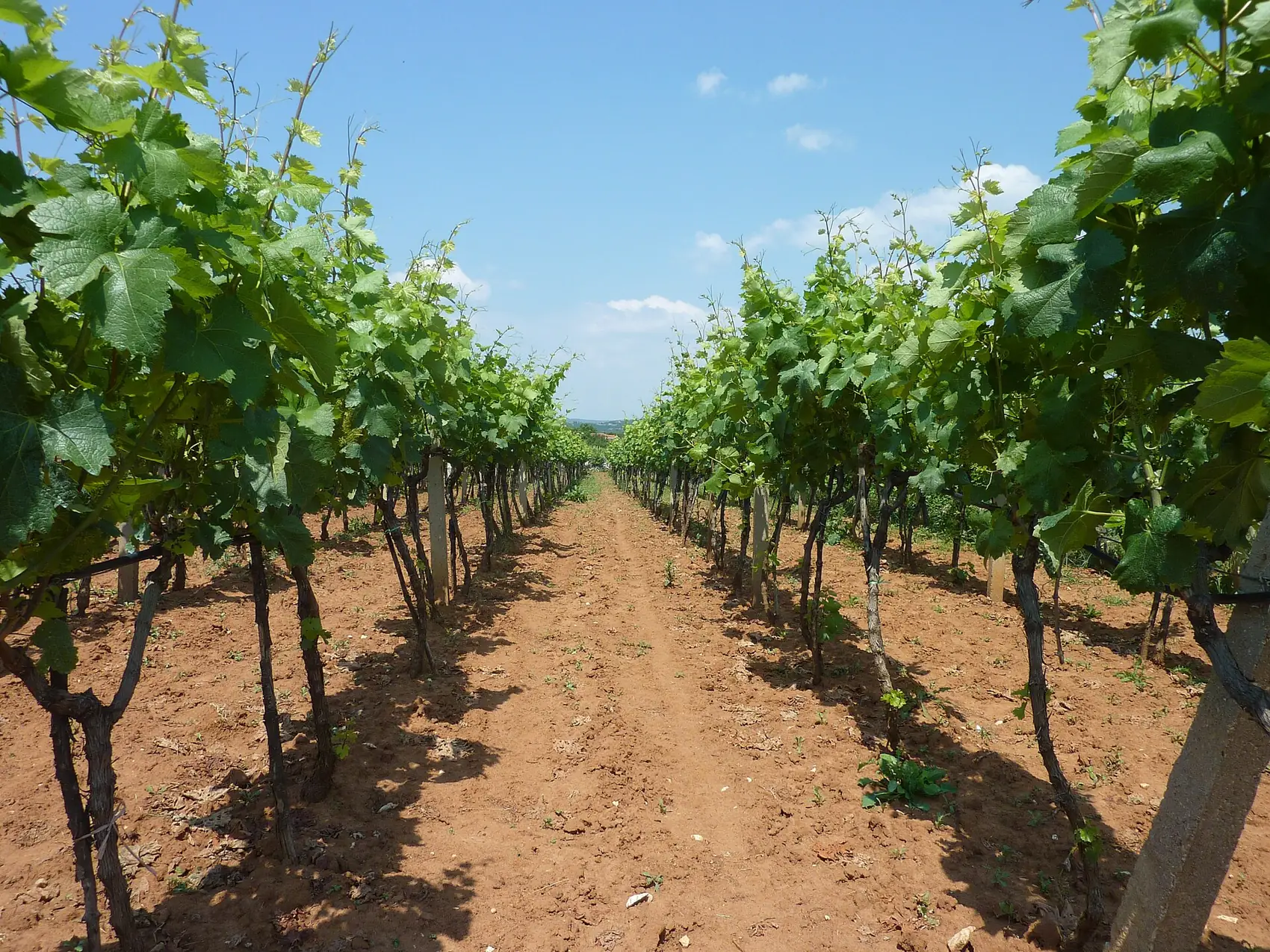
- HeatThe sea is close and the summers are long. Figs, pomegranates and vines grow where the north grows plums.
- HereThe southern fifth of the country, from the mountains above Konjic to the Adriatic at Neum.
Herzegovina
Herzegovina in brief. Herzegovina is the southern region of Bosnia and Herzegovina, roughly a fifth of the country. It is a land of pale limestone, green rivers and vineyards, with a hot, Mediterranean-influenced climate. Its main city is Mostar, and it reaches the Adriatic at Neum. Most visitors need three to five days.
- Main cityMostar
- RiversNeretva, Buna, Trebižat, Trebišnjica
- From sea level toAbout 2,200 m on Čvrsnica
- Best monthsMay, June, September, October
Places in Herzegovina
The shaded area is approximate. Herzegovina has no official border.
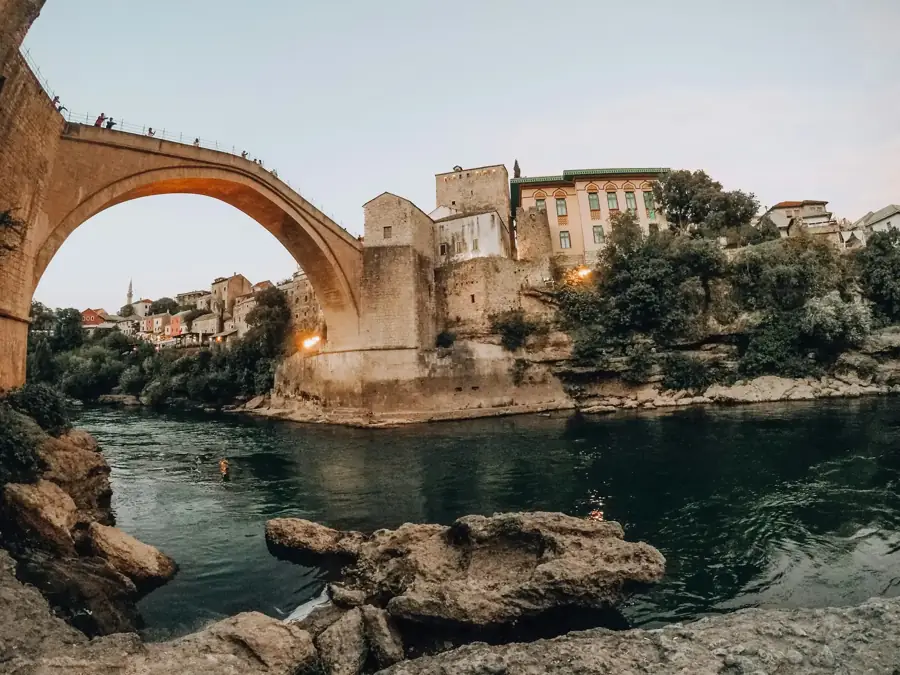 MostarThe old bridge and the city around it.60 m
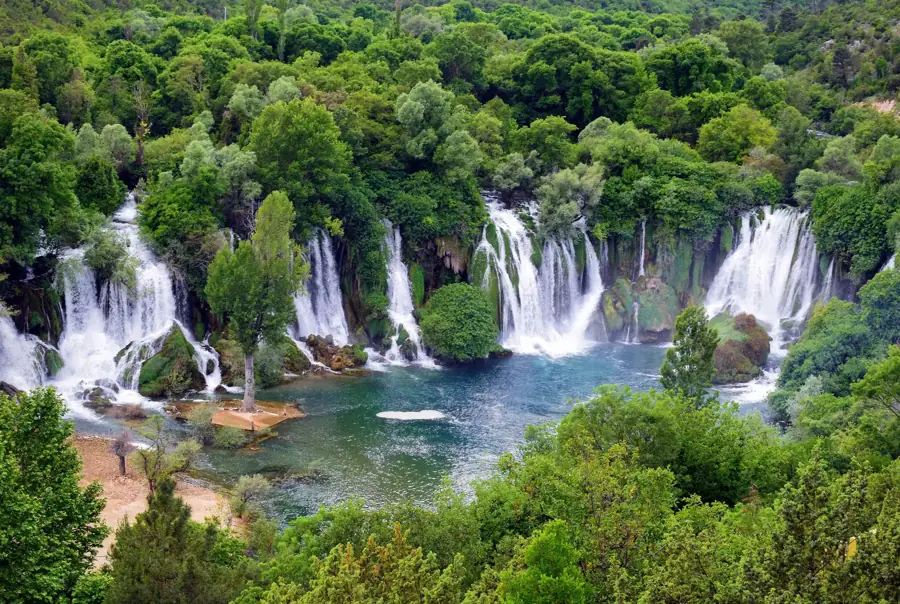 KravicaA horseshoe of waterfalls you can swim under.100 m
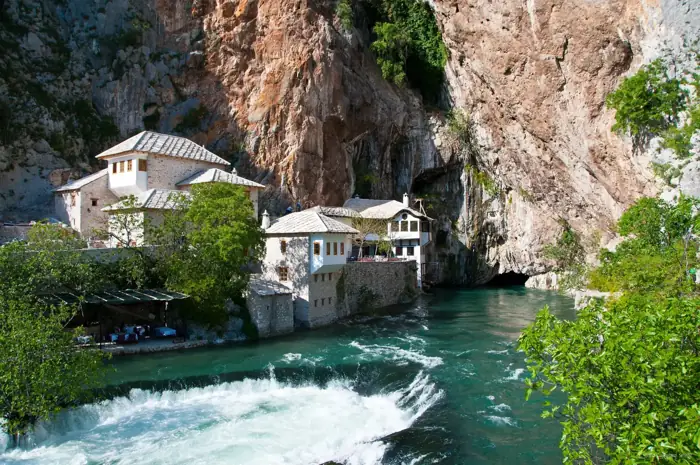 BlagajA dervish house where a river leaves the rock.60 m
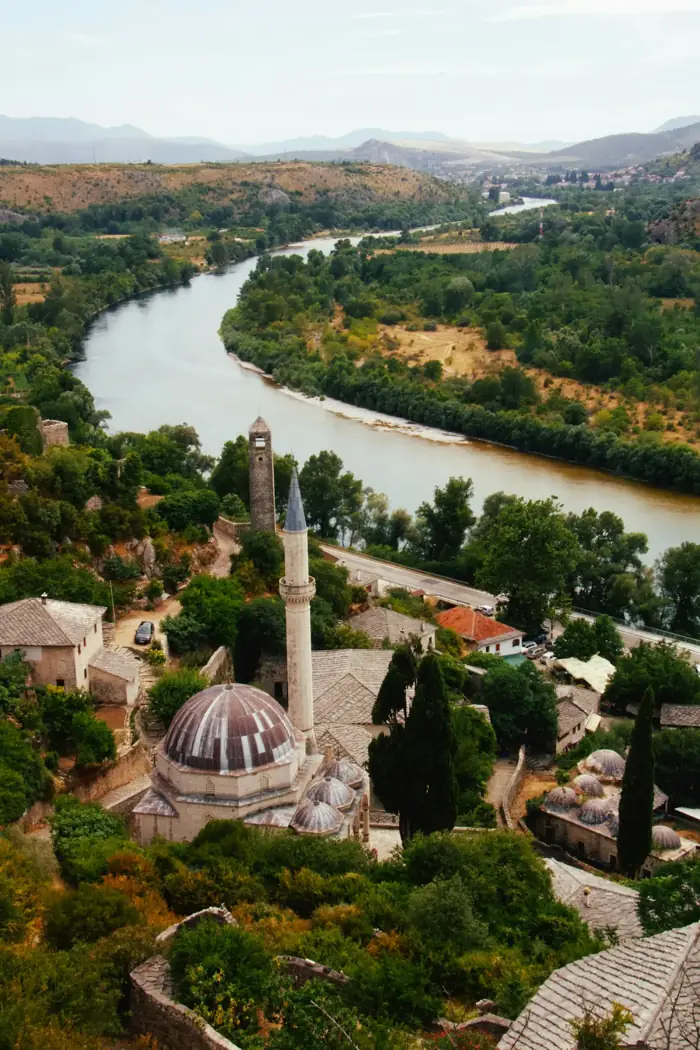 PočiteljA stone village stacked up a hillside.40 m
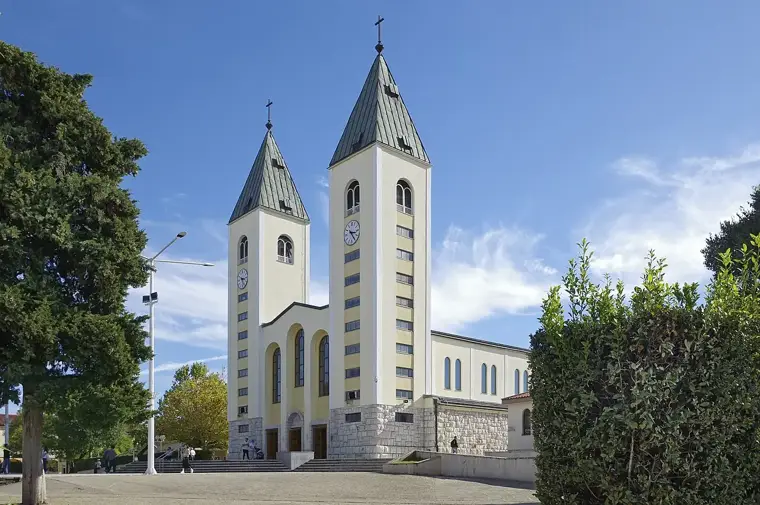 MeđugorjeA village a million pilgrims visit each year.200 m
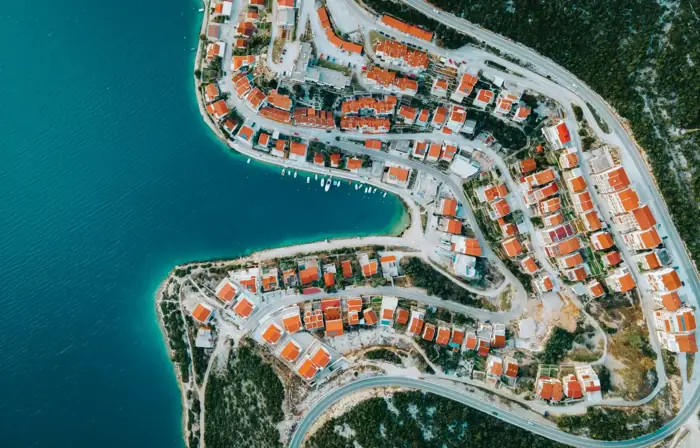 NeumThe country’s one town on the Adriatic.0 m
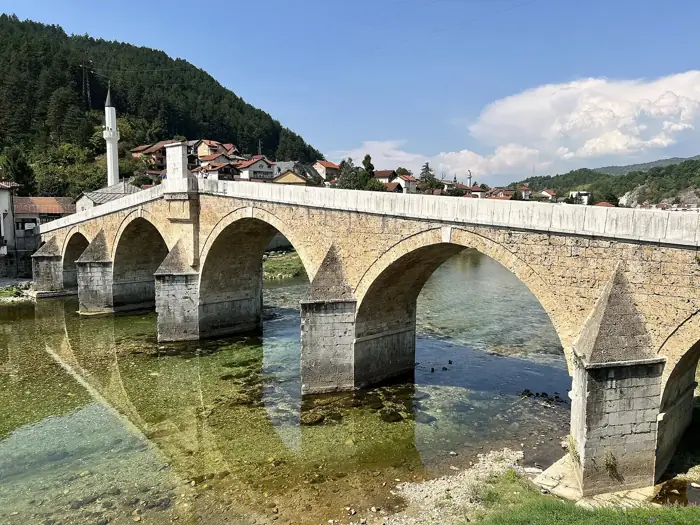 KonjicAn old bridge and rafting on the Neretva.280 m
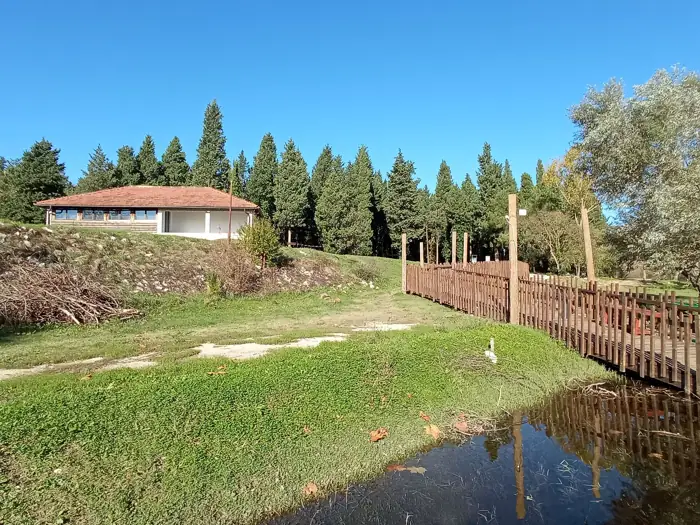 Hutovo BlatoWetlands and lakes full of birds.5 m
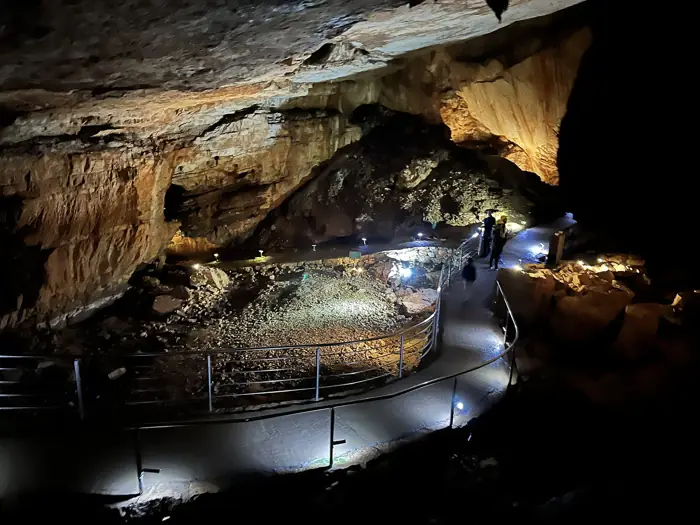 VjetrenicaA World Heritage cave, cool all summer.260 m
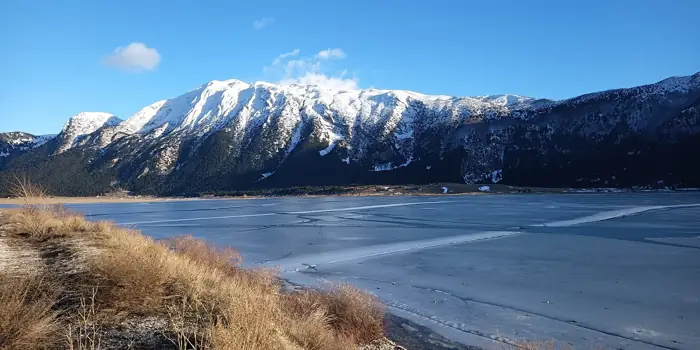 BlidinjeA high lake on a plateau between two massifs.1,185 m
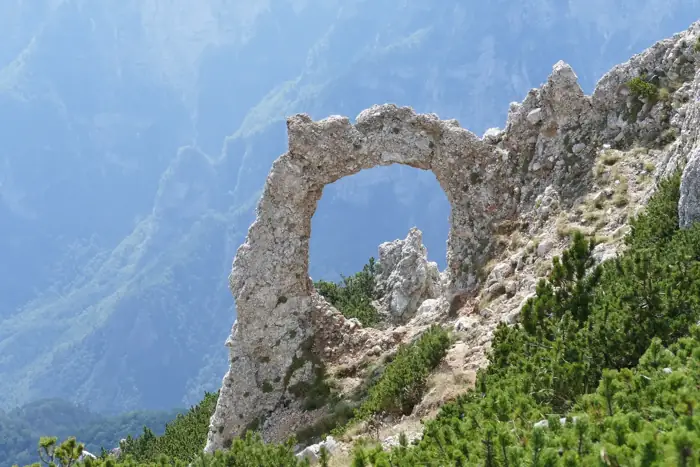 Hajdučka vrataA stone arch on the rim of Čvrsnica.2,000 m
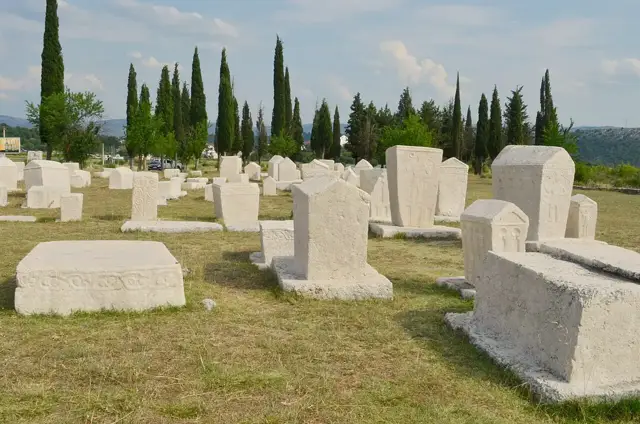 StolacMedieval carved tombstones, and a town on the Bregava.60 m
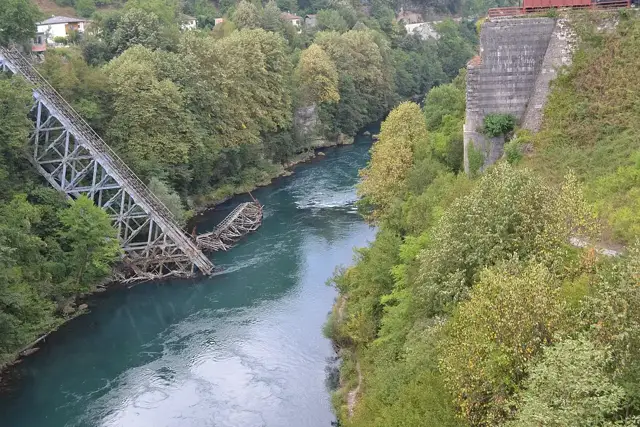 JablanicaA broken bridge in the Neretva, and roast lamb by the road.200 m
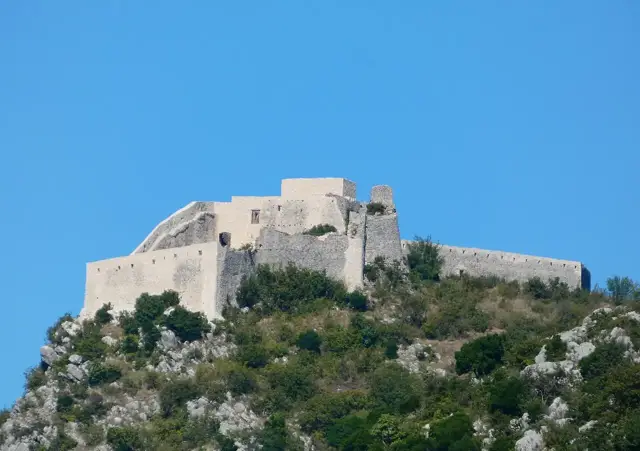 LjubuškiA ruined fortress and a quiet waterfall on the Trebižat.100 m
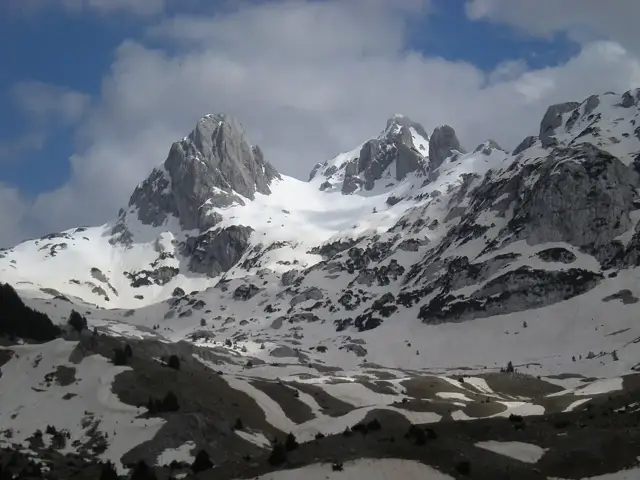 PrenjThe wildest mountain in the country.2,155 m
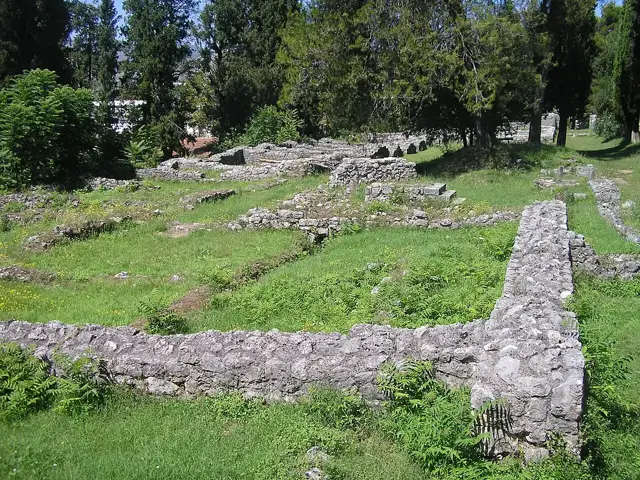 MogorjeloA Roman country estate behind its own walls.20 m
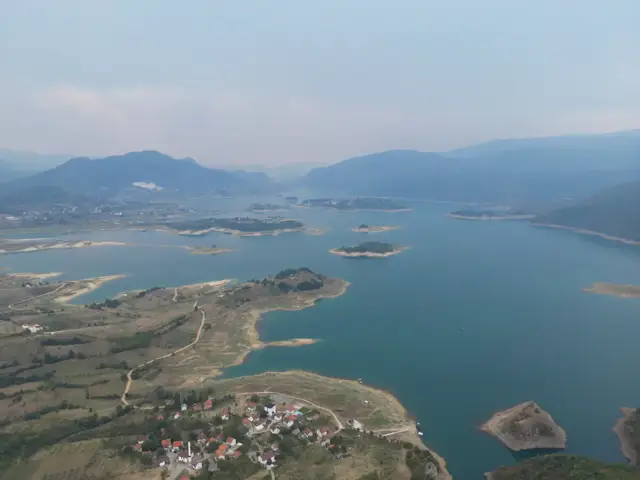 Ramsko lakeA drowned valley, a scatter of islands and a monastery.595 m
Eat and drink
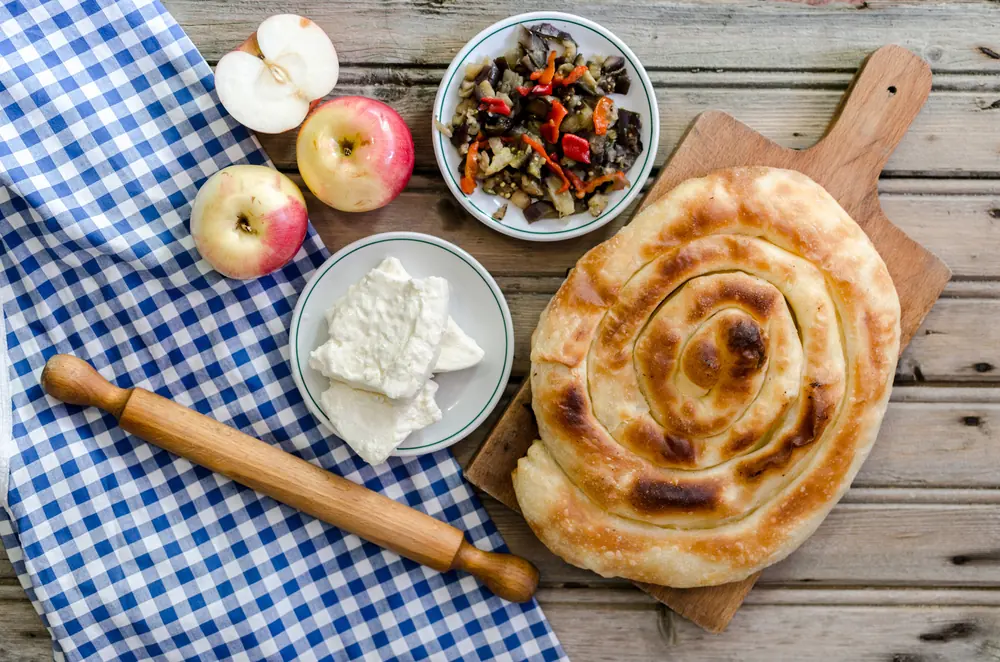
A different table from the north
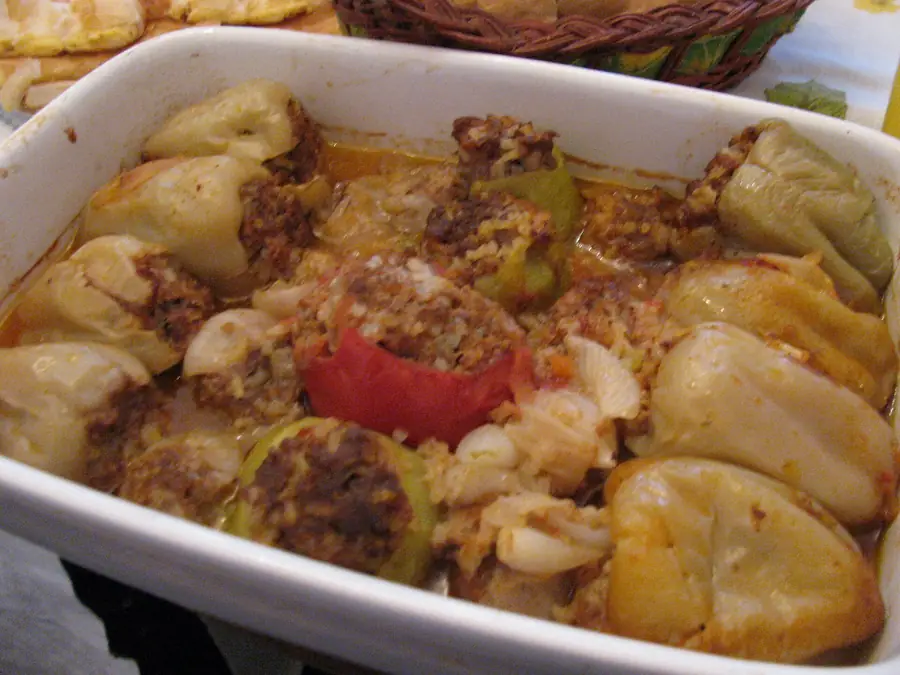
Herzegovinian food leans towards the Mediterranean: olive oil, grilled fish, vegetables stuffed and baked, cheese kept in oil or in a sheepskin sack. Local wine styles include Žilavka and Blatina.
Follow the wine road south of Mostar, through the vineyards round Čitluk and Međugorje.
- ŽilavkaThe local white: dry, full, a little nutty
- BlatinaThe local red, soft and dark
- TroutFrom the Buna and the Neretva, grilled whole
- Punjene paprikePeppers stuffed with meat and rice, baked
- JaprakVine or chard leaves, stuffed the same way
- Sir iz mijehaSharp sheep’s cheese matured in a sheepskin
- SmokveFigs, fresh in late summer, dried all year
Three days in Herzegovina
- 1
Mostar
The bridge, the bazaar and the minaret by day; the old town to yourself in the evening.
- 2
The loop south
Blagaj in the morning, Počitelj at midday, a swim at Kravica in the afternoon. About 100 km in all.
- 3
Stolac and the sea
South-east to Stolac and the medieval tombstones at Radimlja, then down to Neum for the Adriatic.
When to go
Hotter and drier than the rest of the country. Spring and autumn are the easy seasons.
- Best months
- Very hot; best for swimming
- Quiet and mild
Best months: May, June, September and October. July and August are very hot. Winter is quiet and mild.
Getting here
By car, bus or tour, with one to three border crossings.
By train down the Neretva gorge, or by road.
By car or bus, with one border crossing.
Questions people ask
Where is Herzegovina?
Herzegovina is the southern part of Bosnia and Herzegovina, roughly a fifth of the country. It runs from the mountains south of Sarajevo down the Neretva valley to a short stretch of Adriatic coast at Neum. Its largest city is Mostar.
What is the difference between Bosnia and Herzegovina?
They are the two historical regions that give the country its name. Bosnia is the larger, greener north and centre, with a continental climate. Herzegovina is the smaller south: limestone, vineyards and a hot, Mediterranean-influenced climate.
What is Herzegovina known for?
Stari Most in Mostar, Kravica waterfall, the dervish house at Blagaj, the stone village of Počitelj, the wines Žilavka and Blatina, and the pilgrimage town of Međugorje.
How many days do you need in Herzegovina?
Three days covers Mostar and the places around it. With five you can add Stolac and the coast at Neum, or a day’s rafting on the Neretva from Konjic.
When is the best time to visit Herzegovina?
May, June, September and October. July and August are very hot, often above 35 °C in Mostar, though that is also the best time for swimming at Kravica.
How do you get to Herzegovina?
Most visitors arrive from Sarajevo, about two hours from Mostar by train or road, or from Dubrovnik, about two and a half to three hours by road. Mostar has a small airport with few scheduled flights.