The route in brief. This is a seven-day drive of about 700 km across Bosnia and Herzegovina, from Bihać on the Una river to Neum on the Adriatic. It takes in Una National Park, Jajce, Travnik, two days in Sarajevo with a mountain, Mostar, Blagaj, Počitelj and Kravica waterfall. It works best from May to September and needs a car.
Good forA first visit; people who like a different bed most nights
PaceTwo or three hours’ driving on five of the seven days. Days 2 and 7 are the fullest; an eighth day is best spent as a second night in Mostar
The shape of itMostly downhill: 540 m in Sarajevo, sea level at the end
Night 1Bihać
Night 2Jajce
Night 3Sarajevo
Night 4Sarajevo
Night 5Sarajevo
Night 6Mostar
Night 7Neum
Day1
Driven so far0 km
230 mHeight along the route
Day 1
The Una
Bihać and Una National Park
River day
About 1½ hours at the wheel
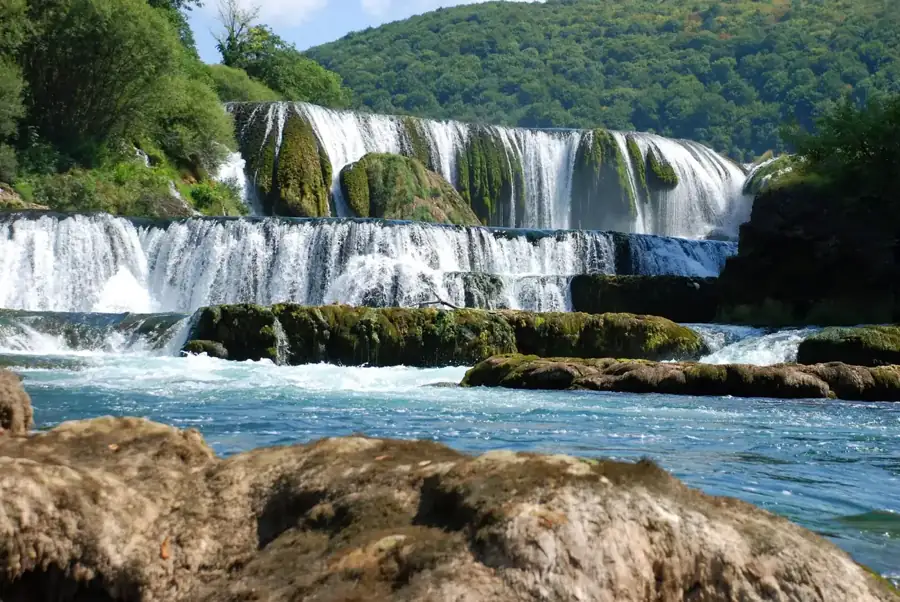
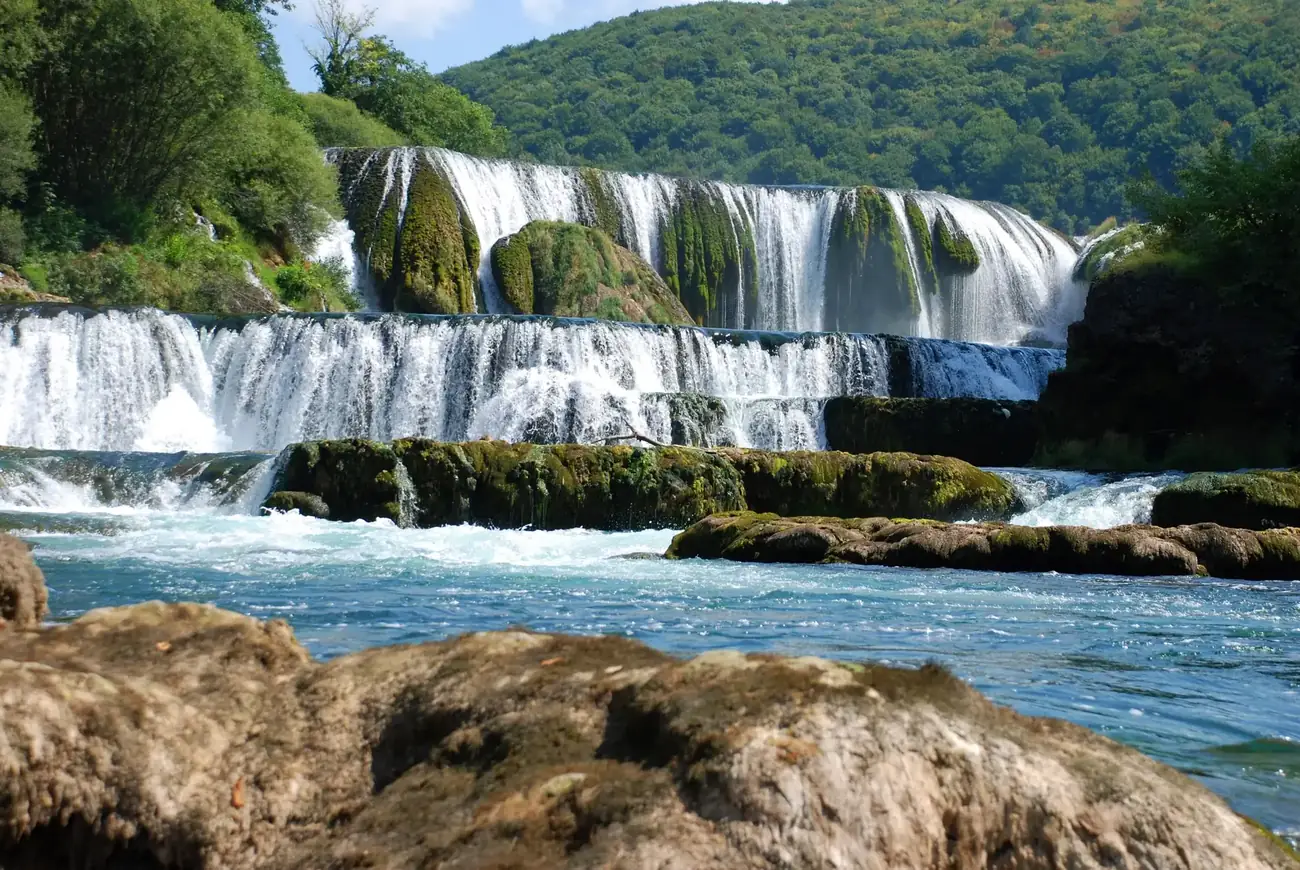
Start in the far north-west, where the Una runs clear and green through a national park. Drive up the valley to Štrbački buk, the park’s biggest falls, and walk the boardwalks beside the water. Back in Bihać, eat on a terrace over the river.
Drive up the Una valley to Štrbački buk, about 40 km.
Walk the boardwalks beside the falls. Bring a picnic.
Back to Bihać for dinner on a terrace over the river.
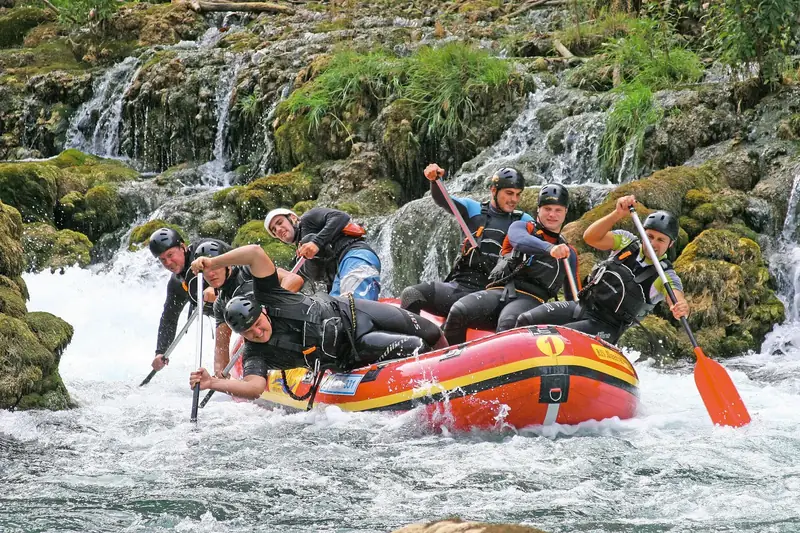
With a spare half day, raft the Una from below the falls.
Day 2
Across the north-west to Jajce
Bihać to Jajce
Driving day
About 3 hours at the wheel
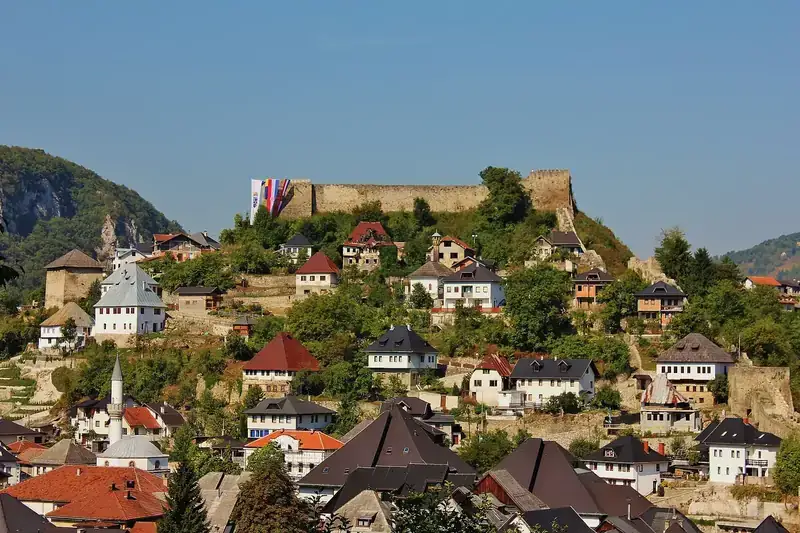
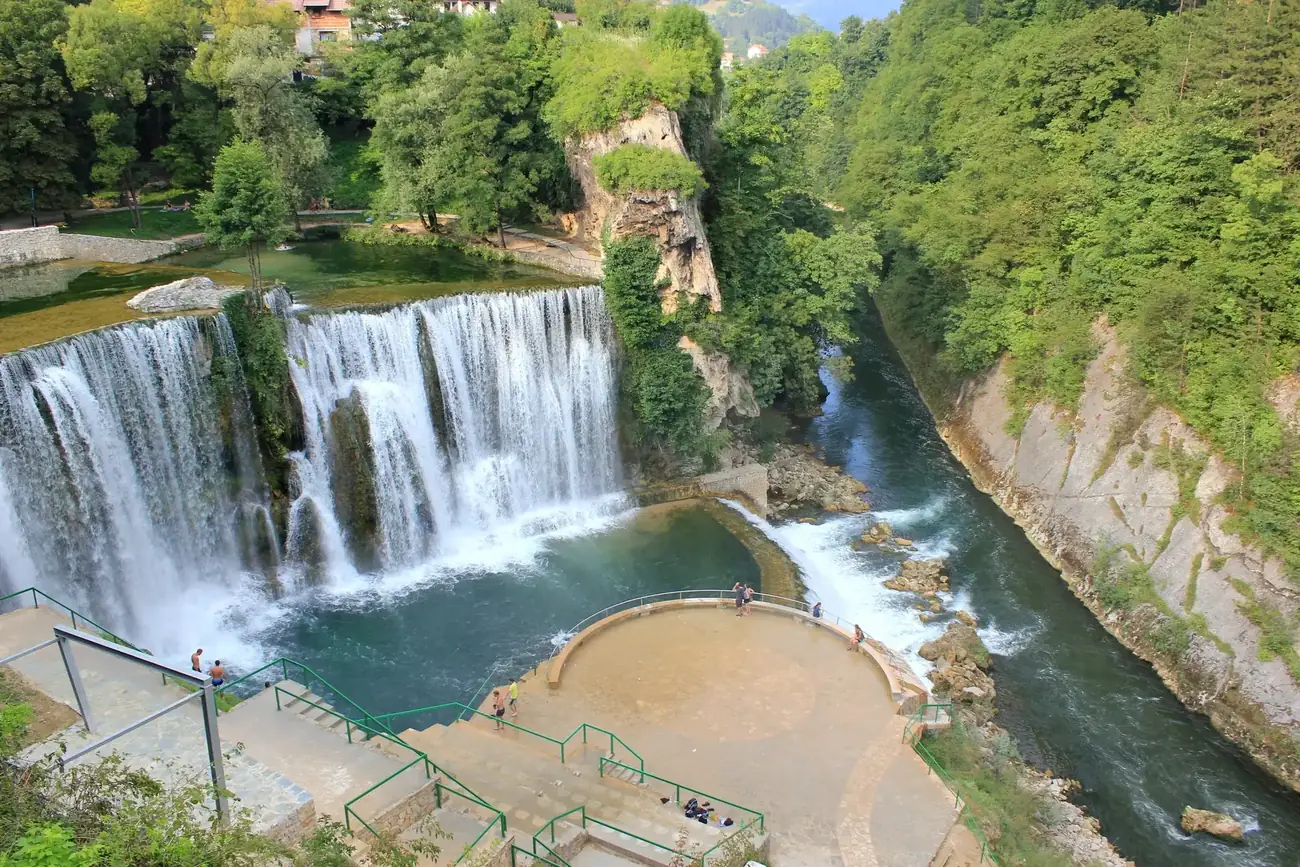
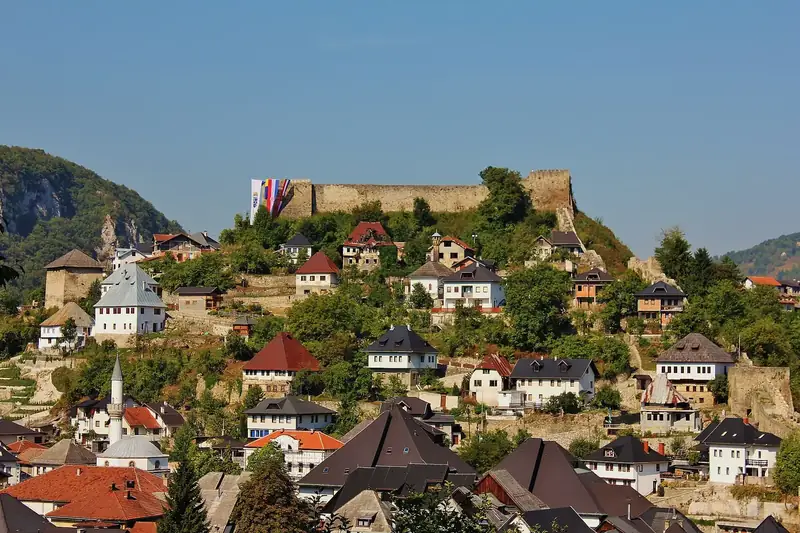
A morning’s drive east through hills and small towns brings you to Jajce, a walled town with a waterfall where its two rivers meet. See the falls from below, climb through the old town to the fortress, and drive out to the wooden watermills on the Pliva lakes before dinner.
Leave Bihać by nine. Coffee stop in Ključ, half way.
Jajce: the waterfall from below, then up through the old town to the fortress.
The watermills are about 5 km from the centre and best in the late afternoon light. If you reach Jajce late, leave them for the next morning, before you set off for Travnik.
Day 3
Travnik, then the capital
Jajce to Sarajevo
Driving day
About 3 hours at the wheel
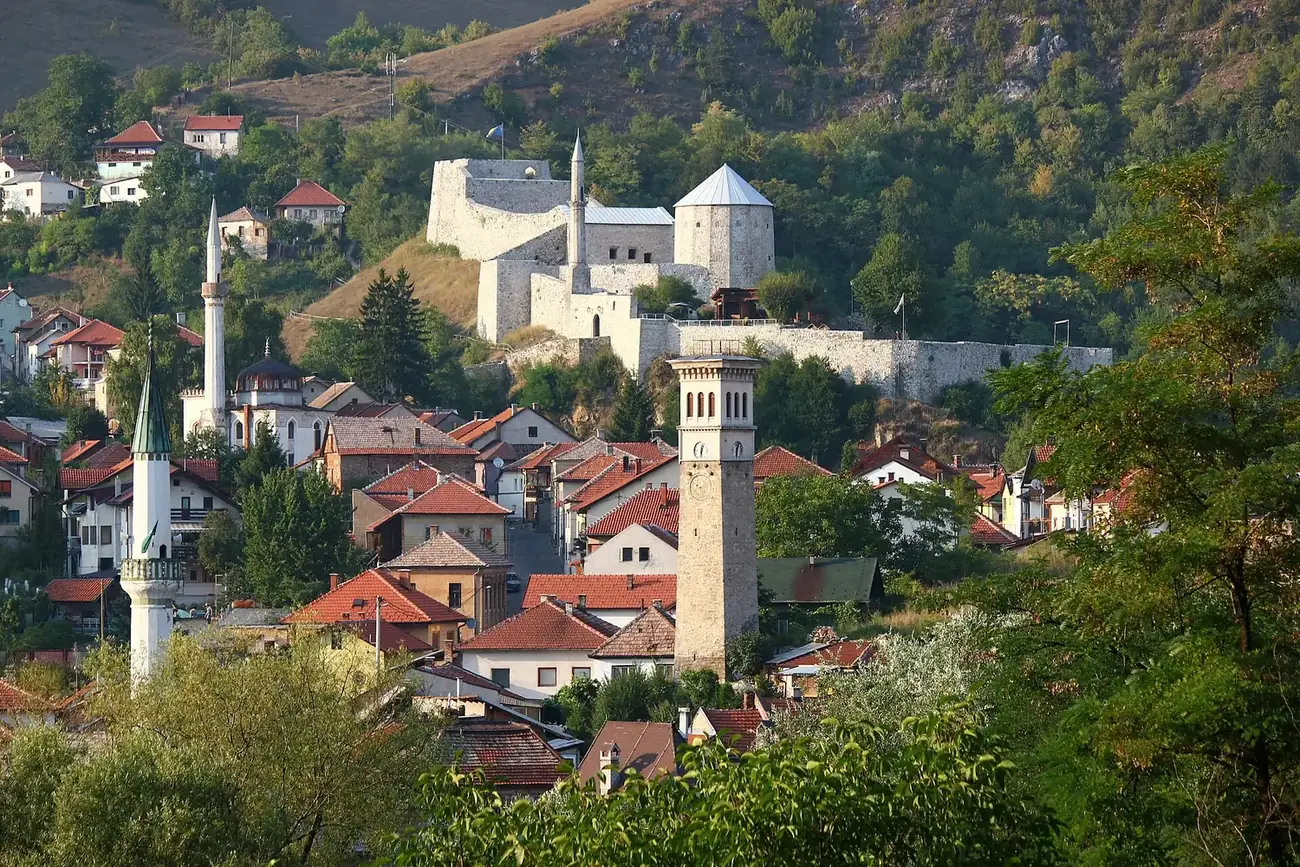
Stop in Travnik, once the seat of the Ottoman viziers, for the Coloured Mosque, the fortress and a plate of ćevapi by the Plava voda spring. Then drive on to Sarajevo, in time for an evening walk through Baščaršija.
Jajce to Travnik, about 65 km.
The Coloured Mosque, the fortress, and ćevapi at Plava voda.
Arrive in Sarajevo and walk Baščaršija after dark.
Travnik is famous across the country for its ćevapi. This is the place to try them.
Day 4
Sarajevo on foot
A day in the capital
On foot
No driving today
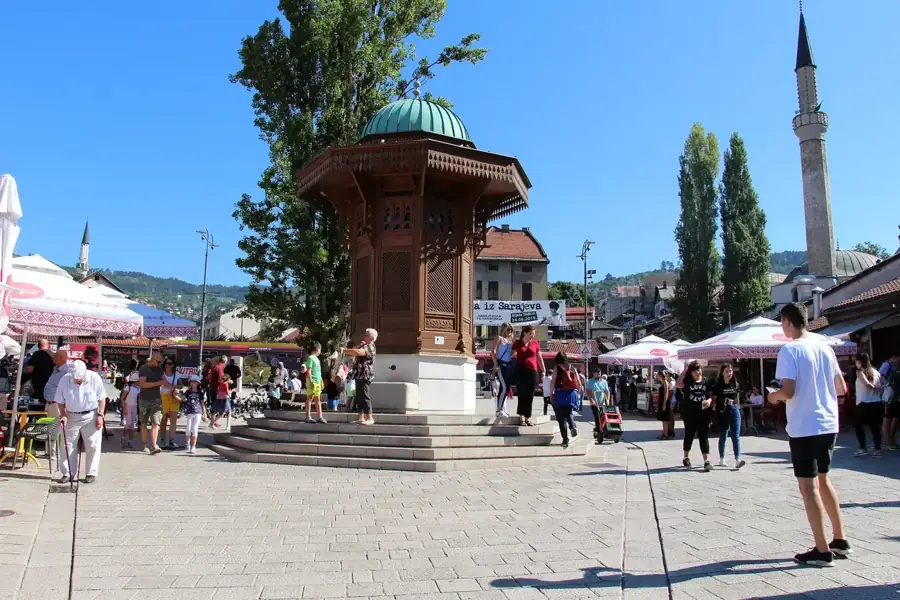
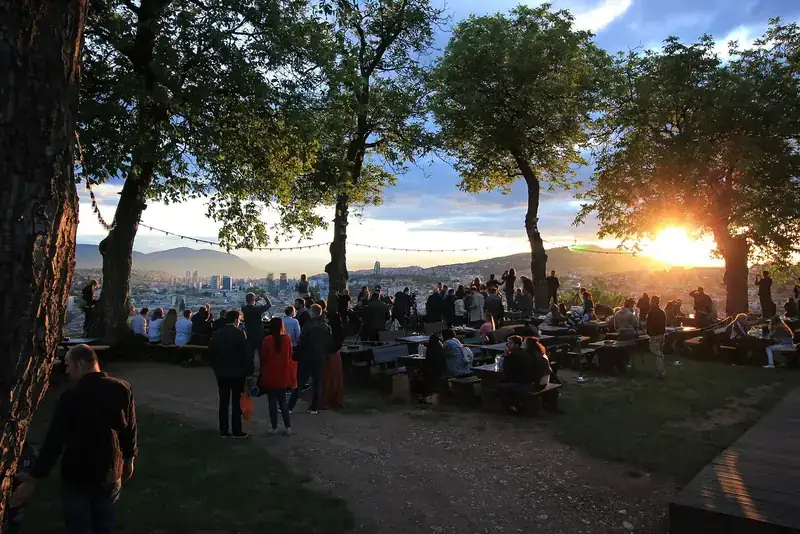
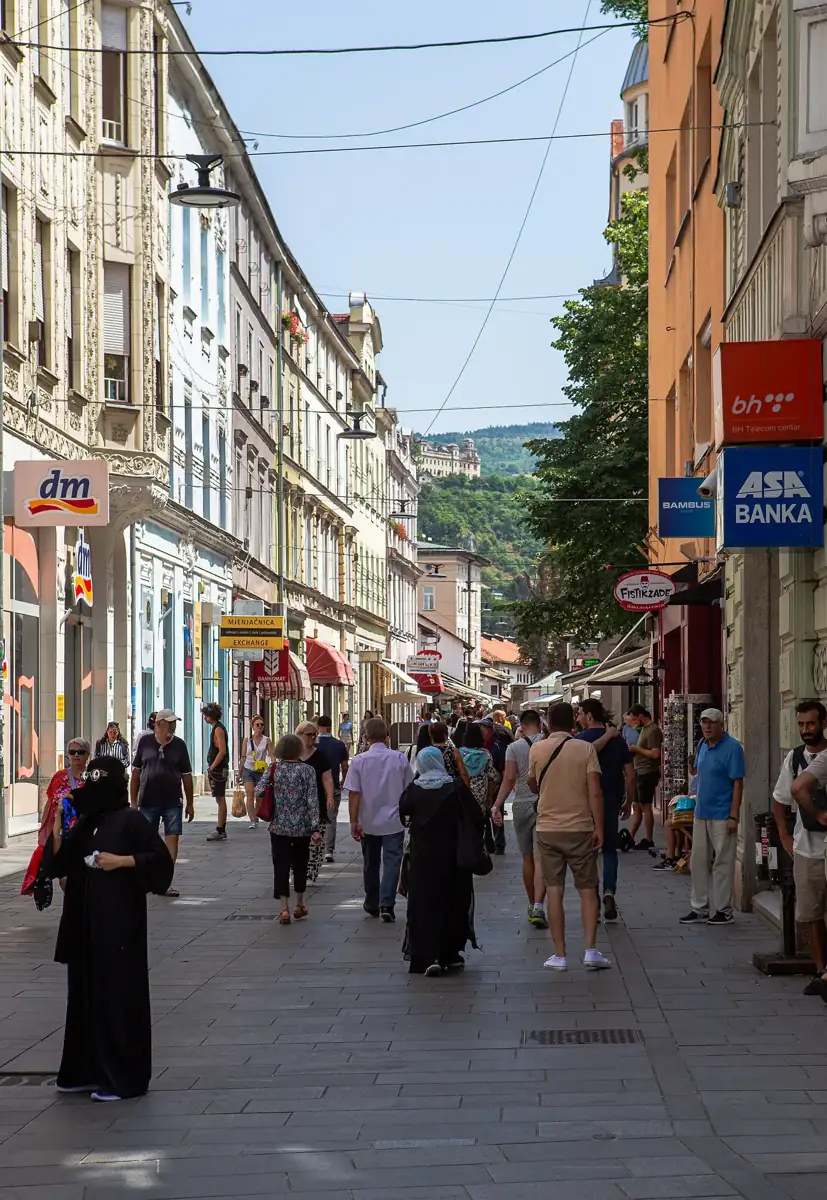
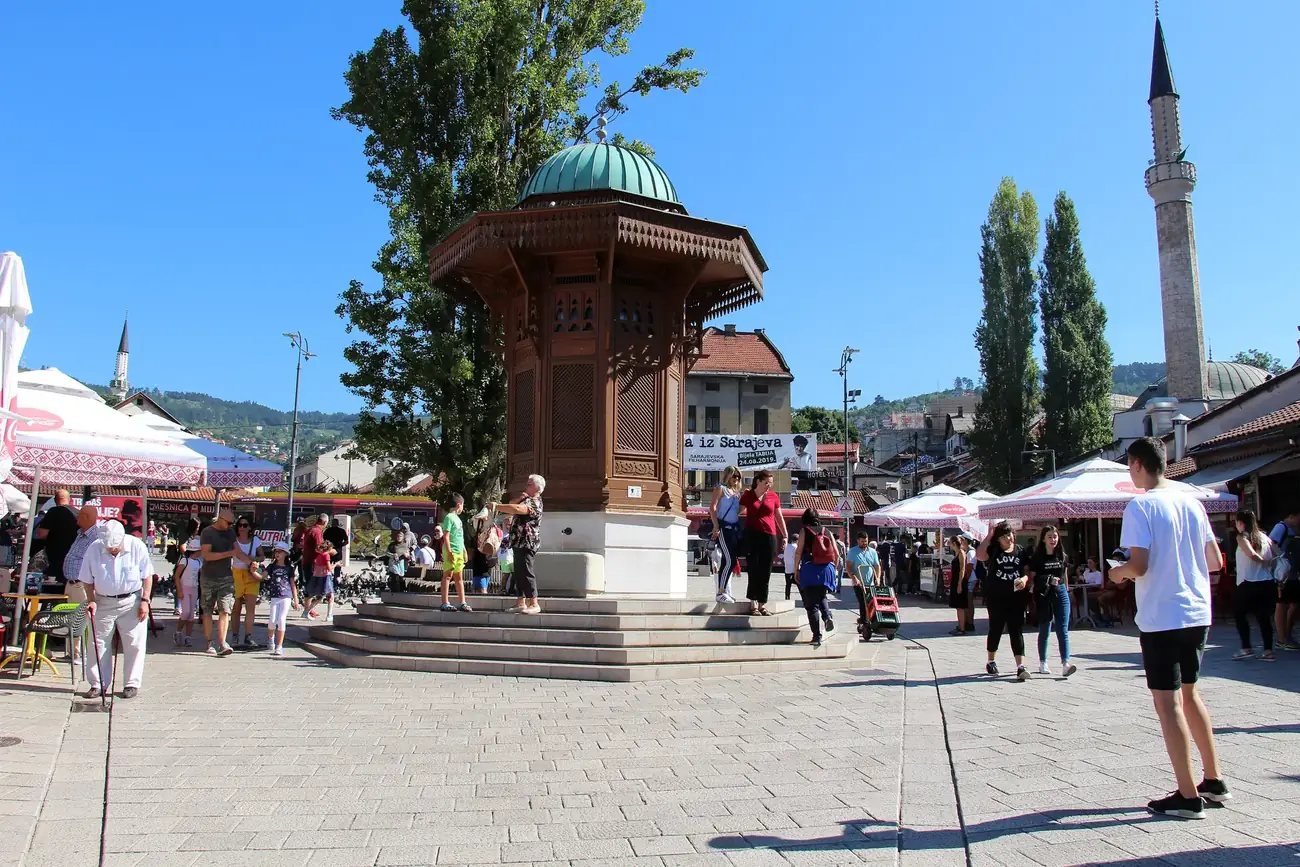
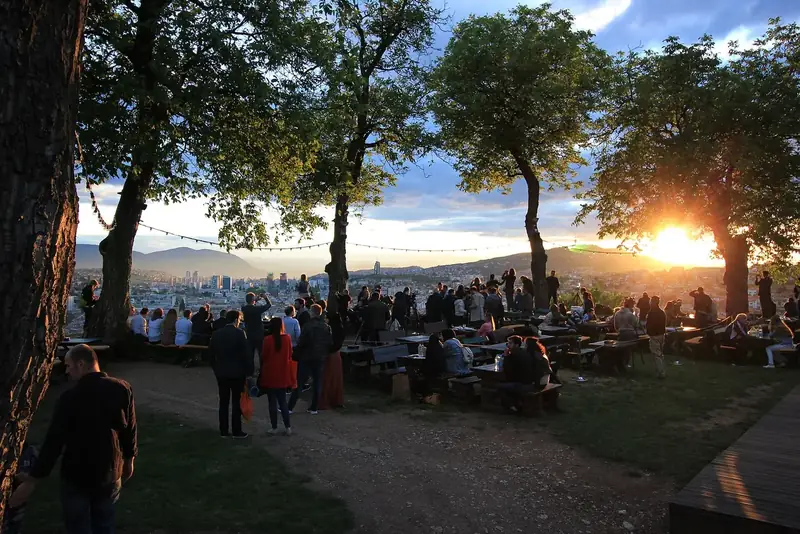
Leave the car. Walk west from the Sebilj fountain along the old street, across the line in the pavement where Ottoman Sarajevo meets the Austro-Hungarian city. Spend the afternoon at the Latin Bridge and Vijećnica, and climb to the Yellow Fortress for sunset.
Bosnian coffee, then the Gazi Husrev-beg Mosque and the lanes around it.
The Sarajevo page has the full walk, a map and what to eat.
Day 5
Up a mountain
Trebević and Jahorina
Mountain day
About 1½ hours at the wheel
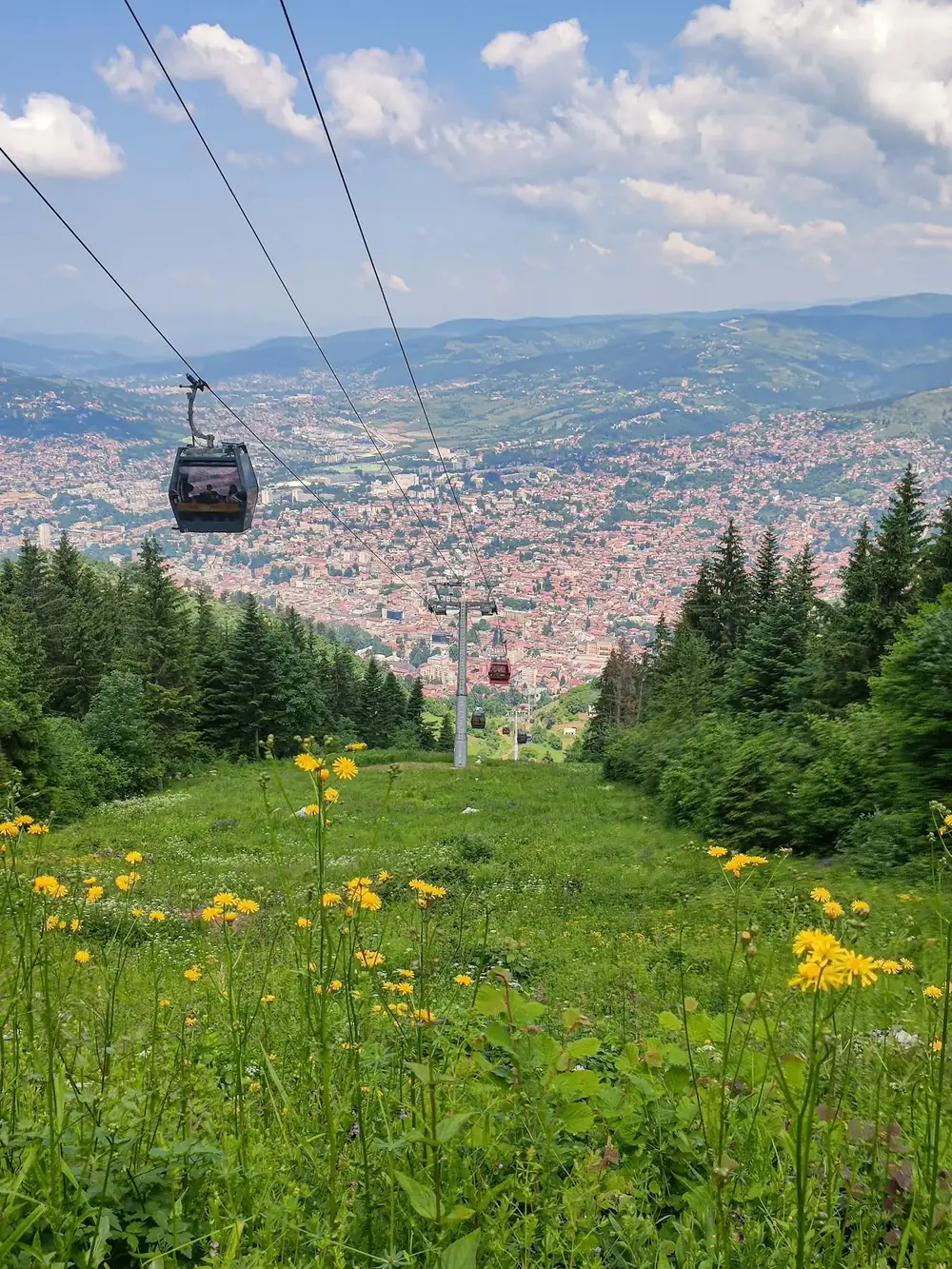
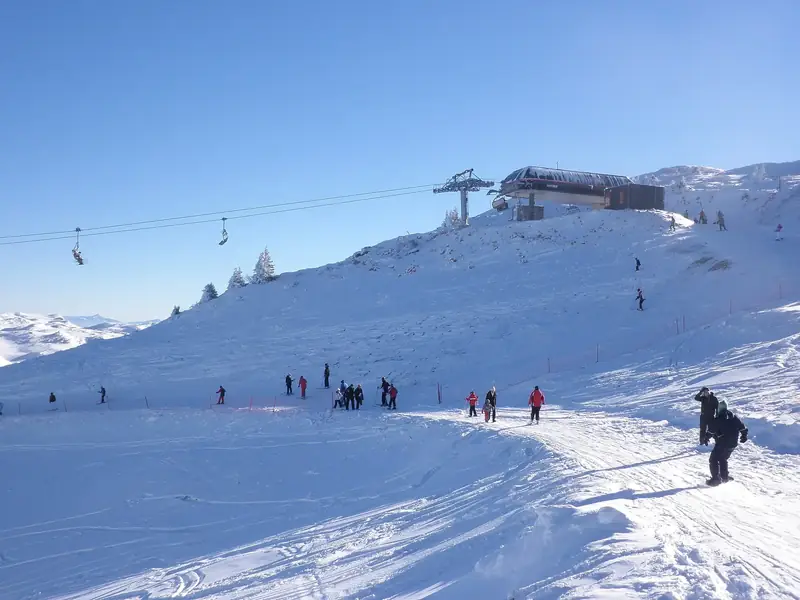
Take the cable car from the old town up Trebević for forest paths and the overgrown bobsleigh track from the 1984 Olympics. In the afternoon drive up to Jahorina for the view along the ridge. In winter, swap the walk for a day’s skiing.
The cable car up Trebević, and the walk to the bobsleigh track.
In summer you can go to Lukomir instead, the country’s highest village, about 50 km from the city. For an easier day, do Trebević alone and keep the afternoon for Sarajevo.
Day 6
Down the Neretva to Mostar
Sarajevo to Mostar
Driving day
About 2½ hours at the wheel
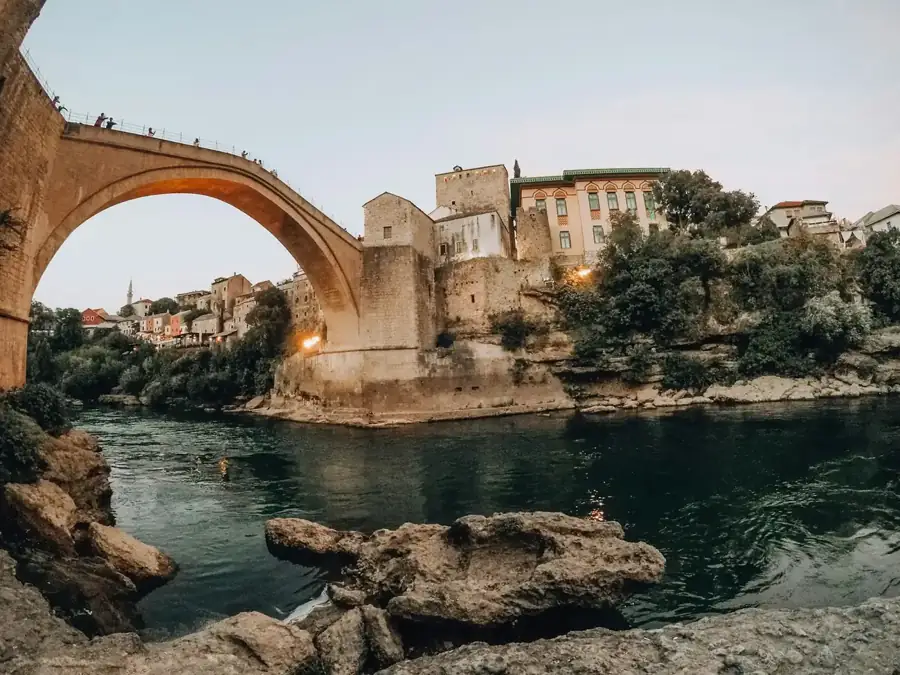
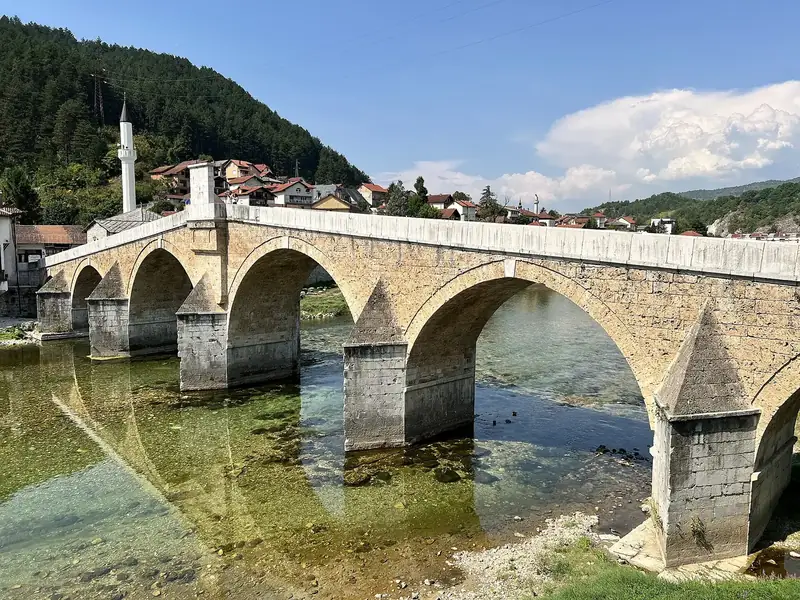
The road south drops into the Neretva valley and follows the river through its gorge. Stop in Konjic for the old bridge. Aim to reach Mostar by late afternoon, when the day visitors are leaving and the old town is at its best.
South over the Ivan pass and down into the Neretva valley.
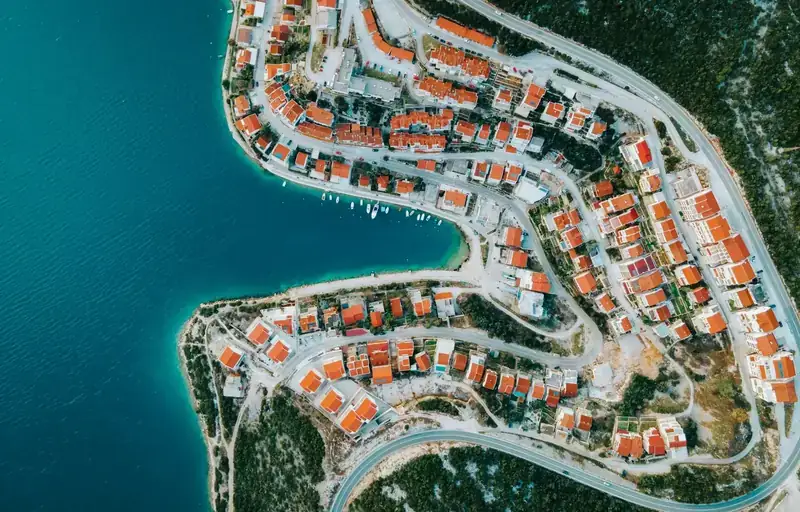
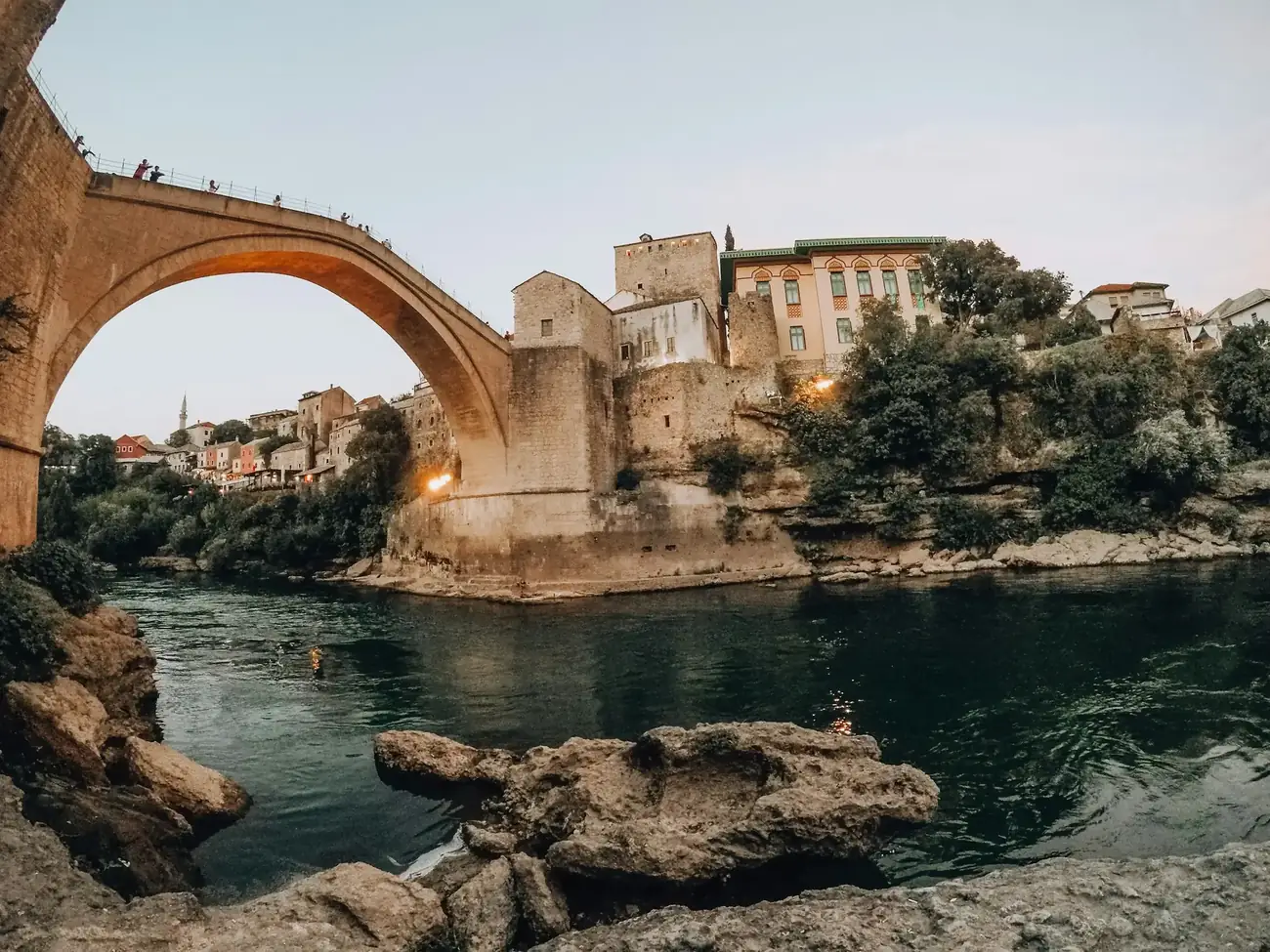
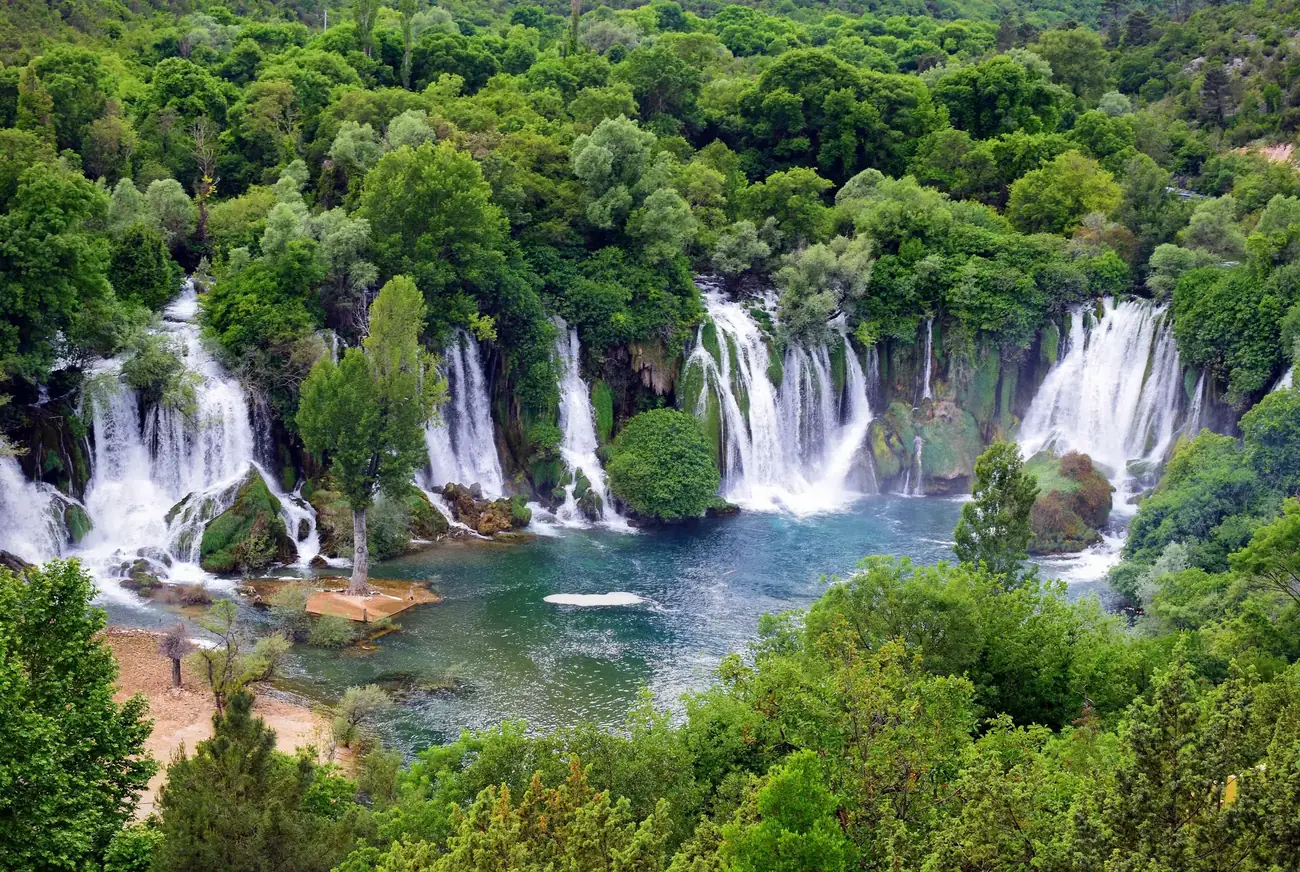
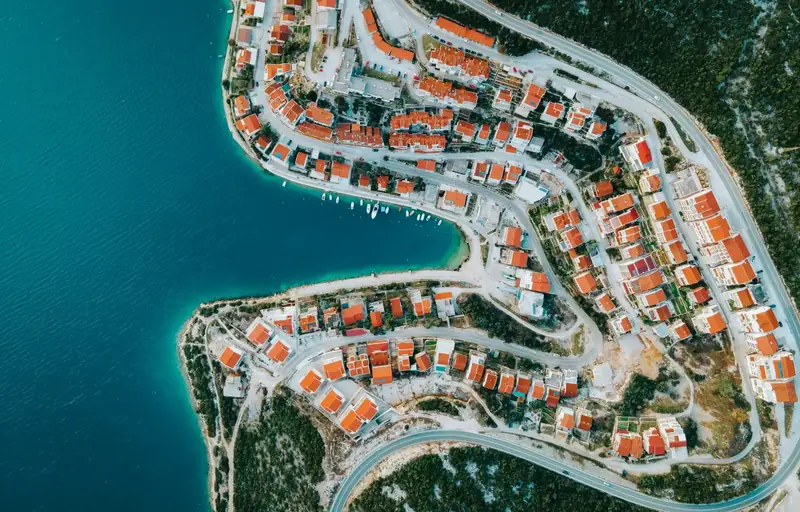
A day of short drives. See the dervish house at the Buna spring in Blagaj, climb the stone village of Počitelj, swim under the falls at Kravica, then follow the road down to the Adriatic at Neum.
Blagaj, 12 km from Mostar, before the coaches arrive.
Check the Kravica page for when you can swim. Dubrovnik is about 70 km beyond Neum. This is the fullest day of the seven. To ease it, leave out Počitelj, or stay a second night in Mostar and see Blagaj and Počitelj from there.
Sea level.
You started on a river at 230 metres and finished with your feet in the Adriatic. Dubrovnik and its airport are about an hour further down the coast.
Seven days is enough to cross the country from the north-west to the sea and see its best-known places: two rivers, three old towns, the capital, a mountain and the coast. It is a steady pace, not a slow one, and the last day is the fullest. With eight days, spend a second night in Mostar. With ten days you could add the east, around Višegrad and Sutjeska.
Do I need a car for this route?
For the whole route, yes. Buses link all the main towns and a scenic train runs between Sarajevo and Mostar, but the waterfalls, the mountains and the villages are slow or impossible to reach without a car.
When is the best time to do it?
May, June and September. The rivers are full or the water is warm, the high roads are open, and the old towns are not at their busiest. In July and August, start early each day to avoid the heat in Herzegovina.
Can I do the route in reverse, starting from Dubrovnik?
Yes. Many visitors arrive from the coast. Start at Neum or Mostar and follow the days backwards, finishing on the Una, about two hours from Zagreb.
Is driving in Bosnia and Herzegovina difficult?
No, but it is slow. Most roads are two-lane and winding, with good surfaces. Plan on an average of about 60 km an hour and avoid driving mountain roads after dark.
Where should I fly into?
For this direction, Zagreb or Banja Luka, both within a few hours of Bihać. The route ends near Dubrovnik airport. If you would rather make a loop, fly into Sarajevo and hire a car there.