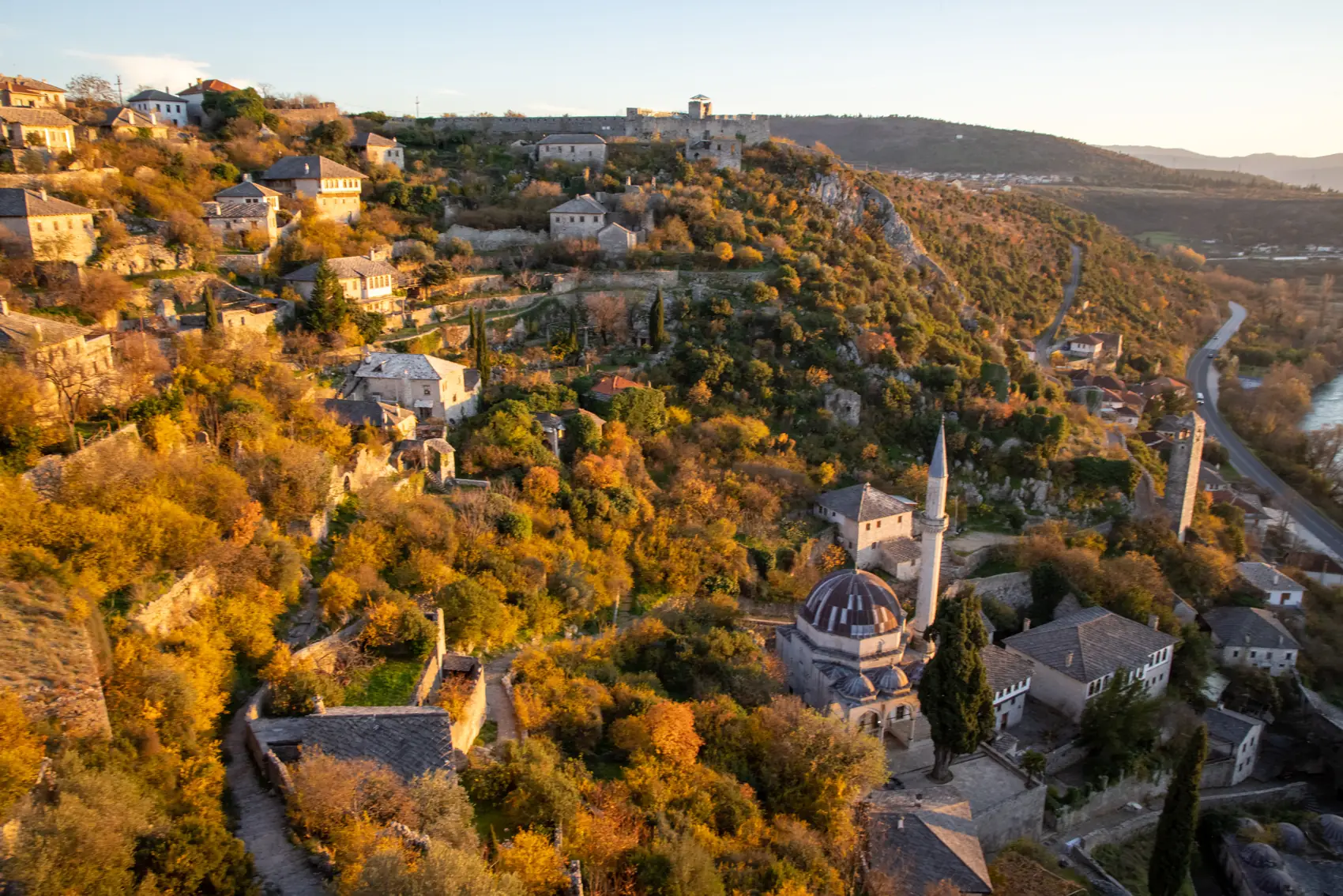
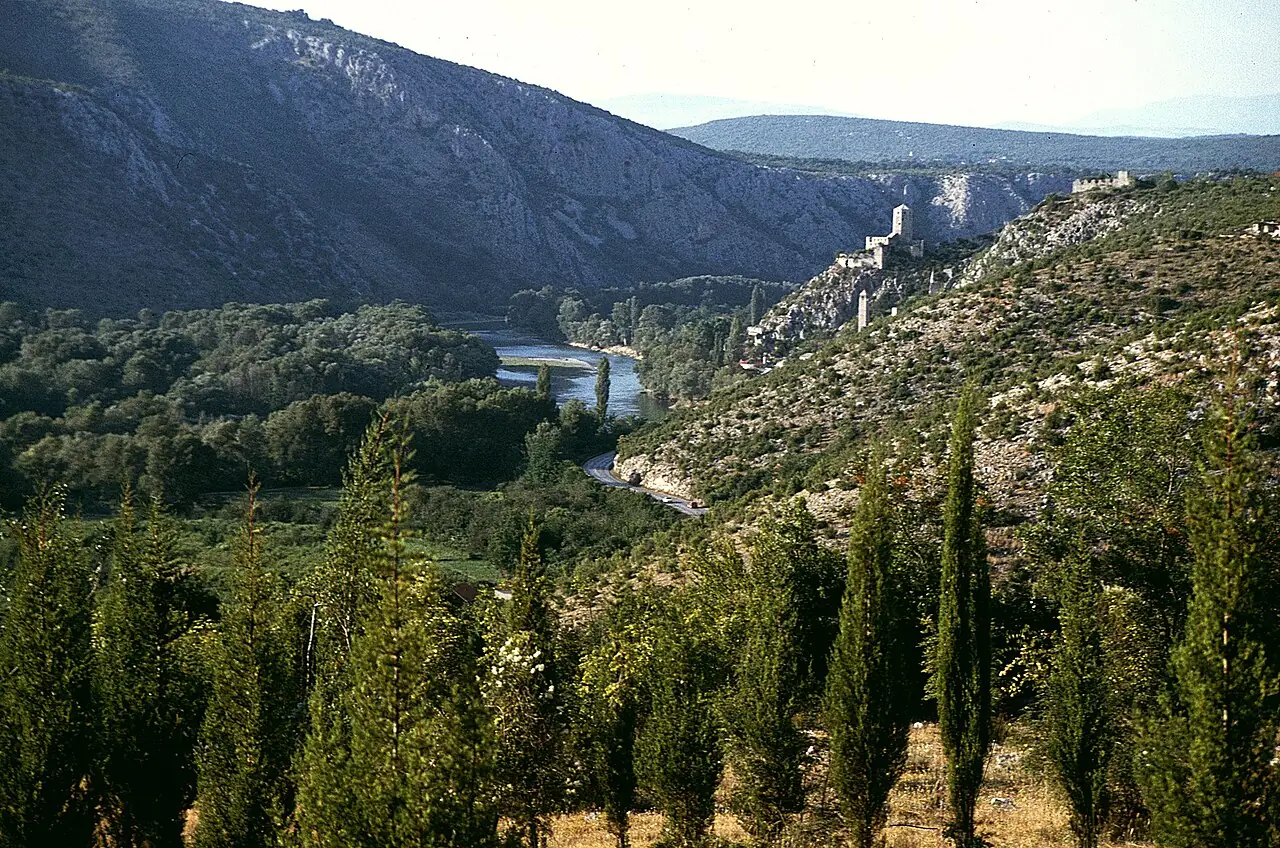
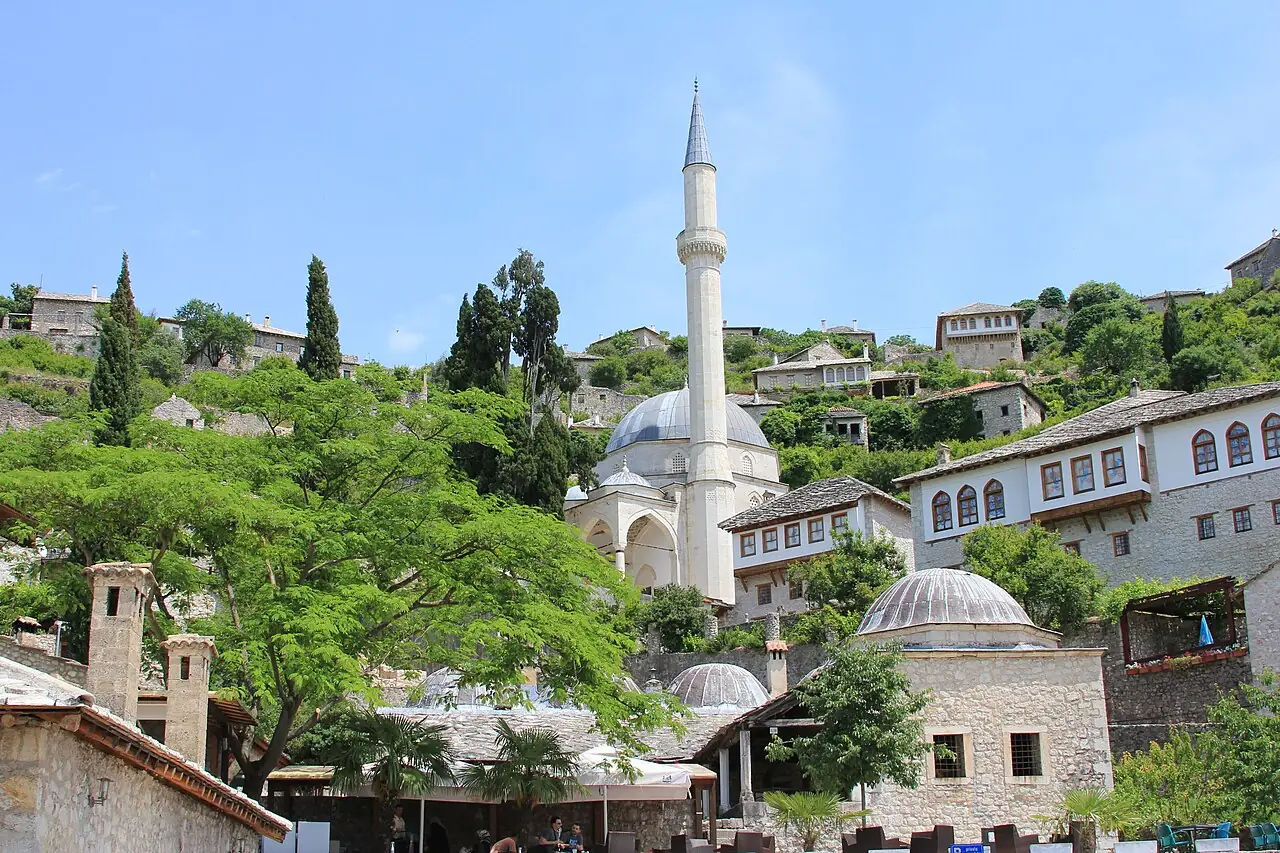
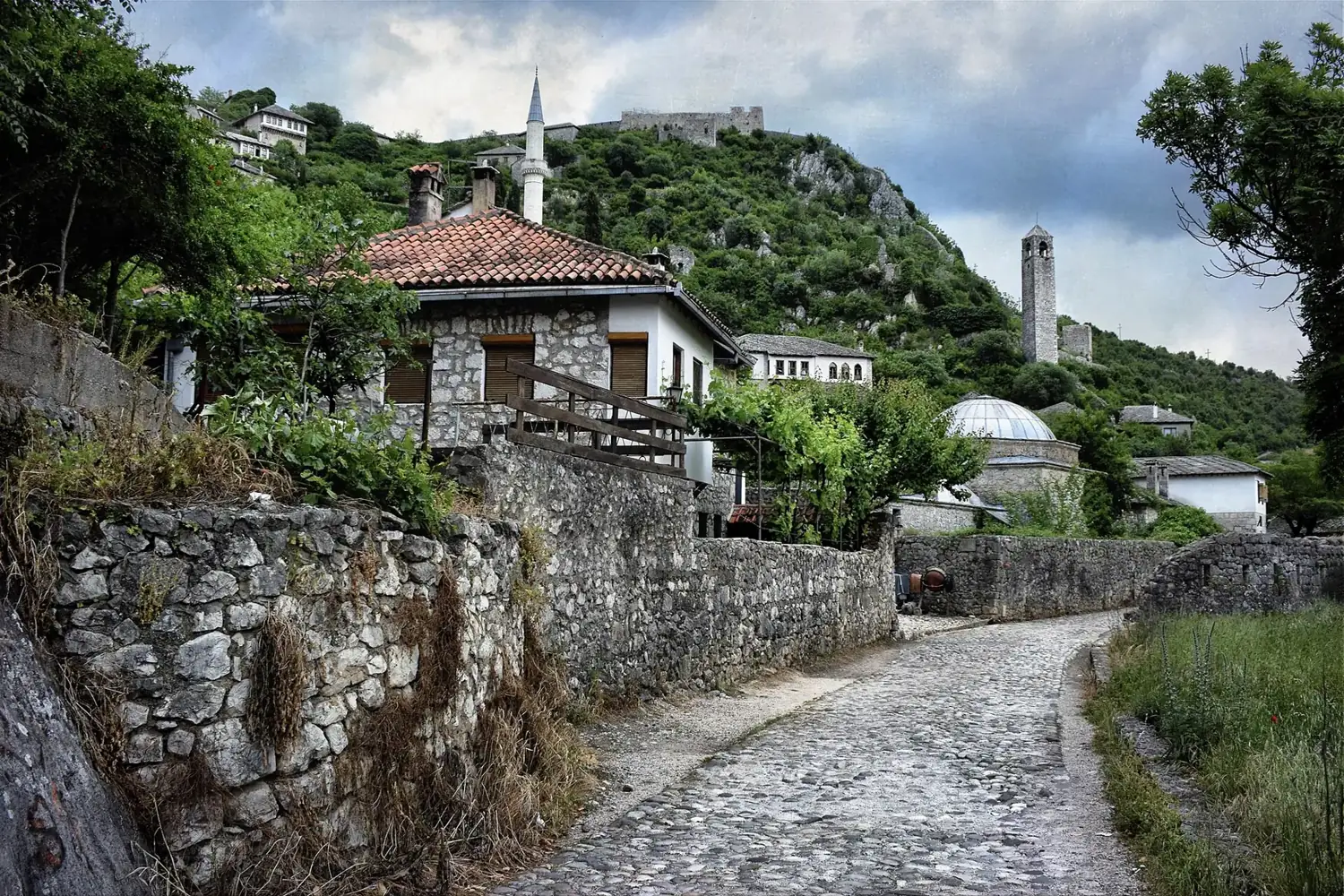
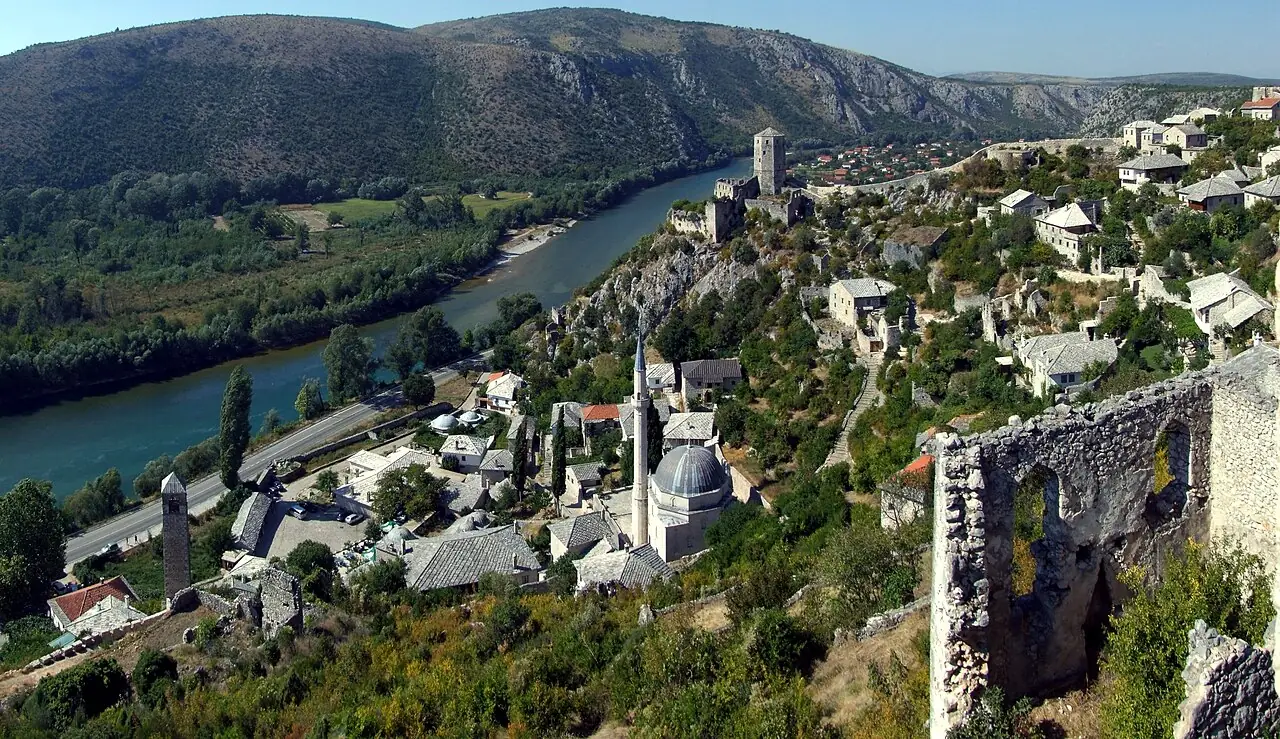
You come round a bend in the road beside the Neretva and there it is, the whole place in a single glance: pale stone houses stepping up a natural amphitheatre of rock, a mosque with its dome and minaret in the middle, a clock tower, and an eight-sided tower on the very top.
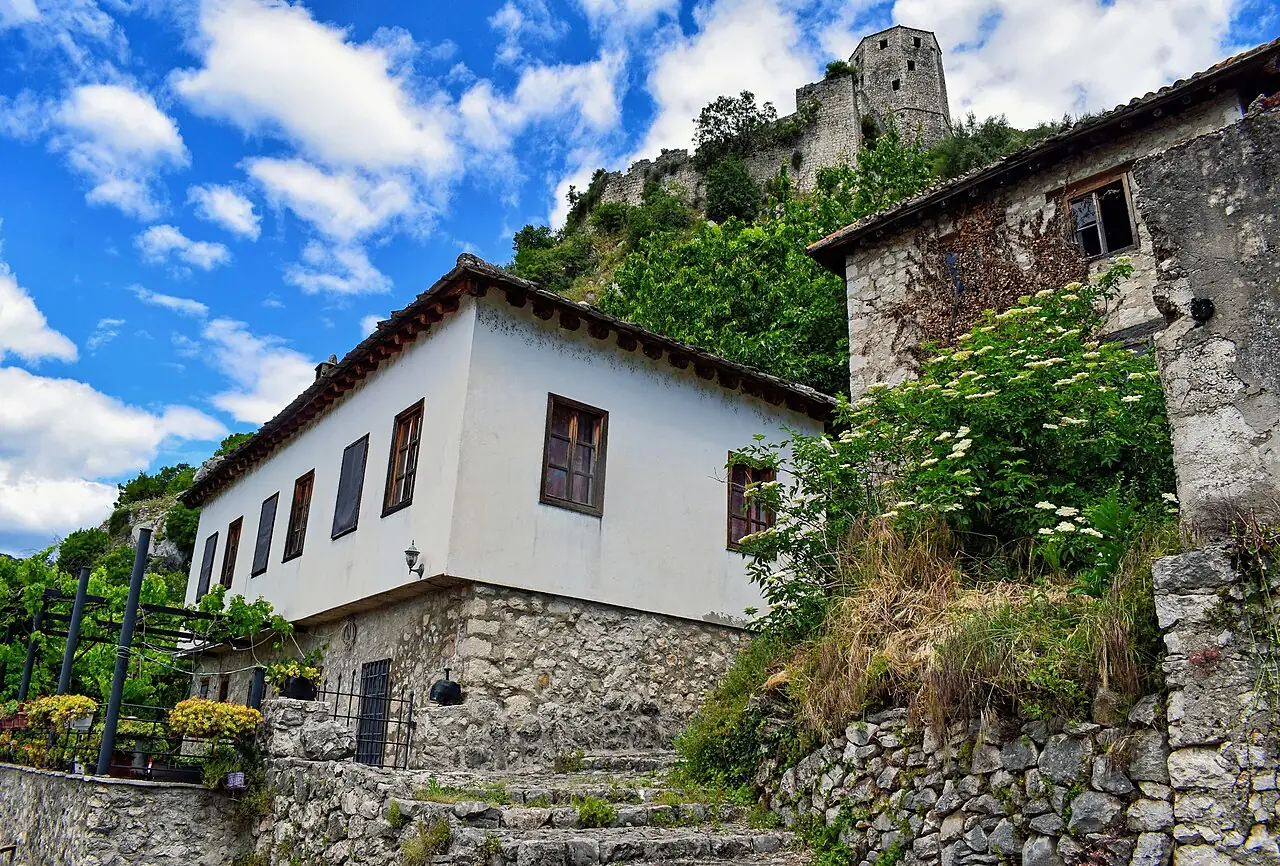
There are no streets, only stairs. Polished stone steps wind up between the houses, under fig and pomegranate trees, past women selling fruit in paper cones. It is a ten-minute climb to the mosque and another ten to the tower, and the view opens with every turn.
Počitelj’s appearance reflects both its older history and extensive post-war restoration. In 1993 its mosque and many other buildings were destroyed or damaged, and residents were displaced. Later rehabilitation supported the return of refugees and displaced residents.