Visit BiH
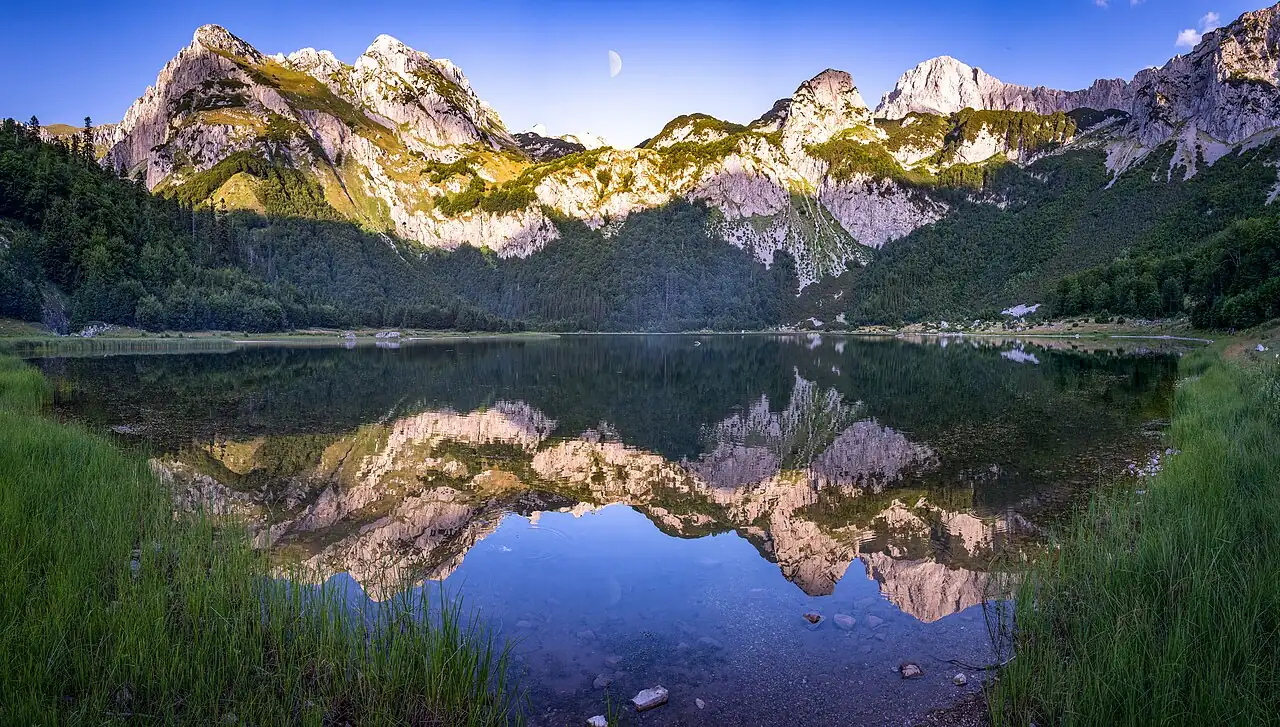
A still mountain lake reflecting peaks lit by the low sun in Sutjeska National Park

Sutjeska National Park

  1. Home
  2. Places
  3. Republika Srpska
  4. Sutjeska National Park

The oldest national park in the country, around a forest that has never been cut.

550mHigh country

Sutjeska National Park in brief. Sutjeska is the oldest national park in Bosnia and Herzegovina, founded in 1962 in the south-east of the country near Foča. It protects Perućica, one of Europe’s surviving primeval forests, and Maglić, the country’s highest peak at 2,386 m. Visitors come for the forest viewpoint and the 75 m Skakavac waterfall, for mountain hikes to Maglić and Trnovačko lake, and for the Second World War memorial at Tjentište. The season runs from late May to October. Perućica can be entered only with a park guide.

The wild corner

The road from Sarajevo to the coast drops into a deep valley and for twenty kilometres runs between walls of forest and rock. This is Sutjeska: about 17,500 hectares of canyon, beech wood, high pasture and bare summit on the border with Montenegro.

At its heart is something very rare. Perućica has never been felled, grazed or planted. Trees germinate, stand for three centuries and fall, and nobody clears them away. It has been like that since the last Ice Age.

Above the forest the country reaches its highest point, and behind that lies a string of glacial lakes. Bears, wolves and chamois live here. In all of it there is one village and one hotel.
What it is
The country’s oldest national park
Founded
1962
Area
About 17,500 hectares
Highest point
Maglić, 2,386 m
Season
Late May to October
Time needed
Two days
Nearest town
Foča, about 20 km

Three hundred rings

  1. About 1720: a seedA beech takes root on a slope nobody farms. Nothing in this forest has ever been planted, and nothing has ever been cut.
  2. A century in the shadeIt grows slowly under older trees, a few millimetres a year, waiting for one of them to fall and let the light in.
  3. 1943War comes through the valley below. The forest above is too steep and too thick to fight in. It is left alone.
  4. 1952: protectedScientists recognise what is here. Perućica becomes a strict reserve, and ten years later the heart of the country’s first national park.
  5. TodayThe tallest trees stand over fifty metres. When one finally falls it is left where it lies, and feeds the next three hundred years.

What to do in Sutjeska

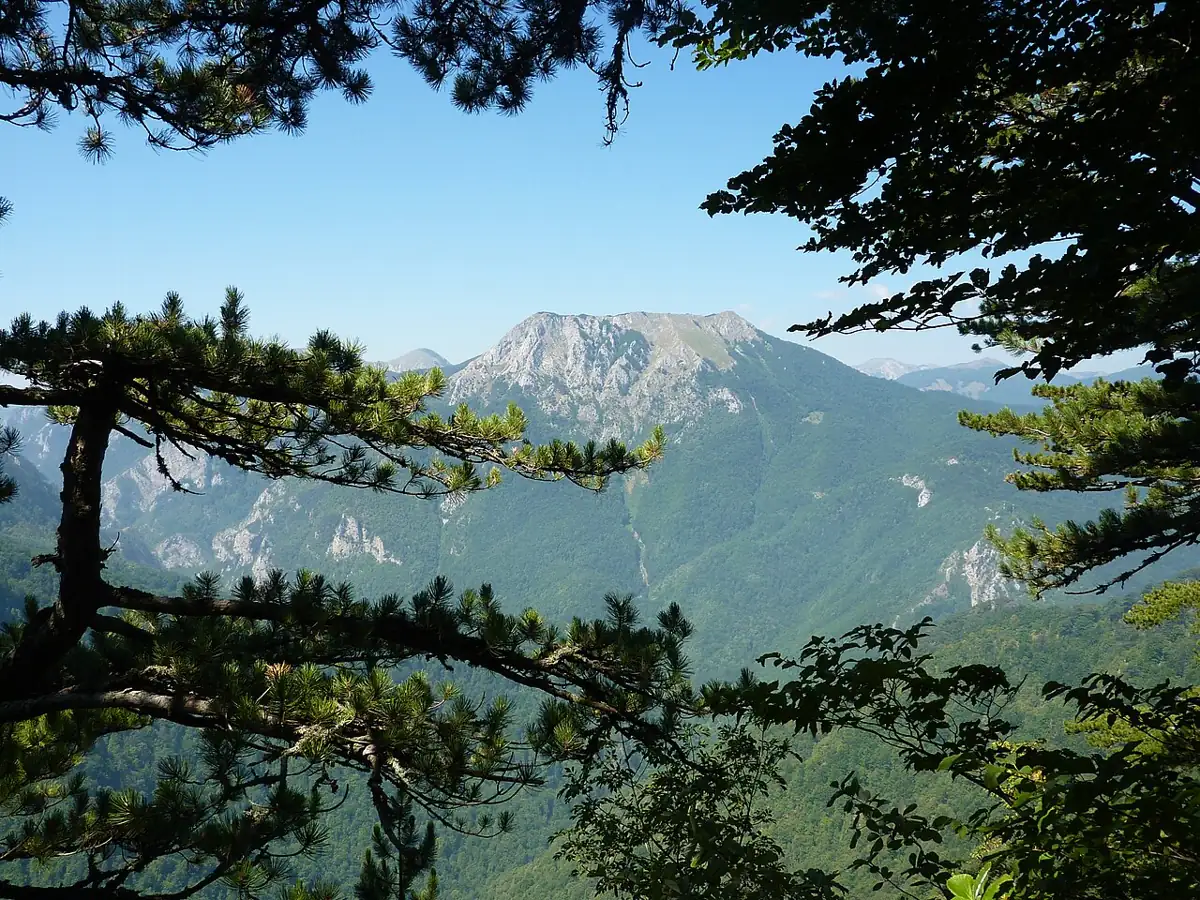
  • A mountain wall seen through the trees of Perućica

    Dragoš Sedlo viewpoint

    A forest road climbs from Tjentište to a platform on the lip of the Perućica bowl. The whole primeval forest lies below, and the Skakavac waterfall falls through it on the far side. This is the one view everybody should see.

    From Tjentište
    About 10 km by forest road
    Time needed
    Two hours return
    Walking
    A few minutes from the car
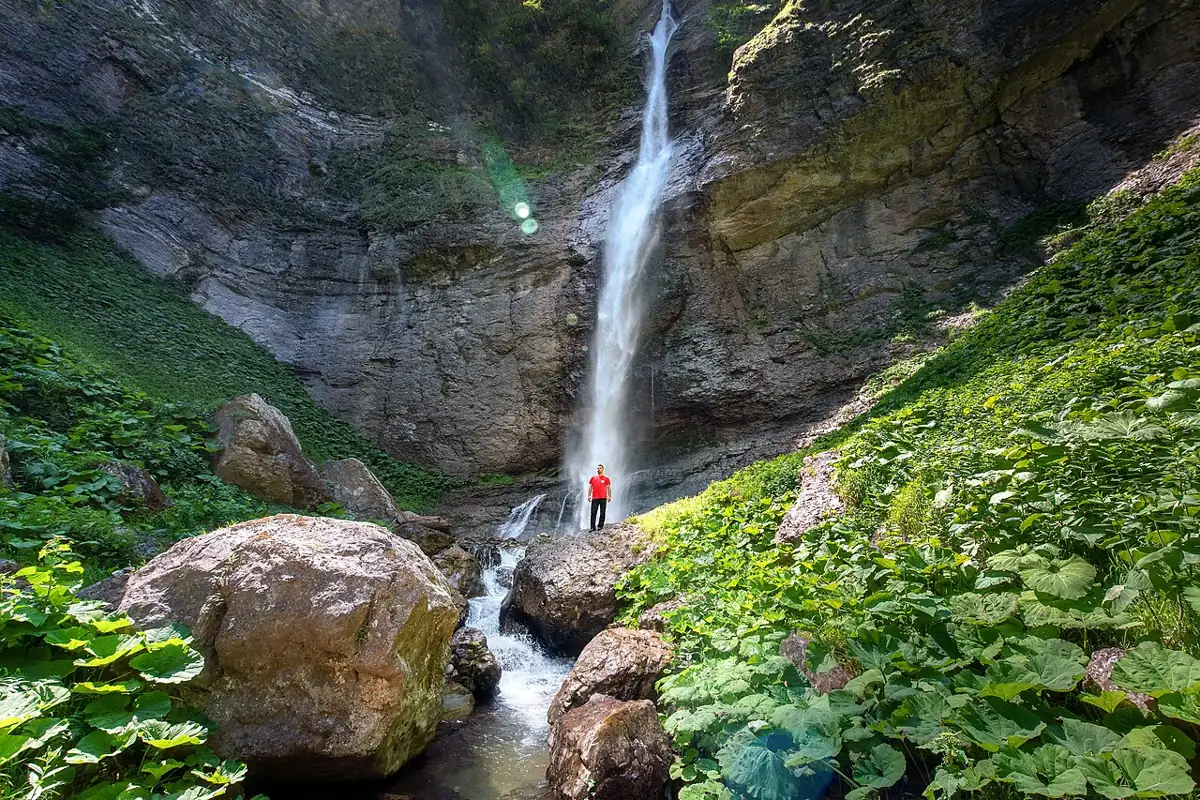
  • Skakavac waterfall, with a person at its foot for scale

    Walk in Perućica to Skakavac

    With a park guide you can walk down into the reserve itself, among the great trees, to the foot of the waterfall. Arrange it ahead at the park office.

    Guide
    Required, and booked through the park. In 2026 the guided Perućica walk is 150 KM a person for groups of four or more, or 250 KM with Skakavac waterfall. Ask what the price covers.
    Time needed
    Half a day
    Height of the fall
    75 m
  • Peaks reflected in a mountain lake

    Climb Maglić

    The highest peak in the country. The usual route starts from the high pasture at Prijevor and takes a full day there and back, with some steep, exposed ground near the top.

    Summit
    2,386 m
    Time needed
    7 to 9 hours return
    Difficulty
    Hard; for experienced hikers
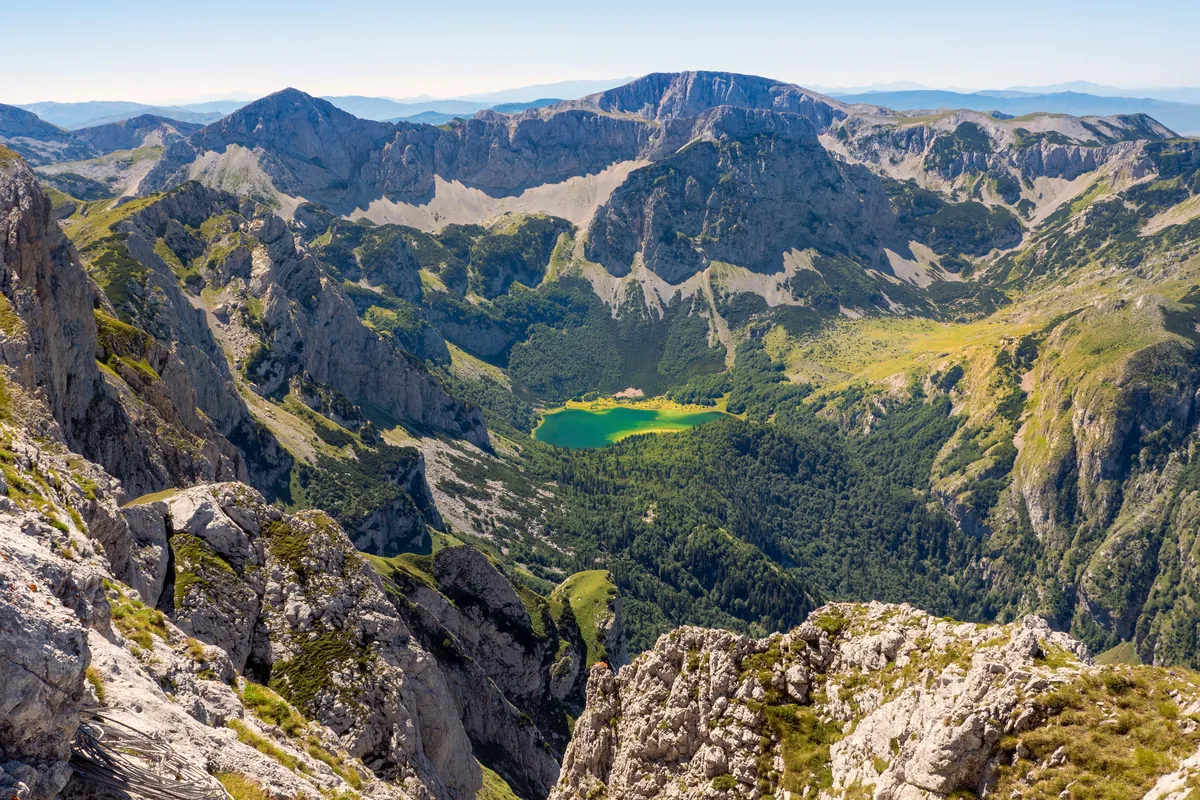
  • Trnovačko lake seen from above, ringed by forest and rock walls

    Walk to Trnovačko lake

    A heart-shaped glacial lake in an amphitheatre of cliffs, two hours’ walk from Prijevor. It lies just across the border in Montenegro, so carry your passport.

    Time needed
    4 to 5 hours return
    Difficulty
    Moderate
    Bring
    The lake is in Montenegro. Arrange permission to cross with the border police of both countries before you set out. A passport on its own is not permission.
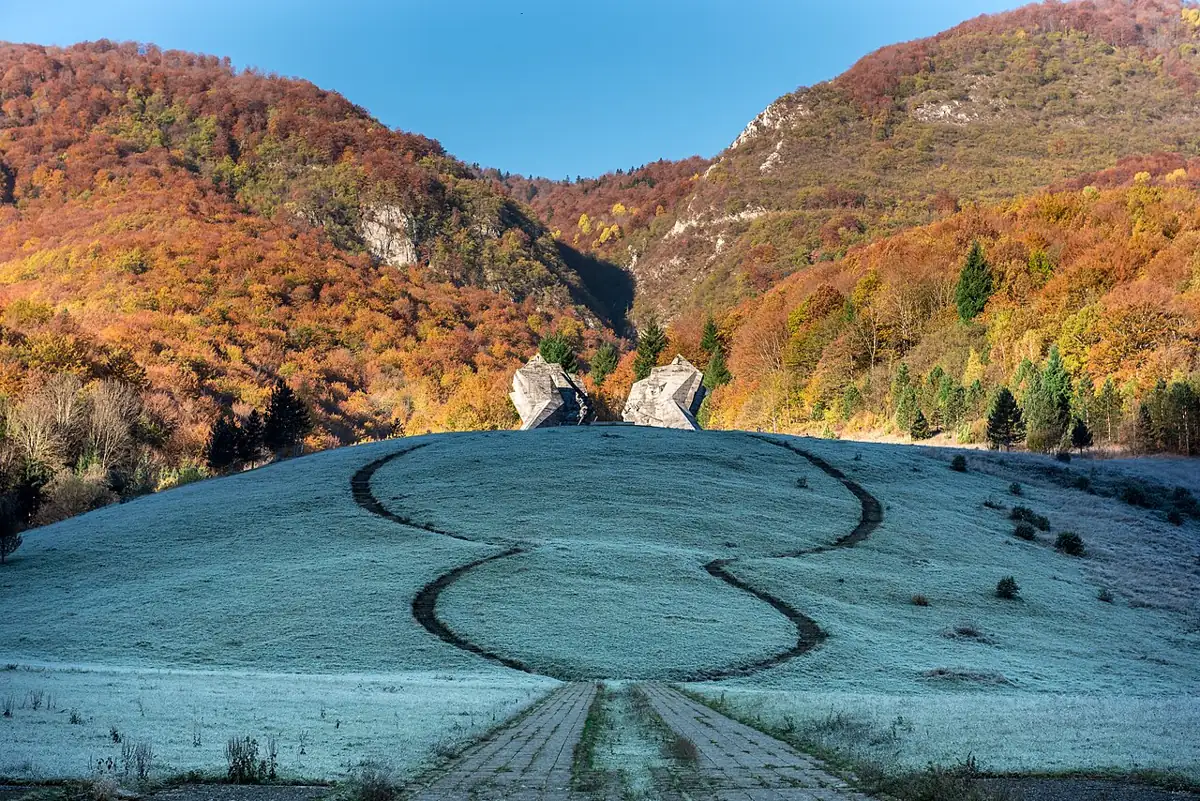
  • The memorial at Tjentište

    The Tjentište memorial

    The great concrete monument to the battle of 1943, on a hillside beside the main road. Walk up and through it.

    Entrance
    5 KM; 2 KM for ages 8 to 18. Children under eight go in without a ticket.
    Opening times
    An open-air monument in the valley at Tjentište, best seen in daylight.
    Time needed
    45 minutes
    Where
    Tjentište
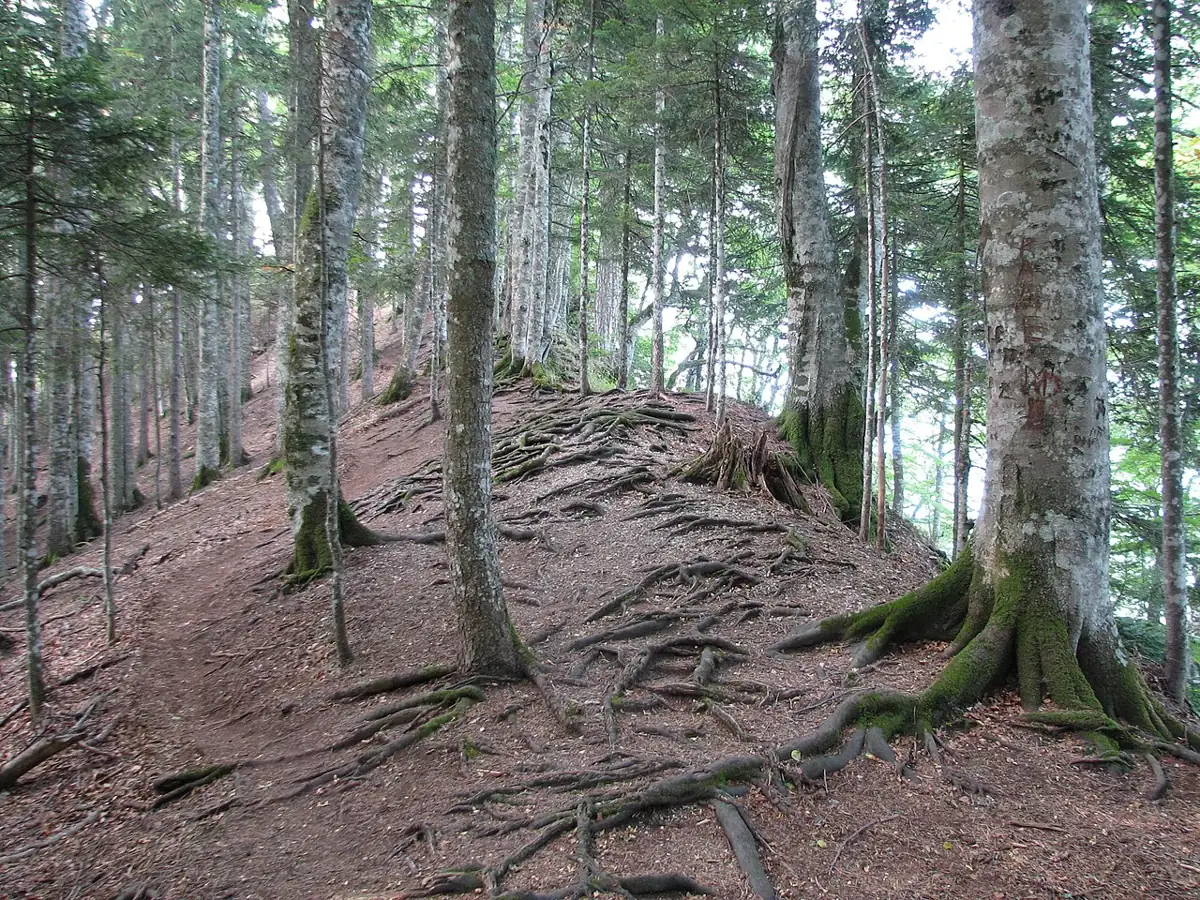
Tall straight trunks and a web of roots on the floor of Perućica forestSkakavac waterfall dropping down a cliff, with a tiny figure in red at its foot

Perućica

Perućica is one of the few primeval forests left in Europe: about fourteen square kilometres of beech, fir and spruce in a steep bowl under the country’s highest peak.

You cannot wander in. The reserve is strictly protected, and you may enter only with a park guide, on foot, on a set trail. What you see is a forest doing exactly as it likes, with fallen giants rotting where they dropped and new trees growing out of them.

From the viewpoint at Dragoš Sedlo you look across the whole of it, with the Skakavac waterfall dropping 75 metres through the trees.

Area
About 1,400 hectares
Tallest trees
Over 50 m
Access
Visits inside Perućica must be announced in advance, approved and accompanied by authorised National Park Sutjeska staff.

Good to know

Park entry
20 KM a day for an adult. The Tjentište memorial is 5 KM. Perućica is 70 KM a day, with the guide on top. Keep your ticket for the whole stay
Perućica
By arrangement only. Book ahead with the park and go in with one of its guides
Season
Late May to October. The forest road and high trails are snowbound in winter
Forest road
Unsurfaced and rough beyond Tjentište; drive slowly
Mountain weather
Changes fast. Carry warm and waterproof layers even in August
Wildlife
Bears and wolves live here. They avoid people; do not leave food out
Border
Trnovačko Lake is in Montenegro. Arrange permission to cross with the border police of both countries beforehand. A passport on its own is not permission
Phone signal
Patchy to none away from the valley
Fuel and cash
Fill up and draw cash in Foča

These are real mountains. Maglić and the high trails are for fit, equipped walkers. Go with a guide if you are unsure, tell someone your route, and turn back if the cloud comes down.

The memorial site at Tjentište among autumn hills, seen from aboveA mountain wall seen through the branches of the primeval forest

The valley of heroes

In the early summer of 1943 one of the hardest battles of the Second World War in Yugoslavia was fought in this valley. Thousands of partisans died breaking out of an encirclement.

At Tjentište, on a rise above the river, stands their memorial: two colossal wings of white concrete, split like a rock face, with a path leading between them. It was unveiled in 1971 and is among the most striking monuments of its era anywhere.

Below it is the ossuary, and a small museum.

The battle
1943
The monument
Unveiled 1971
Where
Tjentište, by the main road

Where it is

12345

Outline from Natural Earth. Distances are by road and approximate.

Sutjeska is in the far south-east, on the Montenegrin border, astride the main road from Sarajevo to Trebinje and Dubrovnik.

Getting to Sutjeska National Park

FromDistanceHowTime
FočaAbout 20 kmCar or bus30 minutes
SarajevoAbout 110 kmCar or bus2 hours
TrebinjeAbout 105 kmCar or bus2 hours
DubrovnikAbout 135 kmCar, with a border crossing2½ to 3 hours

Buses between Sarajevo and Trebinje pass through Tjentište. You need a car, or a guide with one, for the forest road. Distances and times are approximate.

Two days in Sutjeska

  1. Tjentište

    The memorial and the museum, then lunch in the valley.

  2. Dragoš Sedlo

    Up the forest road to the viewpoint over Perućica and Skakavac.

  3. The high country

    To Prijevor early, then Trnovačko lake or, for the strong, Maglić.

  4. Into the forest

    A guided walk down through Perućica to the waterfall.

Planning tips

Advice that comes up again and again from hikers and guides.

Where to stay and eat

Where to stay

There is a hotel, a campsite and bungalows at Tjentište in the middle of the park, and mountain huts higher up. Foča, twenty kilometres away, has more choice.

What to eat

Simple mountain food at Tjentište: grilled trout, lamb, soups and pies. Take your own food and water for any day on the trails.

Near Sutjeska National Park

The park sits on one of the great drives of the country, between the capital and the far south.

Questions people ask

What is Sutjeska National Park known for?

Perućica, one of Europe’s surviving primeval forests; Maglić, the highest peak in Bosnia and Herzegovina; the 75 m Skakavac waterfall; and the memorial to the Battle of the Sutjeska of 1943.

Can you visit Perućica forest?

Yes, but only with a park guide, arranged in advance. Without a guide you can see the whole forest from the Dragoš Sedlo viewpoint.

How high is Maglić?

2,386 metres. It is the highest peak in Bosnia and Herzegovina, on the border with Montenegro.

When is the best time to visit Sutjeska?

From late May to October. June and September are the best months for hiking. In winter the forest road and the high trails are under snow.

How do you get to Sutjeska National Park?

By road. Tjentište, in the centre of the park, is about 110 km from Sarajevo and 20 km from Foča, on the main road towards Trebinje.

How old is Sutjeska National Park?

It was founded in 1962 and is the oldest national park in the country. The Perućica reserve inside it has been protected since 1952.

Is Trnovačko lake in Bosnia and Herzegovina?

No. Trnovačko Lake is in Montenegro. Reaching it on foot from Prijevor involves crossing the international border away from a staffed checkpoint. Carry the travel documents required for your nationality, but do not assume that carrying a passport is enough. Before setting out, arrange the required permission. Published guidance is not consistent on which country’s border police receives the request, and the current regulation in Bosnia and Herzegovina requires a permit application thirty days ahead, so ask the border police of both countries well in advance. Neither a passport nor a guide booking alone establishes permission. Confirm the arrangements for both the outward and return crossing, and keep the confirmation with you.

Sutjeska is a two-day extension to the seven-day route, south-east from Sarajevo.

See the seven-day route

Photographs on this page

Photo credits

Sutjeska National Park

PhotographPhotographerSource and licence
Lake and peaks; Skakavac waterfallSvjetlopis, Vladimir TadićWikimedia Commons, CC BY-SA 4.0
Perućica forest floorNH53Wikimedia Commons, CC BY 2.0
Mountain through the treesErwan MartinWikimedia Commons, CC BY 2.0
Tjentište memorialJankoSamWikimedia Commons, CC BY-SA 4.0
Trnovačko lakeNikola BasicSupplied by Visit Bosnia and Herzegovina
Nearby thumbnailsSee the home page creditsVarious

All credits for the site are on the photo credits page.

Menu