Visit BiH
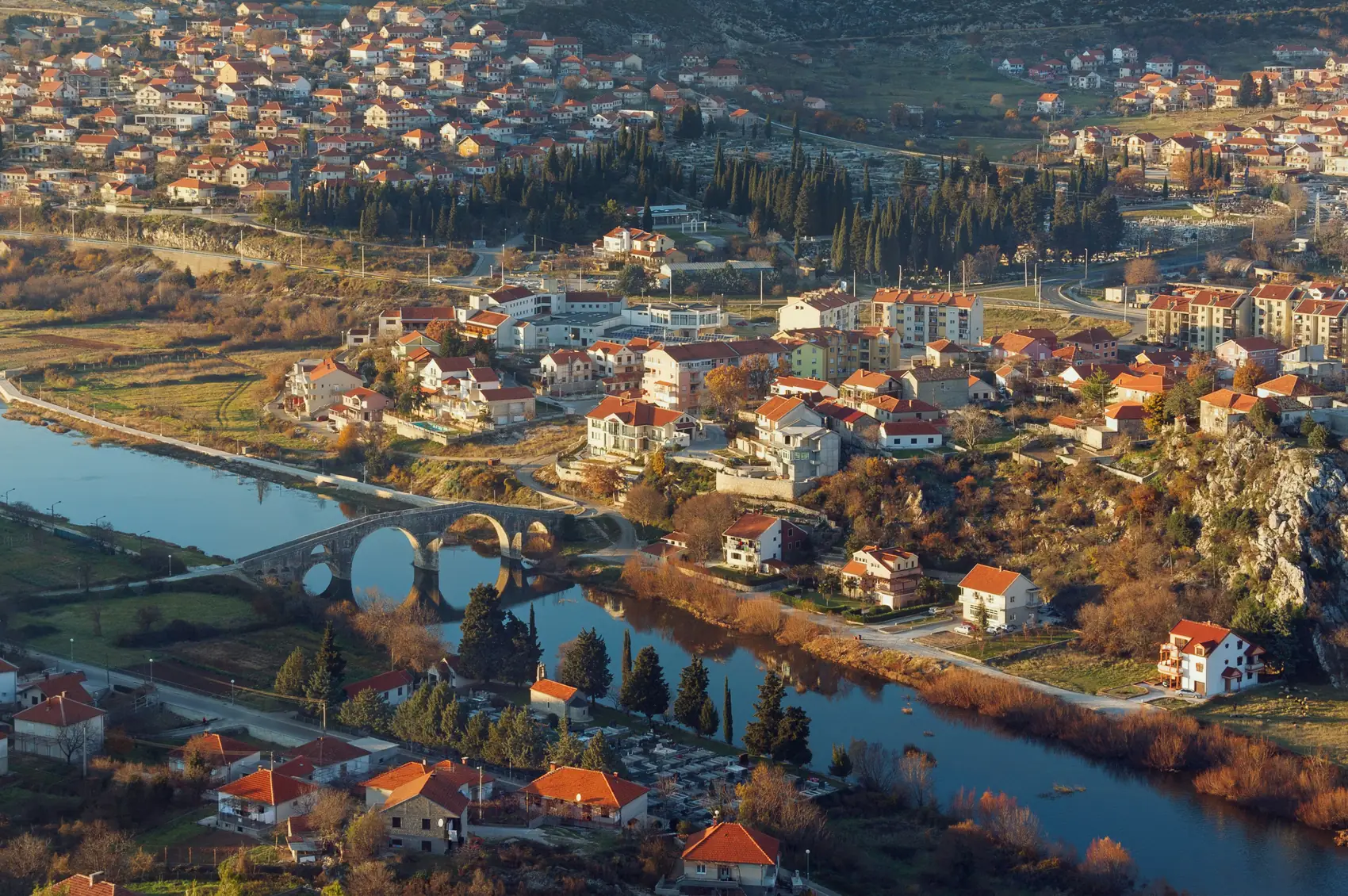
Trebinje and the river Trebišnjica from above at dusk

Trebinje

  1. Home
  2. Places
  3. Republika Srpska
  4. Trebinje

The city of sun and plane trees, an hour from Dubrovnik.

275mRiver country

Trebinje in brief. Trebinje is a small city in the far south of Bosnia and Herzegovina, on the Trebišnjica river, about 30 km from Dubrovnik. It is known as the city of sun and plane trees: a walled Ottoman old town, a market square shaded by century-old planes, a sixteenth-century stone bridge and a hilltop church with a wide view. It is also the centre of Herzegovina’s wine country. Allow a day, and come from April to June or in September and October.

The slowest city in the country

Trebinje has around 260 sunny days a year, a river so clear it looks painted, and a main square where sixteen enormous plane trees make a single roof of leaves. Under them is a market in the morning and most of the town by evening.

The old town beside it is small, walled and lived in. It was laid out by the Ottomans in the early eighteenth century, and its stone lanes now hold cafés, a museum and people’s front doors. Beyond the walls the streets are Austro-Hungarian, pale stone with green shutters.

Everything here is close to something else. Dubrovnik is under an hour away, Montenegro less, and the hills around are planted with vines. Yet Trebinje itself is unhurried in a way its neighbours stopped being long ago.
Region
Republika Srpska
River
Trebišnjica
Height
275 m
Known for
Plane trees, wine, the old bridge
Best months
April to June, September, October
Time needed
One day
From Dubrovnik
About 30 km

A day under the plane trees

  1. The marketFrom first light the stalls are out under the trees: cheese in oil, honey, dried figs, wine in plastic bottles, whatever came down from the villages this morning.
  2. CoffeeBy ten the shopping is done and the cafés have taken over. Nobody is in a hurry. One coffee lasts an hour.
  3. The quiet hoursIn the heat of the afternoon the square empties. The light comes through the leaves in coins, and the only thing moving is a dog changing sides.
  4. The square fillsAs the sun drops the tables fill again, with families this time, and children on bicycles between them.
  5. The evening walkAfter dark comes the korzo: the whole town out walking, round and round under the lamps, until midnight.

What to see in Trebinje

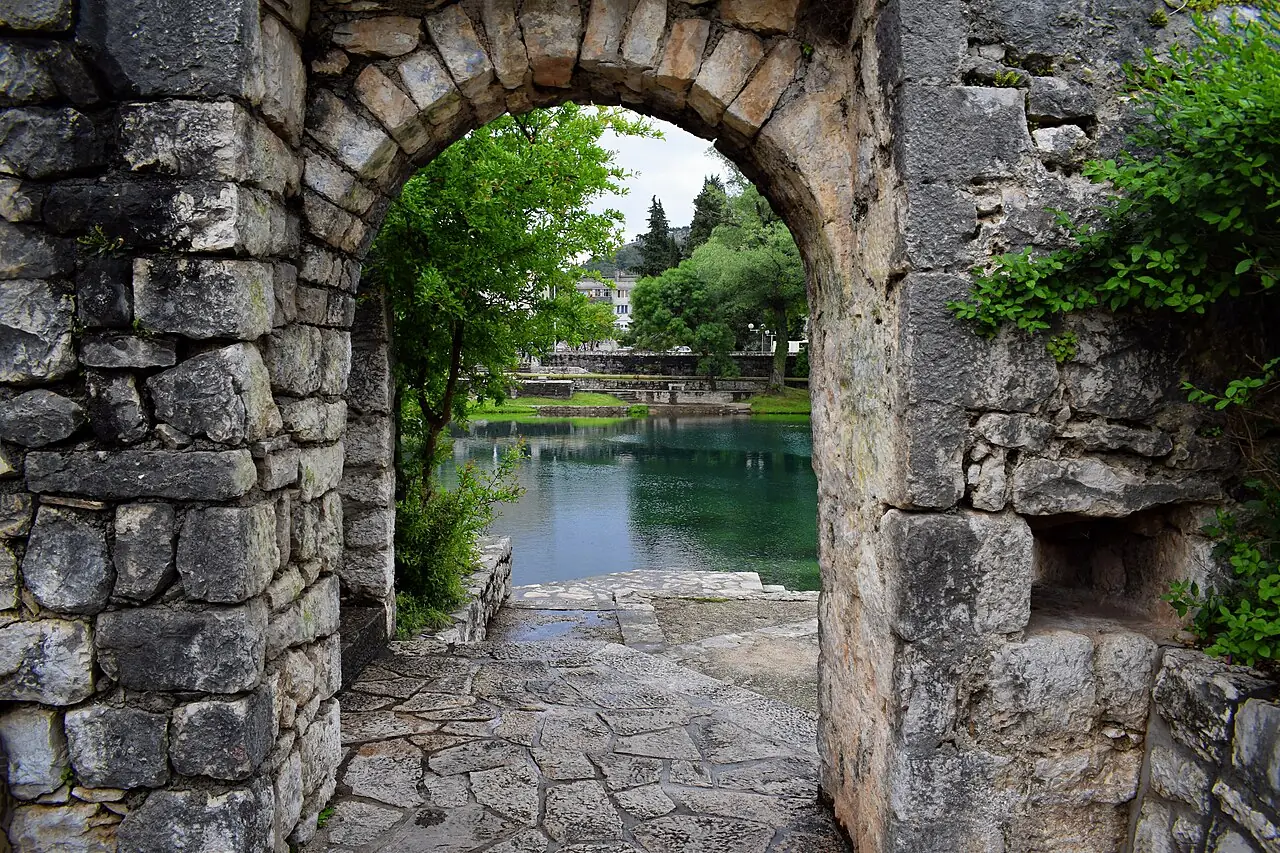
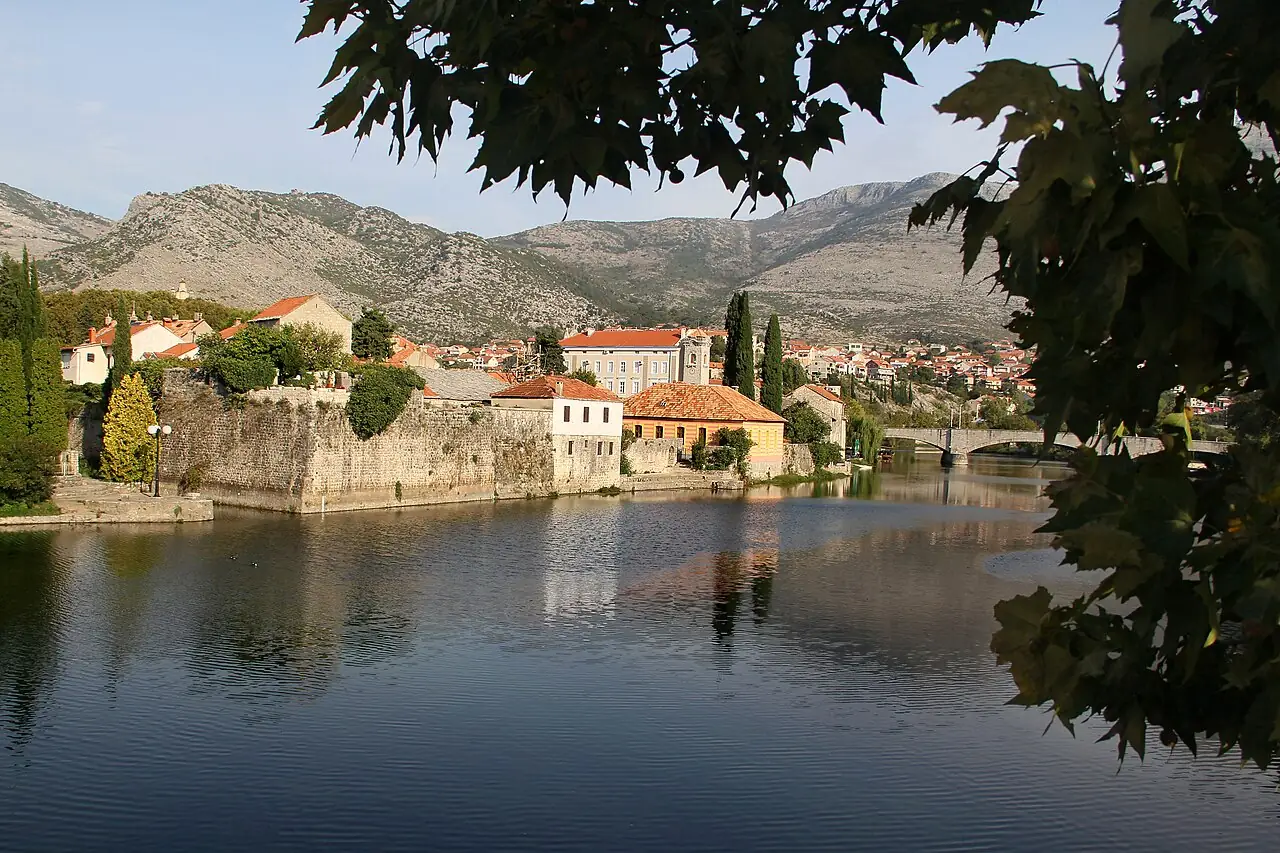
  • The walled old town on the river

    The old town

    Kastel, the walled quarter on the river bank. Go in through one of the stone gates and wander: it takes ten minutes to cross and an hour to leave. The Museum of Herzegovina is here, with the collection of the poet Jovan Dučić.

    Time needed
    An hour
    From the square
    2 minutes on foot
    Entrance
    The gates stand open and the lanes are public. Only the museum sells a ticket.
  • The plane-tree square and market

    Freedom Square, just outside the walls. In the morning it is a market of cheese, honey, dried figs, wine and vegetables from the villages. Later the stalls go and the café tables take over.

    Market
    Mornings; busiest on Saturday
    Best time
    Early, or at dusk
    Entrance
    A public square. You pay for what you buy.
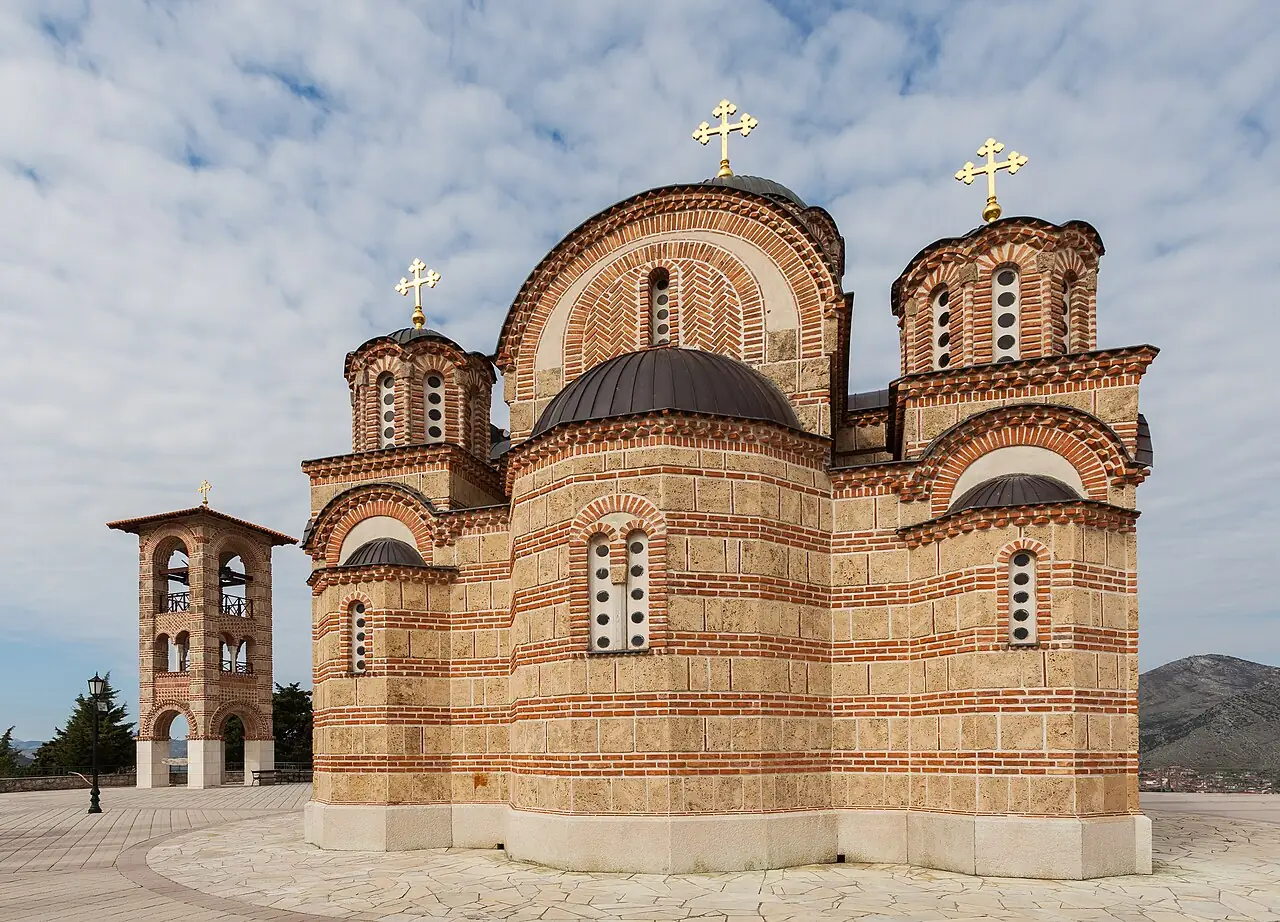
  • Hercegovačka Gračanica, a domed brick and stone church, against a bright sky

    Hercegovačka Gračanica

    A church on the hill above town, finished in 2000 and modelled on a medieval monastery. The poet Jovan Dučić, who was born in Trebinje, is buried inside. The view takes in the whole valley, the bridge and the hills beyond.

    Time needed
    An hour
    Getting up
    40 minutes on foot, or by car
    Entrance
    A working church. Cover shoulders and knees, and wait outside if a service is under way.
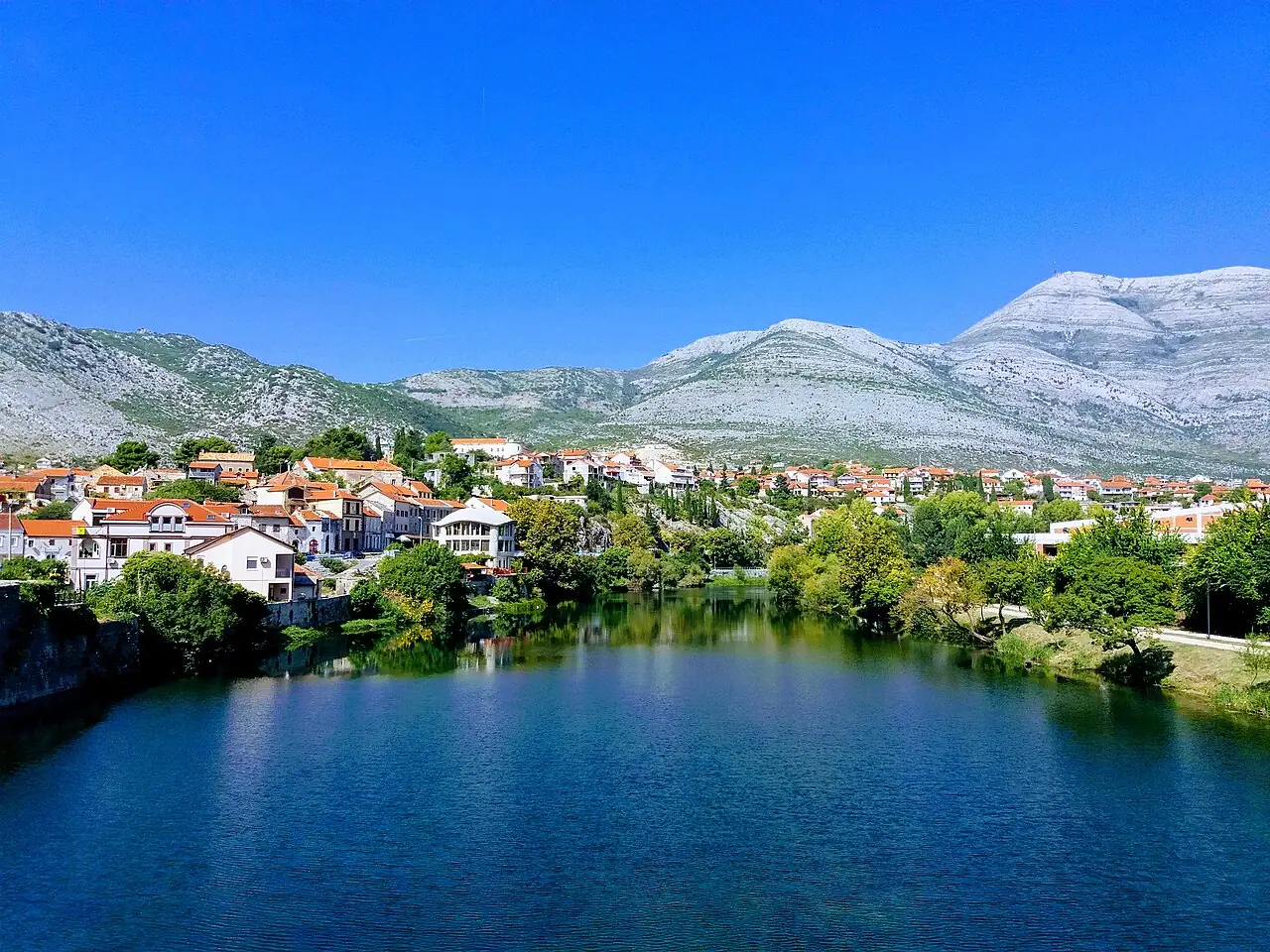
  • The Trebišnjica, deep blue between green banks, with the town and bare mountains behind

    Walk the river

    The Trebišnjica runs slow and startlingly clear through the middle of town. A path follows the bank from the old town walls out to the Arslanagić bridge, past gardens, old waterwheels and swimming spots.

    Time needed
    45 minutes each way
    Best time
    Early morning
    Entrance
    A public path along the bank.
  • The Museum of Herzegovina

    In a former barracks inside the old town. Archaeology, folk costume and the art collection the poet Jovan Dučić gathered on his travels as a diplomat and left to his home town.

    Entrance
    4 KM; groups of five or more, 3 KM per person.
    Open
    Monday–Saturday 08:00–20:00; Sunday 14:00–20:00.
    Time needed
    45 minutes
    Where
    In the old town
  • Tvrdoš monastery

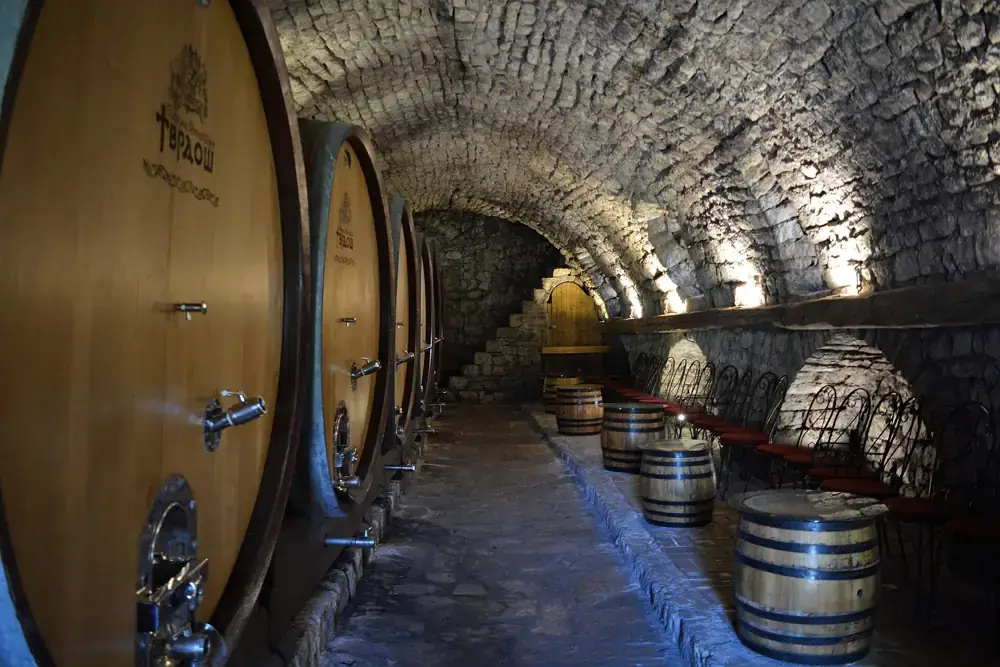
    Five kilometres west of the town, on the river. The church stands on foundations more than fifteen hundred years old, and the cellars beneath the monastery are still full of barrels.

    Time needed
    An hour
    From Trebinje
    5 km
    Dress
    Shoulders and knees covered
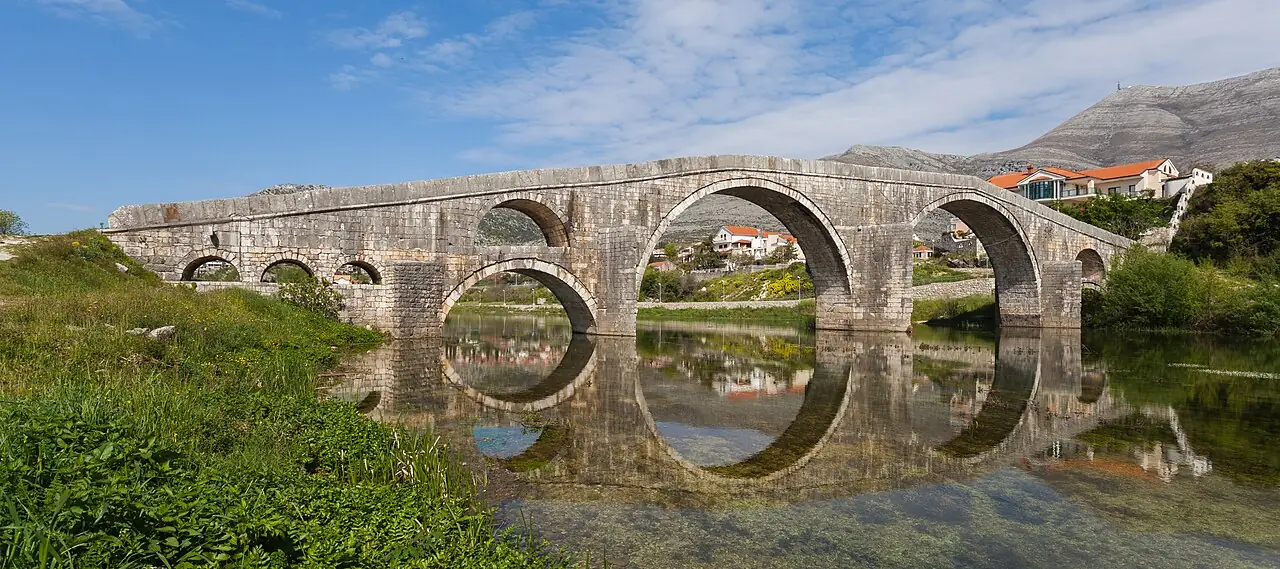
The stone arches of the Arslanagić bridge reflected in the still TrebišnjicaA stone archway in the old town wall, with the river beyond

The bridge that moved

The Arslanagić bridge was built in 1574, on the orders of the same grand vizier who paid for the great bridge at Višegrad. For four hundred years it stood a few kilometres upstream.

Then a dam was planned, and the valley was to be flooded. Between 1970 and 1972 the bridge was taken apart, every stone numbered, and put back together here, on the edge of town.

It looks as if it has always been where it is. Walk across it early, when the river is still. You may also see it signposted as the Perović bridge, a name the town gave it in 1993.

Built
1574
Moved
1970 to 1972
From the centre
20 minutes on foot

Good to know

On foot
The old town, the square and the bridge are all within 20 minutes of each other
Sights
The old town, the square, the bridge and the church grounds are free
Market
Every morning on Freedom Square; biggest on Saturday
Heat
Hot from June to September; the square is the coolest place in town
Money
Convertible marks; cash for the market
Border
Croatia and Montenegro are both under 30 km away. Carry your passport
Parking
Around the centre; the old town itself is for walking
Dress
Cover shoulders and knees at the church and the monasteries
Evening
The whole town walks the square at dusk
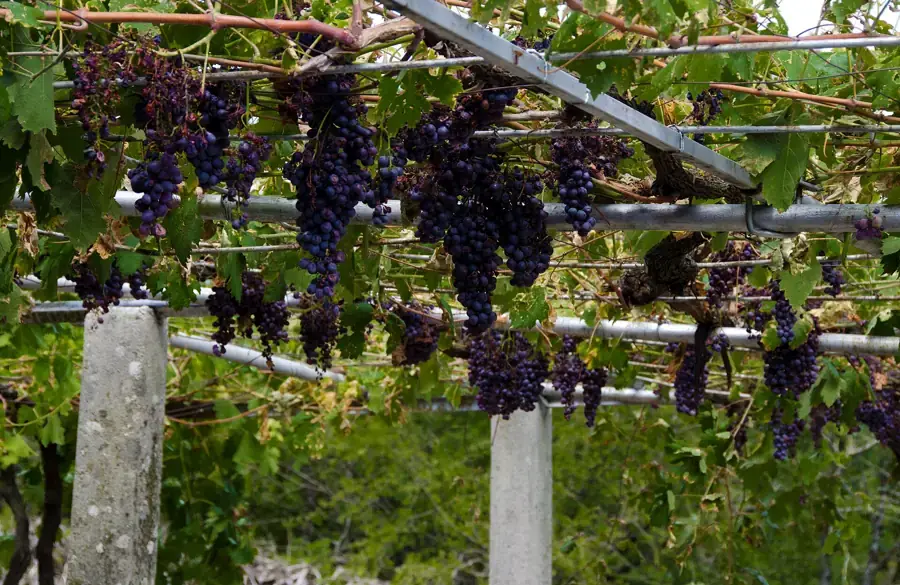
Oak barrels in a vaulted stone wine cellarDark grapes hanging from a pergola

Wine country

The hills around Trebinje are stony, dry and drenched in sun, which is exactly what vines like. This is the heart of Herzegovina’s wine region.

Two grapes matter here. Žilavka is the white: dry, full and a little nutty. Vranac is the red, dark and soft. Both are grown almost nowhere else in such quantity, and most of what is made is drunk within fifty kilometres.

Cellars in and around the town open for tastings, and the monks at Tvrdoš, five kilometres west, have been making wine since the Middle Ages.

White
Žilavka
Red
Vranac
Harvest
September

Where it is

123456

Outline from Natural Earth. Distances are by road and approximate.

Trebinje is in the southernmost corner of the country, close to both the Croatian and Montenegrin borders.

Getting to Trebinje

FromDistanceHowTime
DubrovnikAbout 30 kmCar or bus, with a border crossing45 minutes, plus the border
MostarAbout 115 kmCar or bus, through Stolac2 hours
Herceg Novi, MontenegroAbout 40 kmCar, with a border crossing1 hour
SarajevoAbout 210 kmCar or bus3½ to 4 hours

There is no railway. Distances and times are approximate.

One day in Trebinje

  1. The market

    Coffee under the plane trees while the stalls are full.

  2. The old town

    Through the gate, round the lanes, and into the museum.

  3. The bridge and the hill

    Out along the river to the bridge, then up to Gračanica for the view.

  4. Back to the square

    Wine, dinner and the evening walk.

Planning tips

Where to stay and eat

Where to stay

Small guesthouses inside the old town walls put you a minute from the square. There are hotels along the river and around the centre, and prices are well below those on the coast.

What to eat

Grilled meat and river fish, local cheese and ham, and the wines of the hills around: Žilavka and Vranac. Dinner is eaten outside, under the trees.

Near Trebinje

Trebinje makes a quiet base for the south.

Questions people ask

Is Trebinje worth visiting?

Yes. It is one of the most attractive small cities in Bosnia and Herzegovina, with a walled old town, a famous plane-tree square, a sixteenth-century bridge and good local wine, and it is far quieter and cheaper than nearby Dubrovnik.

How far is Trebinje from Dubrovnik?

About 30 km. The drive takes around 45 minutes, plus the wait at the border between Croatia and Bosnia and Herzegovina.

How long do you need in Trebinje?

One day covers the old town, the market square, the bridge and the church on the hill. Stay the night if you can.

What is Trebinje known for?

Sun, plane trees and wine. It has around 260 sunny days a year, a market square shaded by century-old plane trees, and the vineyards of southern Herzegovina around it.

How old is the Arslanagić bridge?

It was built in 1574. Between 1970 and 1972 it was dismantled and rebuilt stone by stone at its present site, because a dam was about to flood the original one.

When is the best time to visit Trebinje?

April to June, and September and October. July and August are very hot.

What is Hercegovačka Gračanica?

A church on a hill above Trebinje, completed in 2000 and modelled on the medieval Gračanica monastery. The poet Jovan Dučić is buried there.

Trebinje is an extra day beyond the seven-day route, east from Neum.

See the seven-day route

Photographs on this page

Photo credits

Trebinje

PhotographPhotographerSource and licence
The town and the river, main pictureNot named on the fileSupplied by Visit Bosnia and Herzegovina
Old town on the riverBrankaVVWikimedia Commons, CC BY-SA 4.0
Arslanagić bridge; Hercegovačka GračanicaDiego DelsoWikimedia Commons, CC BY-SA 3.0
Archway in the old townJocelyn Erskine-KellieWikimedia Commons, CC BY 2.0
Panorama of the townDiego DelsoWikimedia Commons, CC BY-SA 3.0
The TrebišnjicaMiljan SimonovićWikimedia Commons, CC BY-SA 4.0
Wine cellar; grapesLjubica Kreško Romanić; Branka MumaloWikimedia Commons, CC BY-SA 4.0
Nearby thumbnailsSee the home page creditsVarious

All credits for the site are on the photo credits page.

Menu