Visit BiH
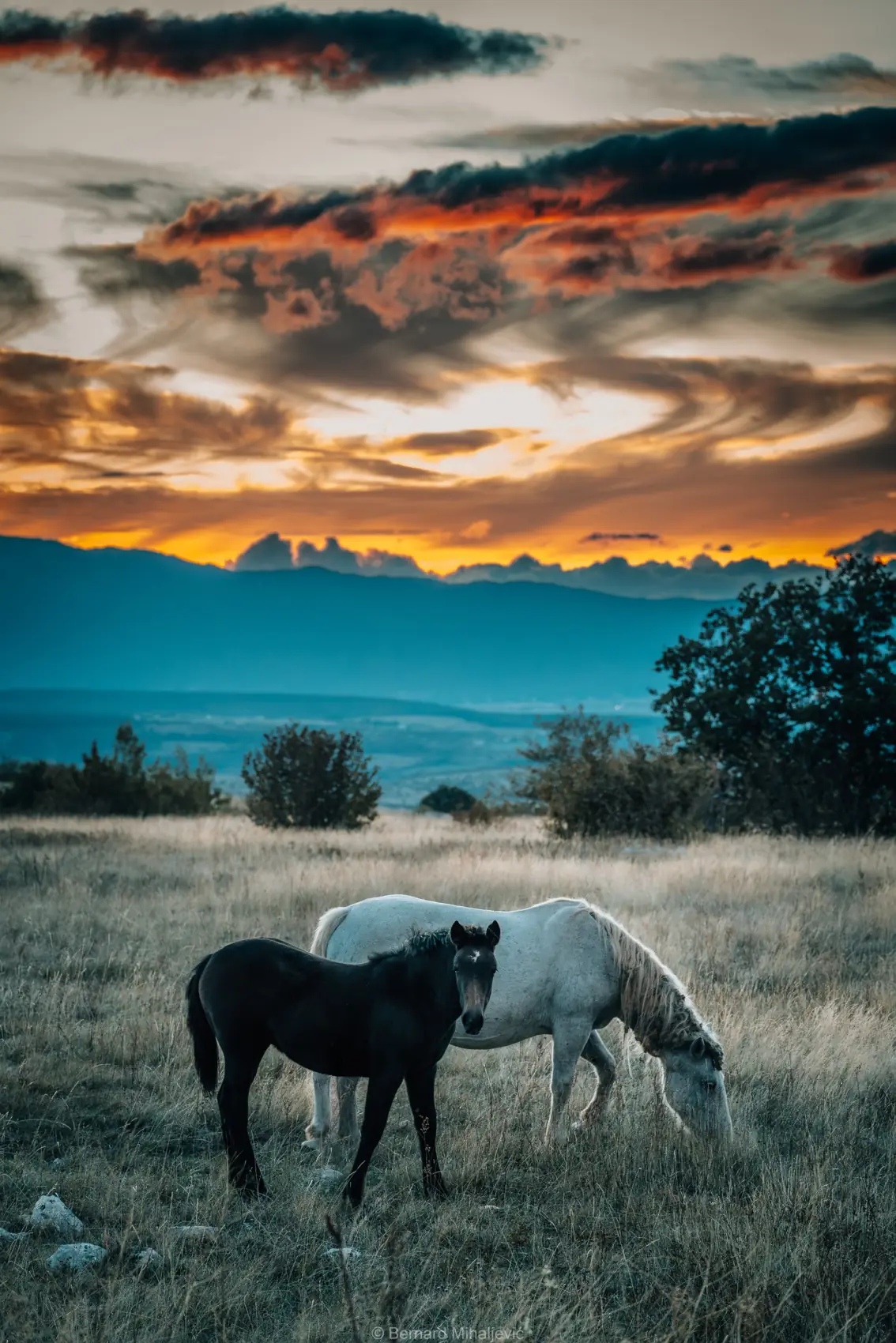
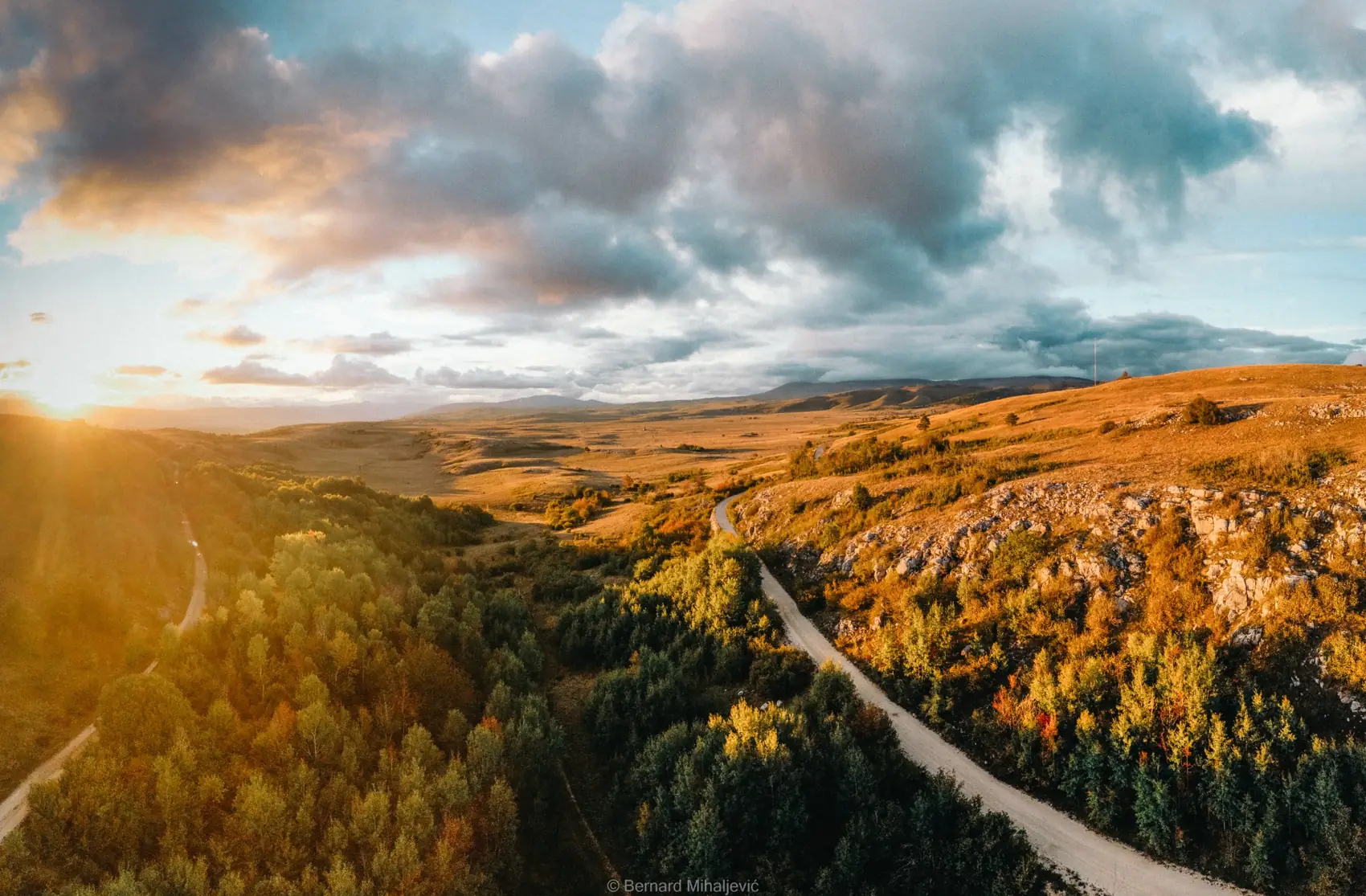
The high plateau above Livno at sunset, with a track winding through autumn woodland

Livno

  1. Home
  2. Places
  3. South-west Bosnia
  4. Livno

Wild horses, a famous cheese and the largest karst field in the world.

730mValley towns

Livno in brief. Livno is a town in the south-west of Bosnia and Herzegovina, at 730 metres, on the edge of Livanjsko polje, the largest karst field in the world. It is best known for the herds of wild horses that roam the plateau beneath Mount Cincar, descended from farm horses set free when tractors replaced them, and for Livno cheese. In the town itself the river Bistrica bursts from the foot of a cliff at the Duman spring. Allow a day, and take a guide to find the horses.

Livno and its surrounding plateau

South-west of the central mountains the country opens out. The valleys become plains, the forests thin to grass and stone, and the sky gets very large. Livno sits at the edge of the biggest of these plains, with a grey wall of mountain at its back.

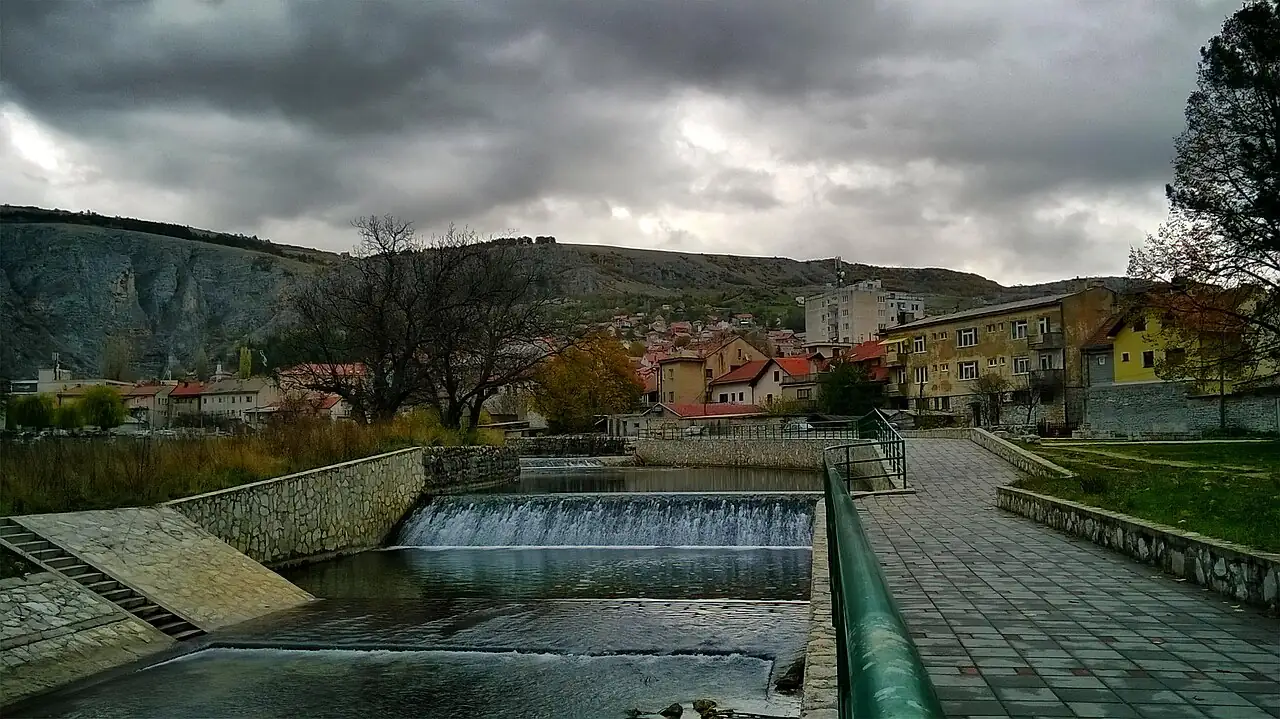
It is an old town, a frontier post for centuries, with a handful of stone mosques, a clock tower and a Franciscan monastery. A river is born inside it: the Bistrica comes out of a cave at the foot of a cliff, fully formed, and runs down through the streets over a staircase of weirs.

But people come for what is outside the town. On the plateau above, several hundred horses live wild. Seeing them move across that country, with snow on the mountain behind, is one of the unexpected sights of Europe.
Region
South-west Bosnia
Height
730 m
Known for
Wild horses, cheese
The field
The largest karst field in the world
The mountain
Cincar, 2,006 m
Time needed
One day
From Mostar
About 115 km

The horses nobody owns

  1. Every farm had horsesUntil the 1970s the villages round Livno ploughed, hauled and travelled by horse. A family without one could not work its land.
  2. Then the tractor cameMachines took over the fields, and the horses were suddenly worth nothing. Rather than sell them for slaughter, some owners led them up to the plateau and let them go.
  3. They did not dieThey found water, grew thick coats and lived through winters at a thousand metres. They bred. Arab, Bosnian mountain horse and heavy draught blood ran together.
  4. Nobody knows how manyThey live in bands of about fifty, each with its own stallion. Estimates put the whole herd at around eight hundred, and it is still growing.
  5. Go and see themA guide with a four-wheel drive will find them for you. Keep your distance, do not feed them, and let them come to you if they choose.

What to do in Livno

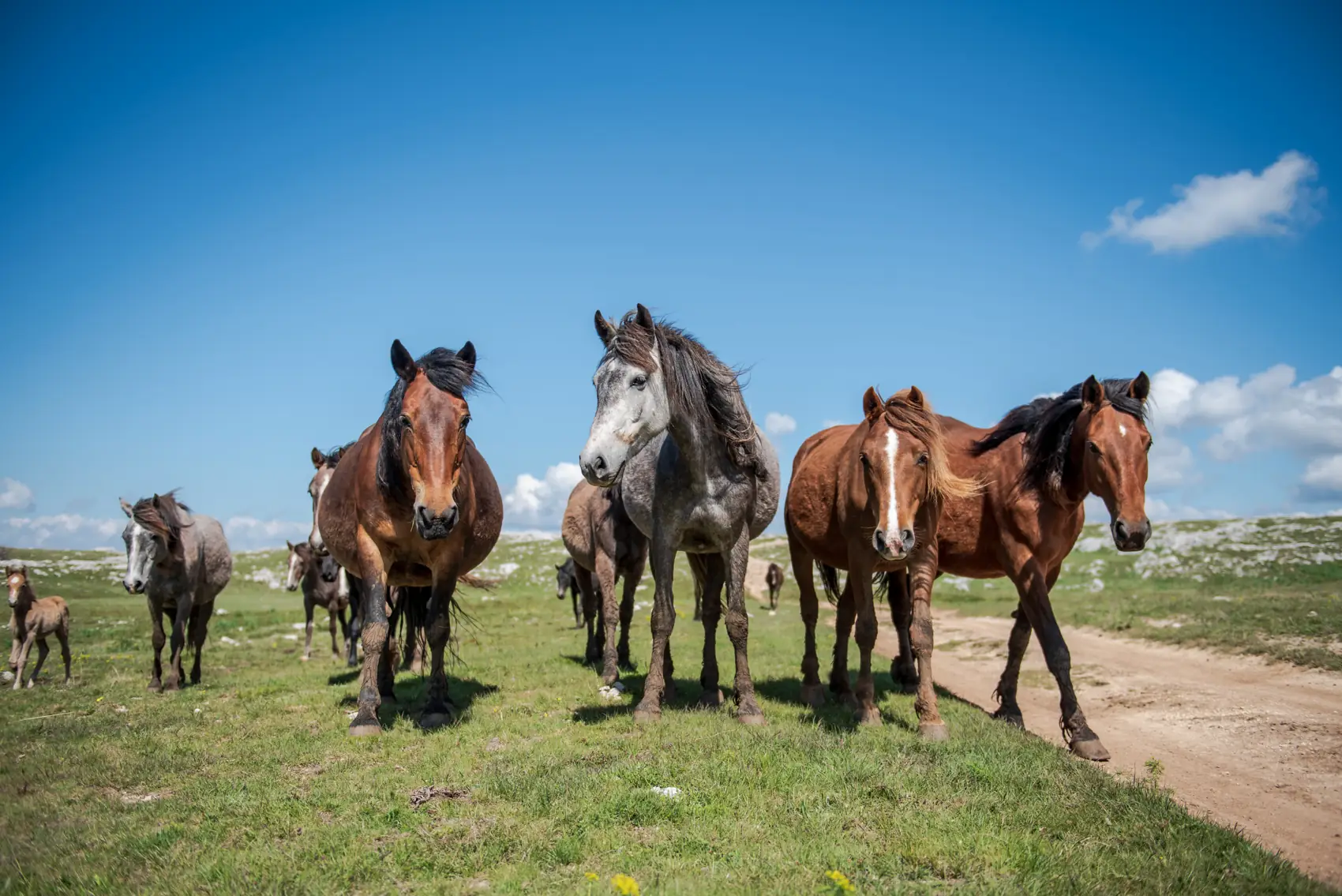
  • Five wild horses walking down a track on the plateau above Livno

    See the wild horses

    The herds range over the Kruzi plateau, on the lower slopes of Cincar, a short but rough drive above the town. Local guides know where they are on any given day and will take you up in a four-wheel drive.

    Time needed
    Three to four hours
    Best time
    Early morning or late afternoon
    Getting there
    The tracks are rough and unmarked, so go with a local guide in an off-road vehicle. The herds move, and some days nobody finds them.
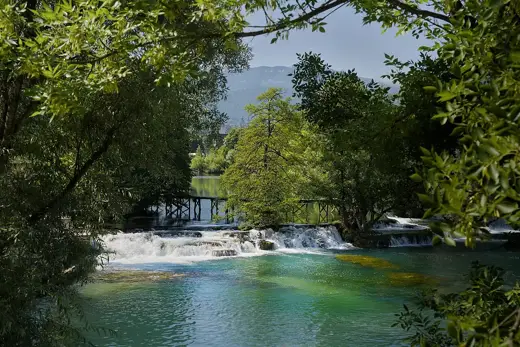
  • The Bistrica running over weirs through Livno

    The Duman spring

    At the top of the old town the river Bistrica pours out of a cave at the foot of a sheer cliff. A path and a small bridge lead right up to it. On a hot day the air there is ten degrees cooler.

    Time needed
    30 minutes
    From the centre
    10 minutes on foot
    Entrance
    A public spring at the top of the old town, open at any hour.
  • The old town

    Above the spring are the remains of the old fortress, and scattered through the streets below are small domed mosques from the sixteenth century, one with a clock tower beside it, and a single-arched stone bridge.

    Time needed
    An hour
    Underfoot
    Steep lanes
    Entrance
    Public lanes, walked at any hour.
  • Gorica monastery

    The Franciscan monastery on a rise at the edge of town has a museum and a gallery, with archaeology from the field and paintings by Gabrijel Jurkić, the best-known artist the region has produced.

    Museum and gallery
    8 KM; pupils, students and pensioners 3 KM.
    Open
    Monday–Friday 09:00–15:00; Saturdays 10:00–15:00 from 1 June to 1 September; closed on holidays.
    Church and monastery
    Open outside services. Ask at the museum desk
    Time needed
    An hour
    Where
    On the edge of town
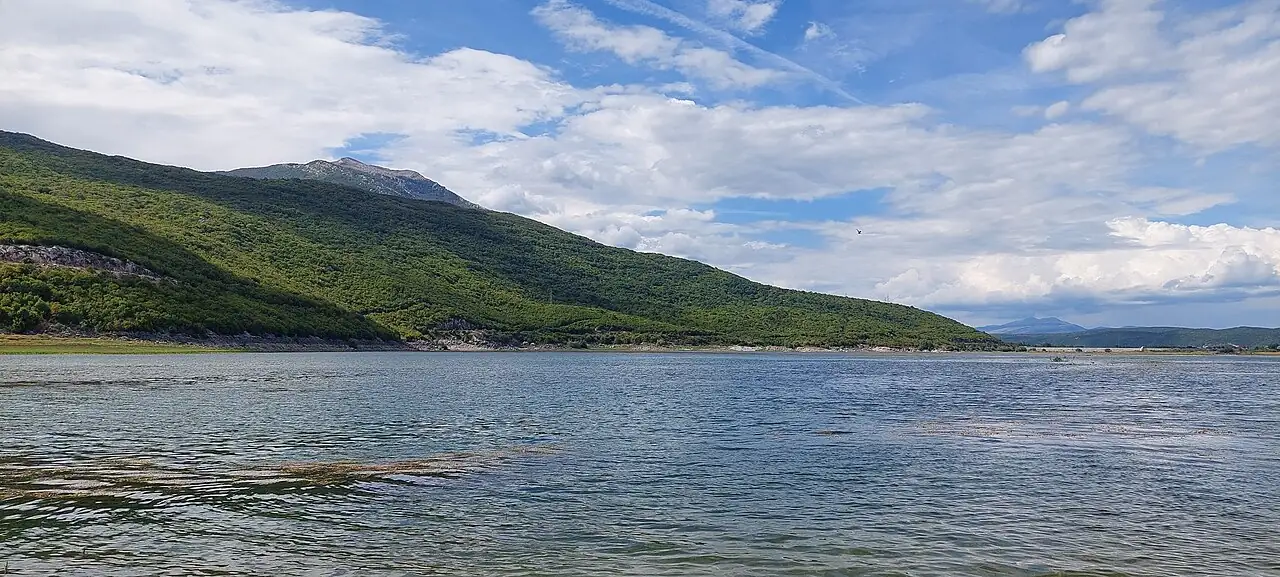
  • Buško lake under a mountain ridge

    Buško lake

    A very large reservoir at the southern end of the field, made in the 1970s. Wide, shallow and quiet, with places to swim and fish.

    From Livno
    About 20 km
    Best in
    Summer
    Entrance
    An open lake shore. You pay only for what you eat or hire.
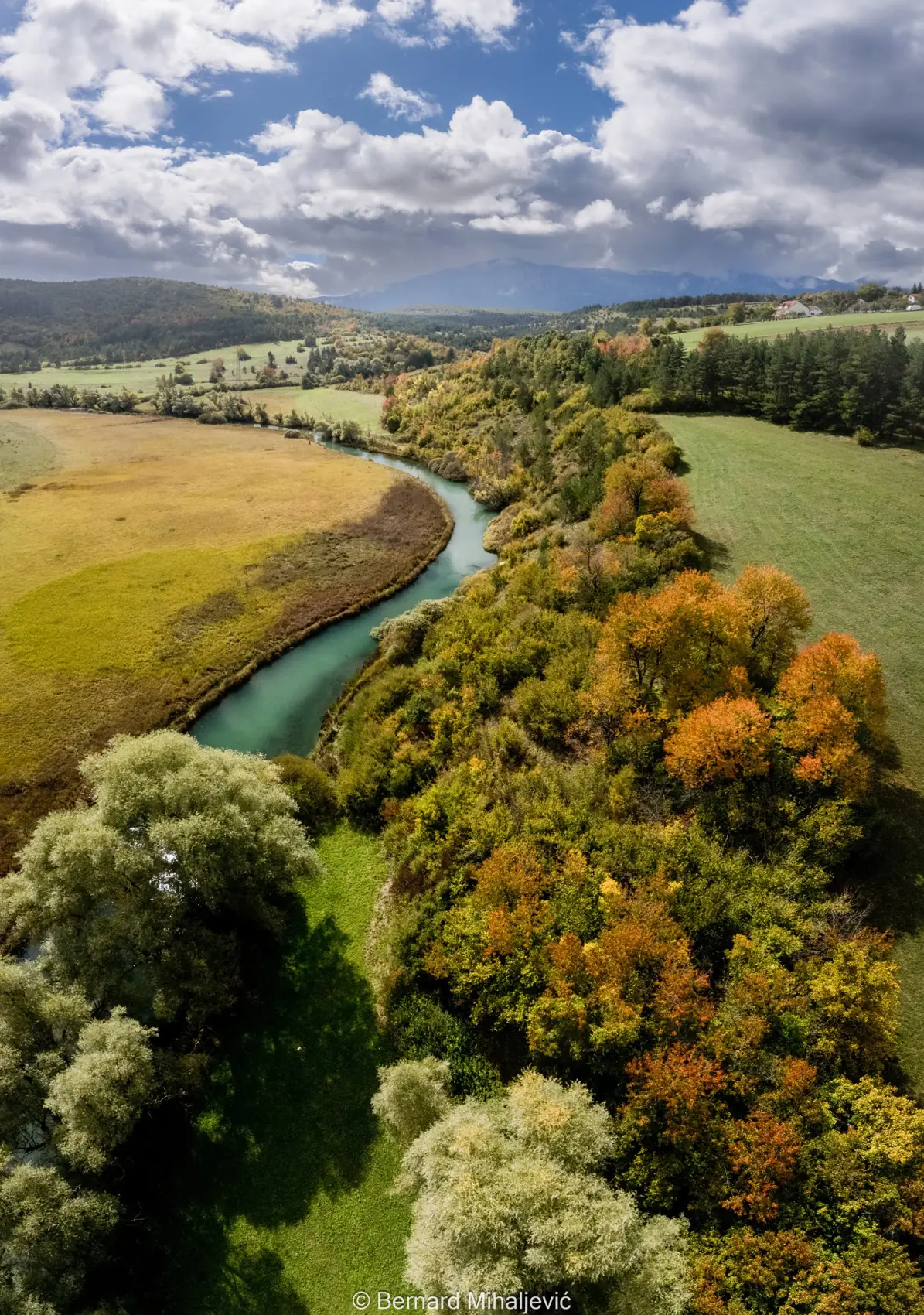
The Sturba stream curving through the Livno field in autumn colour, seen from aboveBuško lake, a broad sheet of water under a mountain ridge

The field that floods

Livno stands on the edge of the largest karst field in the world: a dead-flat plain sixty kilometres long, walled in by mountains, with no river leading out of it.

Every spring, rain and meltwater pour in faster than the limestone can swallow them, and for a few weeks much of the field becomes a shallow lake. Then the water drains away underground, and the grass comes up.

It is a protected wetland of international importance, a resting place for migrating birds, and very beautiful in a severe, wide-open way.

Protected area
About 45,900 hectares
Average height
720 m
Floods
Each spring

Good to know

The horses
Wild, and to be treated as such. Do not feed, touch or chase them
Getting to them
With a local guide in an off-road vehicle. The tracks are rough and unmarked, and the herds are not always found
Weather
The plateau is open and windy. Bring a warm layer even in summer
Best months
May to October. Spring, when the field is flooded, is the most striking
Winter
Snow closes the plateau tracks. Ask a guide before you plan a winter trip
In town
Everything is within a 15-minute walk
Cheese
Sold at the market and at farms; it keeps for days without a fridge
Money
Convertible marks. Carry cash for the guide, the market and the farms
Border
Croatia is about 30 km away. Carry your travel document

Keep your distance. Stallions defend their bands and mares defend their foals. Stay well back, never get between a mare and a foal, and keep dogs in the car.

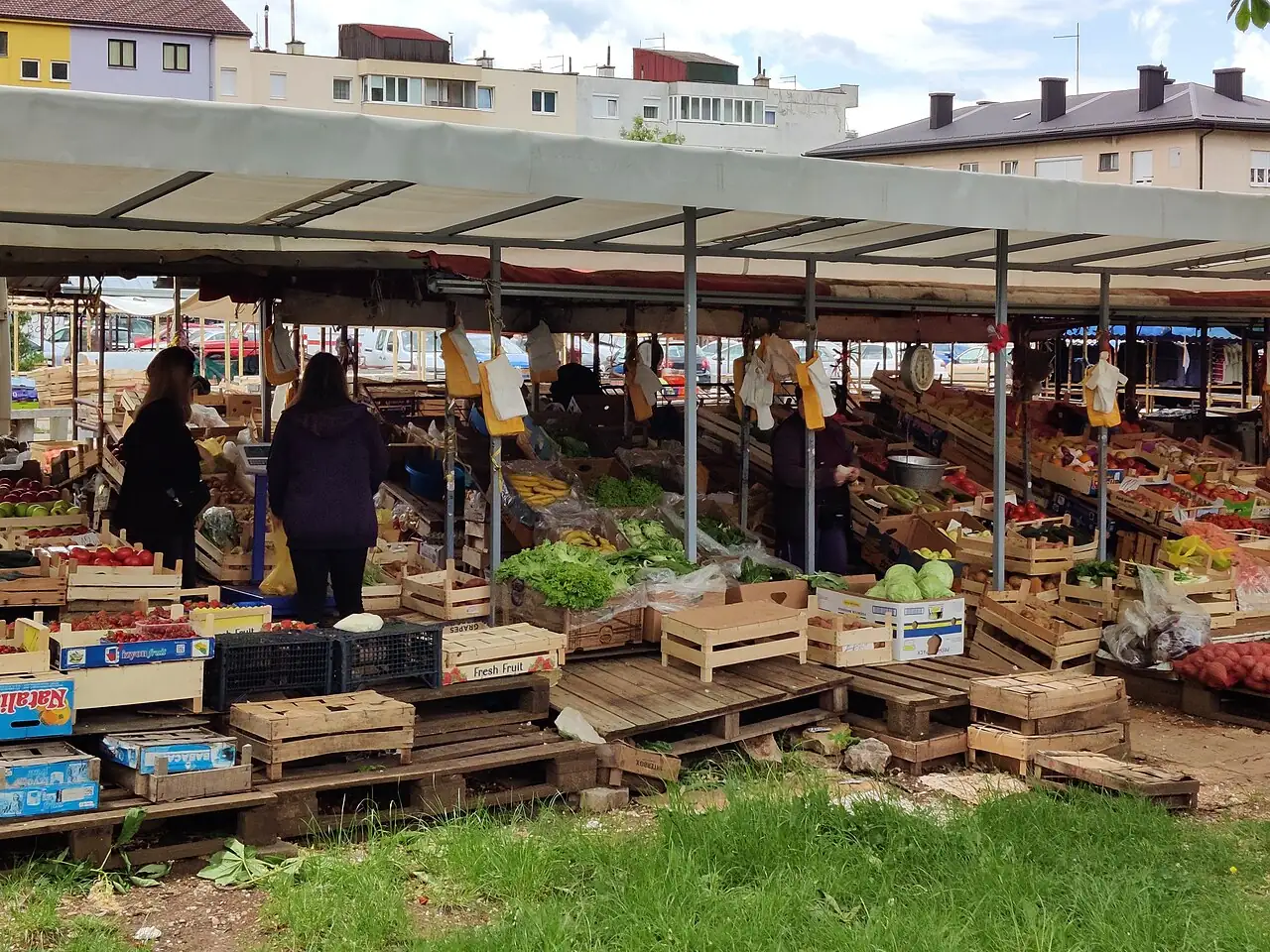
Stalls piled with vegetables at the open-air market in LivnoA dark foal and a grey mare grazing on the plateau above Livno at dusk

The cheese

Ask anyone in the country what Livno means and they will say cheese. Livanjski sir is a hard, golden, full-flavoured cheese, a little like a Gruyère, made in big wheels and aged for months.

The traditional recipe is mostly sheep’s milk with some cow’s, from animals that graze the field and the mountain pastures above it. A second cheese, named after Cincar, is made nearby.

Buy a wedge at the market, or from a farm on the road out of town. It travels well.

Style
Hard, aged, golden
Milk
Sheep and cow
Where to buy
The market; farms

Where it is

12345

Outline from Natural Earth. Distances are by road and approximate.

Livno is in the south-west, between the central mountains and the Croatian border, on the road from Split to central Bosnia.

Getting to Livno

FromDistanceHowTime
Split, CroatiaAbout 90 kmCar or bus, with a border crossing1½ hours
MostarAbout 115 kmCar or bus2 hours
SarajevoAbout 210 kmCar or bus3½ hours
JajceAbout 110 kmCar, over Kupres2 hours

There is no railway. Livno is closer to Split than to Sarajevo, and many visitors come up from the coast for the day. Distances and times are approximate.

One day in Livno

  1. The plateau

    Up with a guide while the horses are grazing and the light is low.

  2. The spring

    Back in town, walk up to Duman and the old quarter.

  3. Cheese and lamb

    At the market, or in a restaurant by the river.

  4. The field or the lake

    Drive out across the polje, or down to Buško lake for a swim.

Planning tips

Where to stay and eat

Where to stay

There are a few small hotels and guesthouses in the town, and rooms in the villages along the edge of the field.

What to eat

Livno cheese, of course; lamb roasted on the spit; trout from the Bistrica; and potatoes and cabbage from the field.

Near Livno

Livno is on the quickest road between the Dalmatian coast and central Bosnia.

Questions people ask

Are there wild horses in Bosnia and Herzegovina?

Yes. Several hundred horses live wild on the Kruzi plateau beneath Mount Cincar, near Livno. They are descended from farm horses that were set free from the 1970s onwards, when tractors replaced them.

How many wild horses are there near Livno?

Nobody knows exactly. Recent estimates put the population at around eight hundred, living in bands of about fifty.

How do you see the wild horses of Livno?

Go with a local guide in a four-wheel drive. The horses move across a large area of rough plateau, and guides know where to find them. Early morning and late afternoon are best.

What is Livno known for?

Wild horses, Livno cheese, and Livanjsko polje, the largest karst field in the world, which floods every spring.

What is Livno cheese?

A hard, aged, golden cheese made in the Livno area, traditionally from a mixture of sheep’s and cow’s milk. It is the best-known cheese in Bosnia and Herzegovina.

How do you get to Livno?

By road. It is about 90 km from Split in Croatia, 115 km from Mostar and 210 km from Sarajevo.

What is the Duman spring?

The source of the river Bistrica, which emerges from a cave at the foot of a cliff in the old part of Livno.

Livno is an extra day beyond the seven-day route, west from Mostar or south from Jajce.

See the seven-day route

Photographs on this page

Photo credits

Livno

PhotographPhotographerSource and licence
Horses on the trackAntea MilolažaSupplied by Visit Bosnia and Herzegovina
The plateau at sunset; the Sturba stream; mare and foal at duskBernard MihaljevićSupplied by Visit Bosnia and Herzegovina
The herd on the plateauEmina BukvićSupplied by Visit Bosnia and Herzegovina
Bistrica in the townBrian EagerWikimedia Commons, CC BY 2.0
The marketSimon LegnerWikimedia Commons, CC BY-SA 4.0
Buško lakeLexeratiWikimedia Commons, CC BY-SA 4.0
CincarJulian NyčaWikimedia Commons, CC BY-SA 3.0
Nearby thumbnailsSee the home page creditsVarious

All credits for the site are on the photo credits page.

Menu