Visit BiH
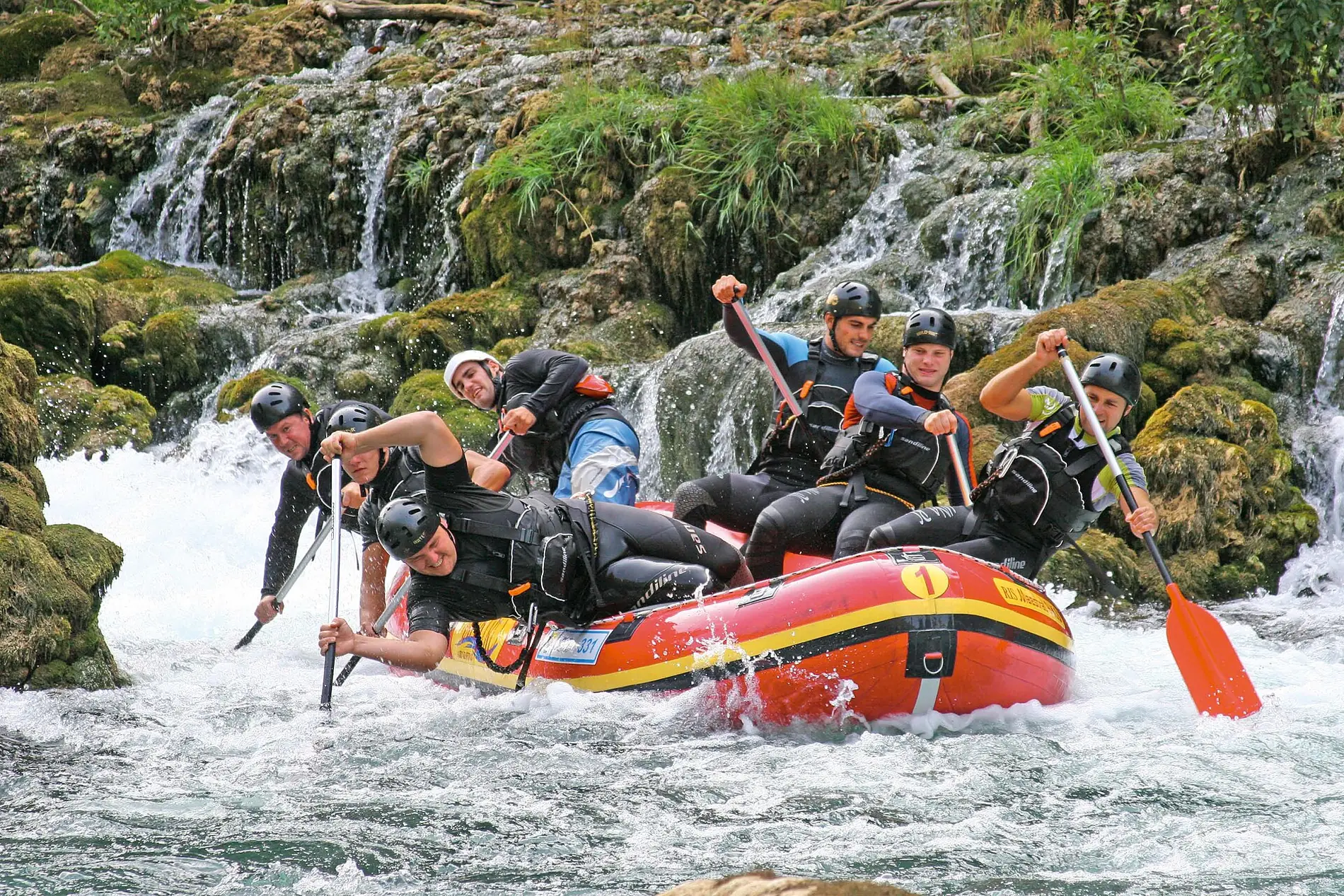
A raft full of paddlers dropping through white water on the Una

Rafting

  1. Home
  2. Things to do
  3. Rafting

Four rivers, from a family float to serious white water.

April to OctoberThe season

Rafting in brief. Bosnia and Herzegovina has four main rafting rivers: the Neretva, the Una, the Vrbas and the Tara. The season runs from April to October, with the biggest water in spring and the warmest in summer. Trips take half a day to a full day. Book a guided trip and confirm the guide arrangements, qualifications and equipment before paying.

A small country with a lot of fast water

The rivers cut through limestone mountains, creating deep canyons and a range of white-water routes. Choose a trip for the conditions and your group, rather than the scenery alone.

The four rivers each have a character. One is a gentle classic, one is wild, one runs through a city and can be rafted at night, and one flows through the deepest canyon on the continent.

You do not need to have done it before. Tell the operator who is in your group, and they will choose the stretch and the day to suit.
Rivers
Neretva, Una, Vrbas, Tara
Season
April to October
Biggest water
April to June
Warmest water
July to September
Grades
II to V, depending on river and level
Time needed
Half a day to two days
Experience
None needed on the easier runs
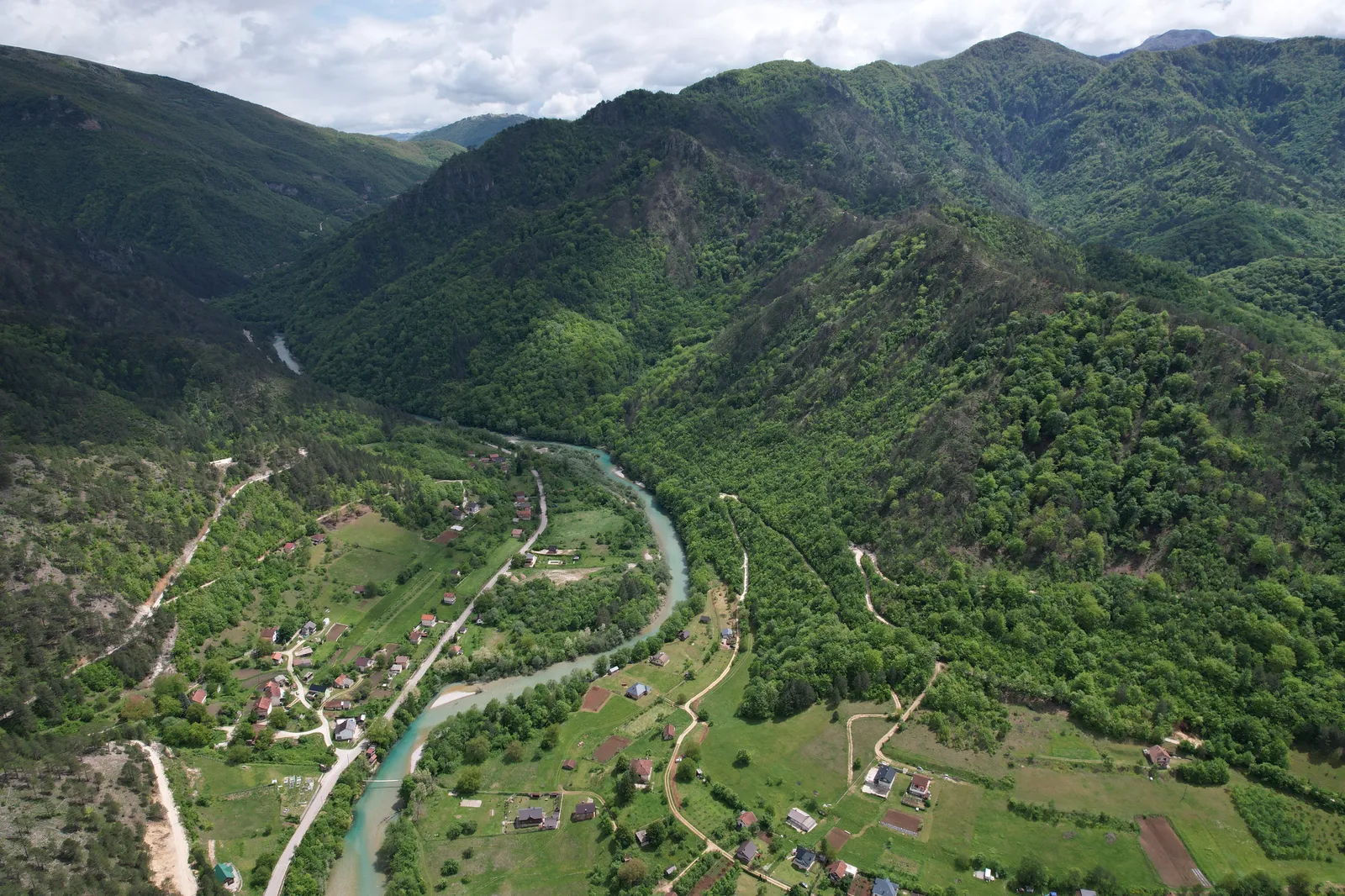
The Neretva winding past the village of Glavatičevo, seen from above

A day on the Neretva

  1. Put-in at GlavatičevoHelmets, vests, paddles and a briefing on the bank. Then you push off into quiet green water.
  2. First rapidsA gentle start: enough white water to learn to paddle together.
  3. Swim stopOn the calm pools the guides let you jump in. The water is cold and clear to the bottom.
  4. The canyonThe walls close in and rise for hundreds of metres. This is the stretch people come for.
  5. The big rapidsThe strongest water of the day, graded III to IV depending on the level.
  6. Lunch on the bankMost trips stop at a gravel beach or a riverside hut for something from the grill.
  7. Take-out near KonjicAbout 23 km and four to five hours after you started.

The four rivers

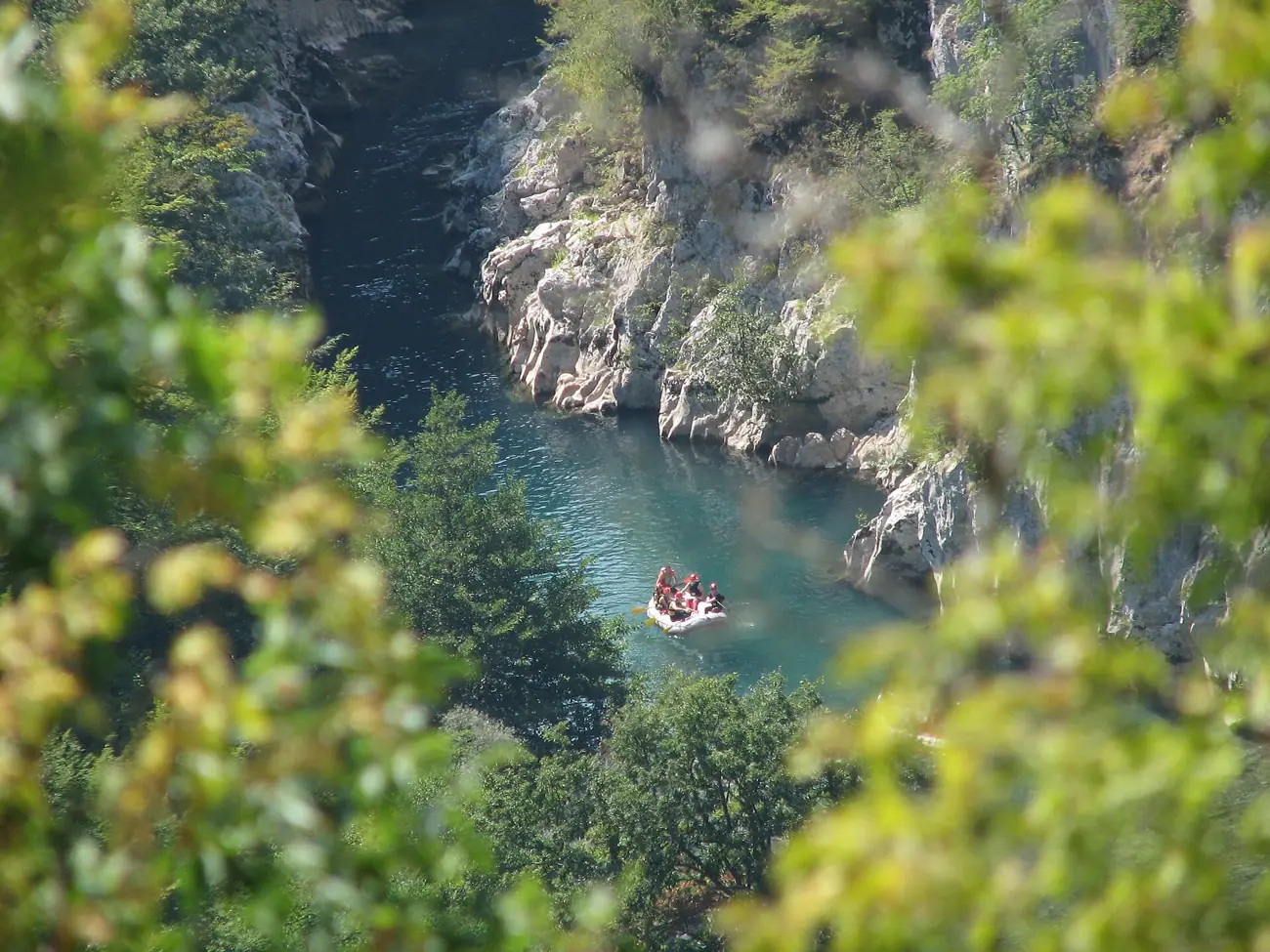
  • A raft in the Neretva canyon, seen from above

    The Neretva

    The classic. A long run from Glavatičevo to Konjic through a deep, green canyon, with moderate rapids and calm pools for swimming. An easy day trip from Sarajevo or Mostar.

    Base
    Konjic
    Length
    About 23 km
    Grade
    II to IV
    Best for
    First-timers, scenery
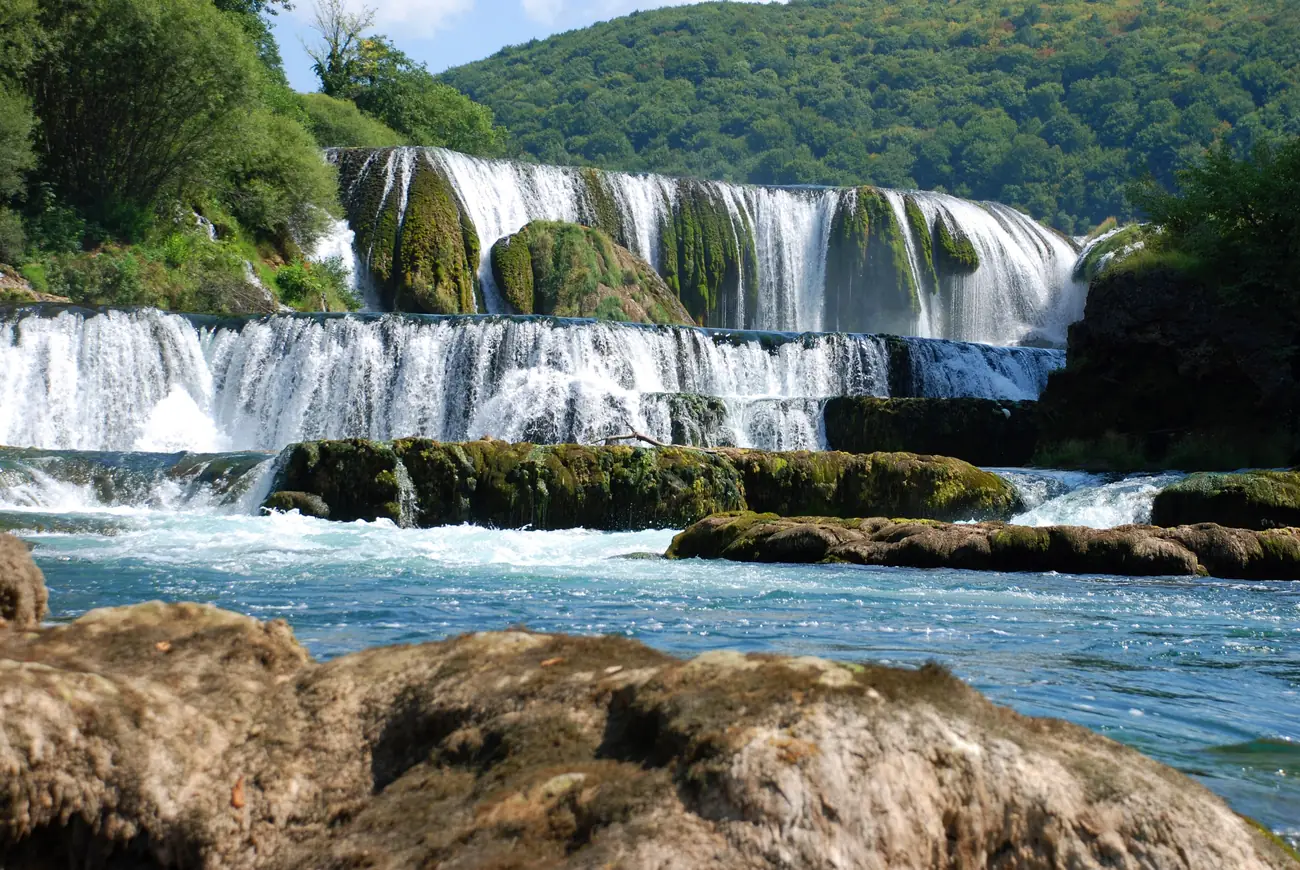
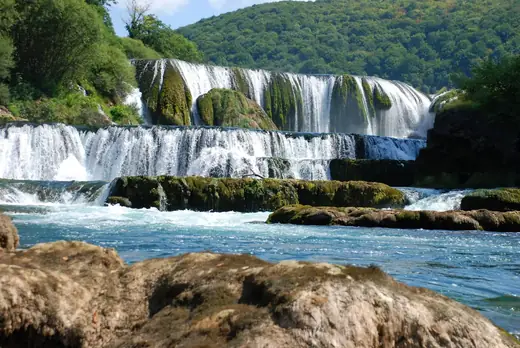
  • Štrbački buk, the largest waterfall on the Una

    The Una

    The wild one. The upper run starts below the Štrbački buk waterfall and takes several big drops in a national park. A lower section near Bihać is gentler and suits families.

    Base
    Bihać
    Length
    About 15 km
    Grade
    III to V upper; II to III lower
    Best for
    Thrills, or families on the lower run
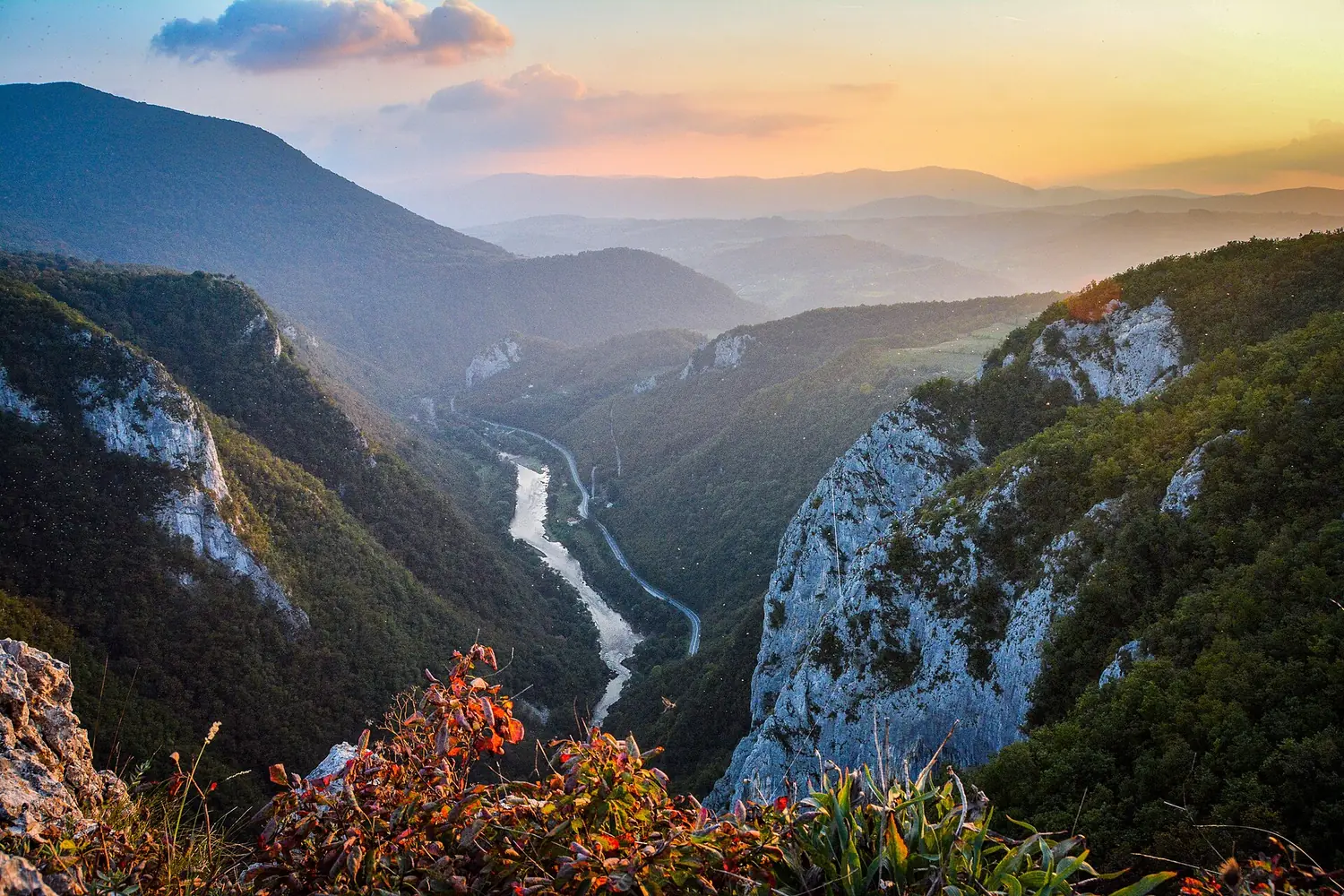
  • The Vrbas canyon at sunset, seen from the rim

    The Vrbas

    The city river. The canyon upstream of Banja Luka hosted the 2009 World Rafting Championships and has floodlit rapids, so you can raft in the evening or after dark.

    Base
    Banja Luka
    Length
    Varies by section
    Grade
    III to IV
    Best for
    Evening and night rafting
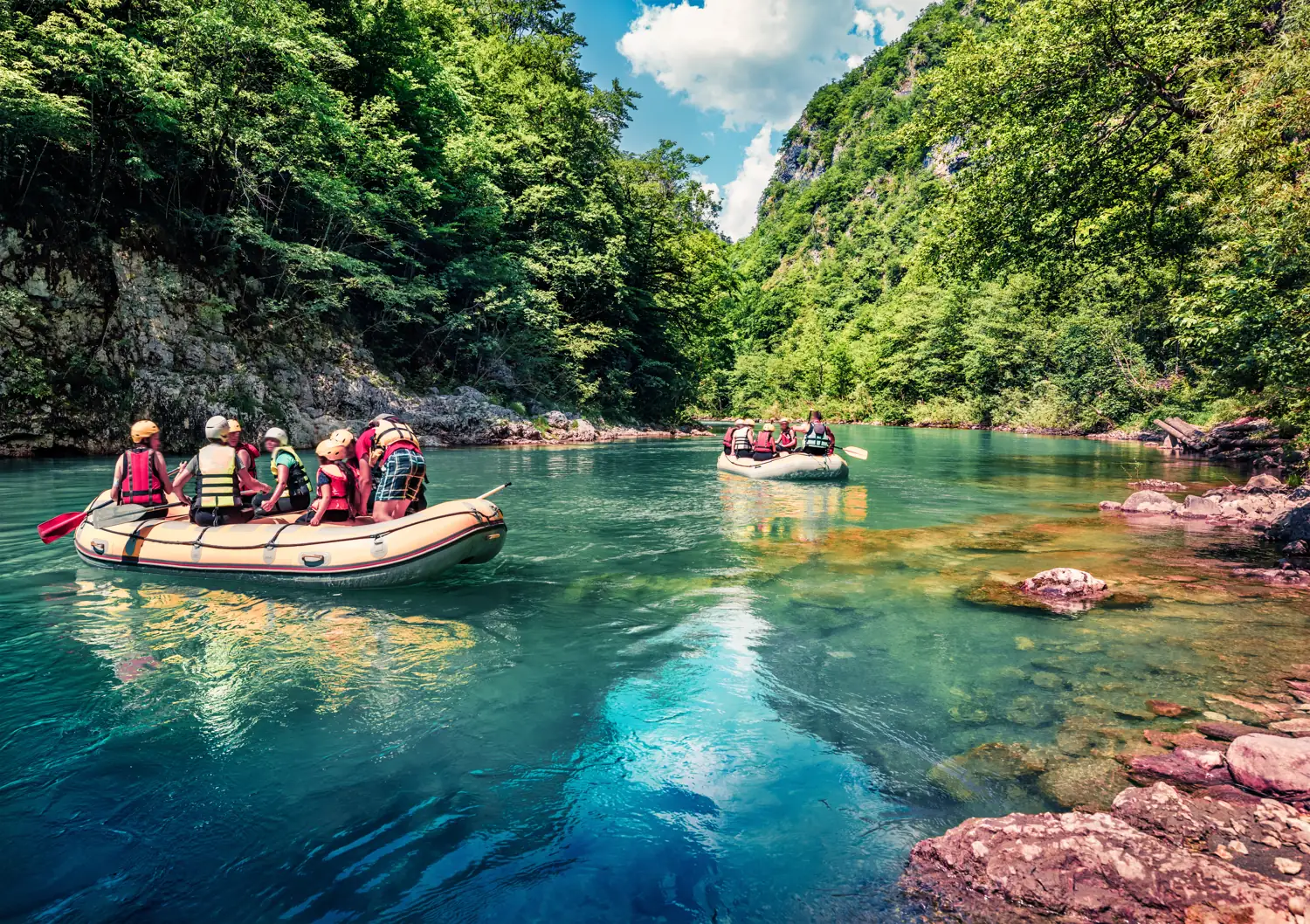
  • Rafts on the Tara river, seen from above

    The Tara

    The big canyon. The Tara runs along the border with Montenegro through the deepest canyon in Europe, up to 1,300 metres. Most people stay a night in a riverside camp near Foča.

    Base
    Foča
    Length
    About 15 km
    Grade
    III to IV; higher in May
    Best for
    Canyon scenery, two-day trips

Where they are

SarajevoMostar1234

Outline from Natural Earth. Positions are approximate.

One river in each corner of the country. Choose a river from your overnight base, then check the journey to the operator’s meeting point.

When to go

The same river is a different trip in May and in August. Choose by the water you want.

The season runs from April to October. April to June has the biggest water. July to September is the warmest and gentlest.

April to June

Snowmelt. High, fast and cold: the rapids are at their strongest and wetsuits are essential. For people who want the thrill.

July to September

Lower, warmer and clearer. More swimming, more sun, smaller rapids. The best time for families and first trips.

October

The last weeks, with autumn colour in the canyons and the rivers starting to rise again. Fewer departures, so book ahead.

What a trip involves

  1. Book and ask

    Tell the operator your ages and experience. Ask which section and what grade to expect on the day.

  2. Kit and briefing

    You meet at the base, change into a wetsuit, vest and helmet, and drive to the put-in.

  3. On the water

    Rapids, calm stretches, swim stops. A guide steers from the back and calls the strokes.

  4. Dry off and eat

    Back at the base there are showers, your dry clothes and, usually, lunch.

Good to know

Provided
Confirm equipment included with the operator for the particular river section and conditions, including correctly fitted helmets and buoyancy aids. Ask about guide qualifications and pre-launch safety briefing.
Bring
Swimwear, shoes that can get wet, towel, dry clothes
Leave behind
Jewellery, loose glasses, anything that cannot get wet
Experience
None needed on grade II to III sections
Swimming
You should be comfortable in water
Minimum age
Set by each operator; ask when you book
Price
Ask for a quote for your date and group size, and check what it includes.
Group size
Usually six to eight in a raft
Booking
A day or two ahead; a week in July and August

Stay safe. Before you book, tell the operator your swimming ability, previous experience and the ages of everyone in your group. Ask which river section you will use, what conditions are expected, what equipment is provided and whether the trip suits your group. Choose a qualified guide with current experience on that section. Wear the properly fitted buoyancy aid and helmet provided, and follow the guide’s equipment and clothing instructions.

The safety briefing should cover paddling commands, what to do if someone falls out, rescue signals and how to avoid becoming trapped. Keep your feet up if you are swept into fast-moving water; do not try to stand in the current. The right response depends on the river and the hazards ahead, so follow the guide’s briefing and instructions rather than a general rule to wait for the raft. Leave loose belongings behind; ask the guide how any necessary items should be secured.

What guides tell first-timers

Six things you will hear on the bank before you push off.

Rafting operators

How to choose

Use a licensed operator with trained guides, one in every raft. Good ones ask about your group before they take a booking, include all the equipment in the price, and will move you to another day if the river is too high.

By river

While you are there

Each river has a place worth an extra day.

Questions people ask

Where is the best rafting in Bosnia and Herzegovina?

There are four main rivers. The Neretva near Konjic is the classic first trip. The Tara near Foča runs through the deepest canyon in Europe. The Una near Bihać has the biggest drops, and the Vrbas near Banja Luka is known for evening and night rafting.

When is the rafting season?

From April to October. April to June has the highest, fastest and coldest water. July to September is warmer and gentler, and better for families and first-timers.

Is rafting safe for beginners?

Some guided trips are suitable for first-time rafters, but suitability depends on the section, water level and the people taking part. Give the operator an honest account of your experience and swimming ability before booking. A river described as easy is not easy in every condition.

Do I need to be able to swim?

Tell the operator if you cannot swim or are not confident in moving water. Ask about the swimming requirements for the exact trip before booking. Wearing a buoyancy aid does not remove the risks of cold water, strong currents or falling out of the raft.

Can children go rafting?

Ask the operator about its minimum age, equipment sizes and suitability requirements for the exact section and expected conditions. These can change with water levels. A trip advertised for families is not automatically suitable for every child.

What should I wear and bring?

Swimwear under the wetsuit you are given, shoes that can get wet and will stay on, a towel and dry clothes for afterwards. Leave phones and jewellery behind, or use a strap and a waterproof case.

How long does a rafting trip take?

Most trips are half a day to a full day, with three to five hours on the water. On the Tara, two-day trips with a night in a riverside camp are common.

Which river is best for a first time?

The Neretva. It has a long, scenic run with moderate rapids and calm stretches for swimming, and it is an easy day trip from Sarajevo or Mostar.

The Neretva run fits into all three ready-made routes, on the day between Sarajevo and Mostar.

See the routes

Photographs on this page

Photo credits

Rafting

PhotographPhotographerSource and licence
Rafting on the UnaNacionalni park UnaWikimedia Commons, CC BY-SA 4.0
Raft in the Neretva canyonNH53Wikimedia Commons, CC BY 2.0
The Neretva at GlavatičevoNedim SelimovićSupplied by Visit Bosnia and Herzegovina
Vrbas canyon at sunsetVladimir Tadić (Svjetlopis)Wikimedia Commons, CC BY-SA 4.0
Rafting on the TaraVisit Bosnia and HerzegovinaOwned by the publisher
Štrbački bukNacionalni park UnaWikimedia Commons, CC BY-SA 4.0
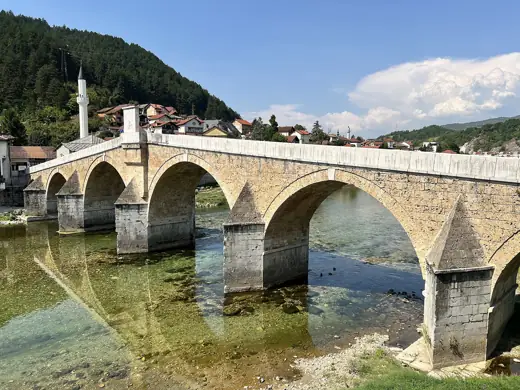
Konjic old bridgeBdxWikimedia Commons, CC0
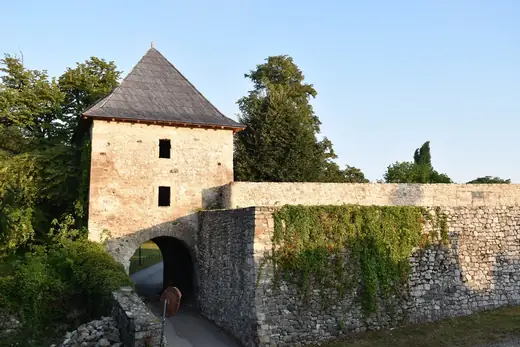
Kastel, Banja LukaVasyatka1Wikimedia Commons, CC BY-SA 4.0
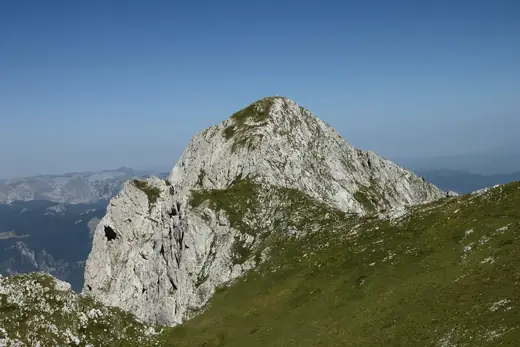
MaglićAktronWikimedia Commons, CC BY 3.0

All credits for the site are on the photo credits page.

Menu