Visit BiH
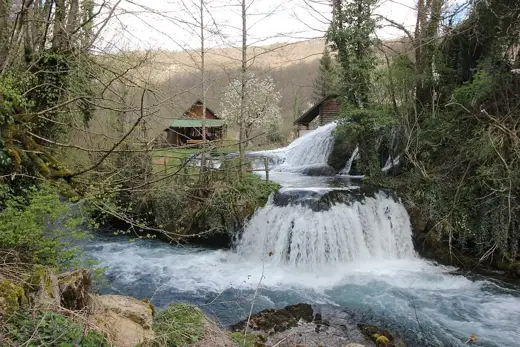
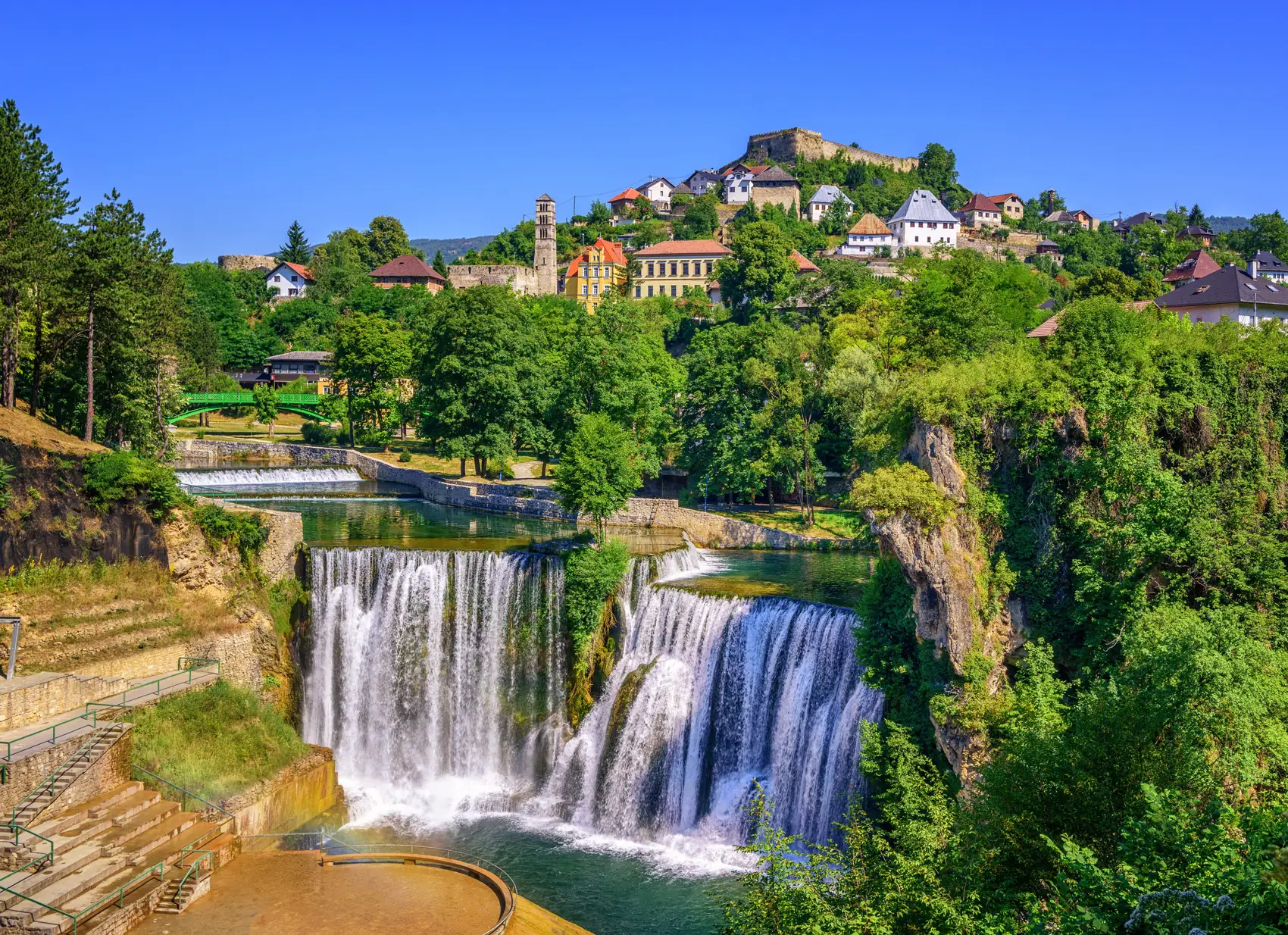
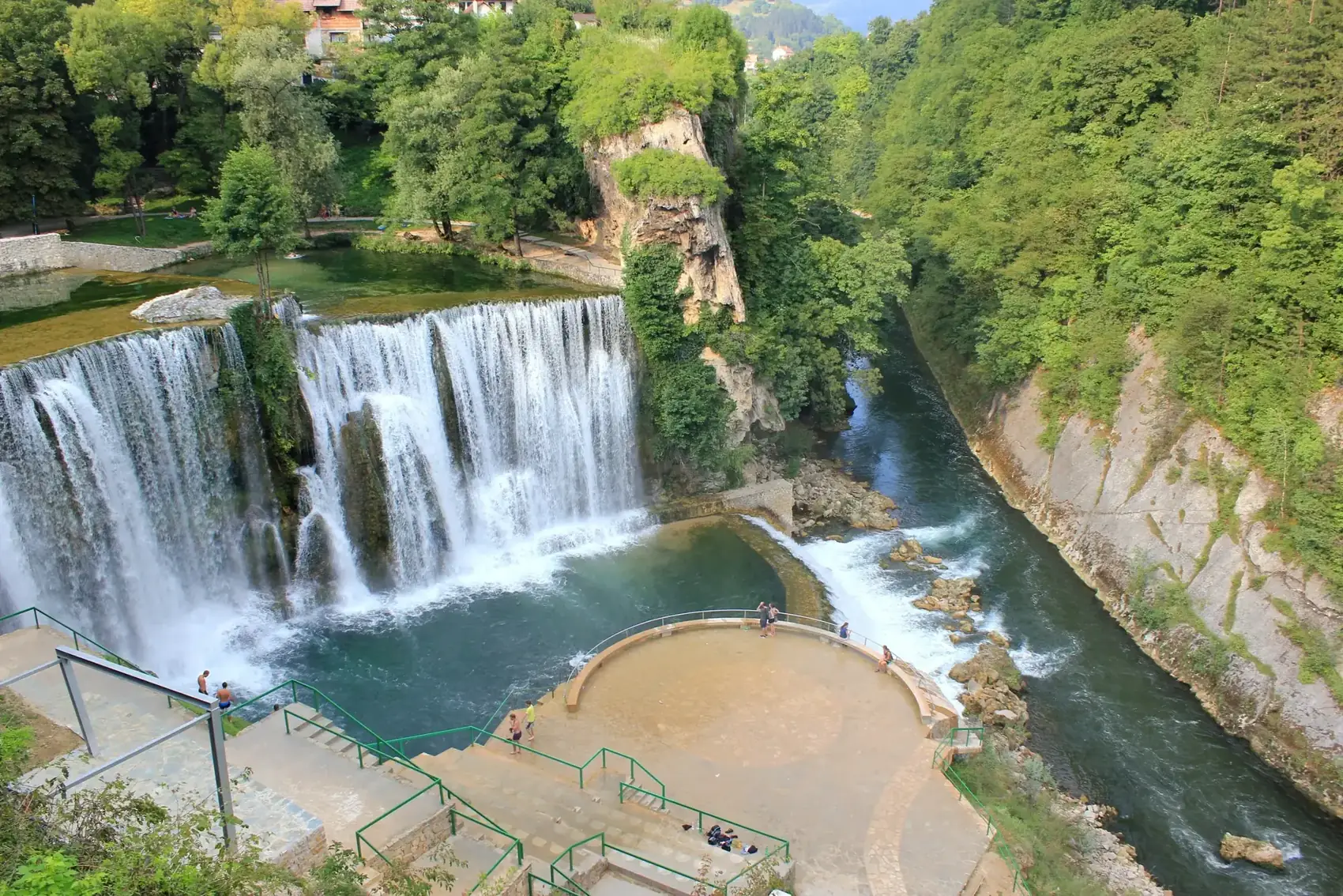
The waterfall at Jajce dropping below the old town and its fortress hill

Jajce

  1. Home
  2. Places
  3. Central Bosnia
  4. Jajce

A walled royal town with a waterfall where its two rivers meet.

380mValley towns

Jajce in brief. Jajce is a small walled town in central Bosnia and Herzegovina, built on a hill where the Pliva river drops about 22 metres into the Vrbas. It was the last capital of the medieval Bosnian kingdom, and its fortress, catacombs and gates survive. The Pliva lakes and their wooden watermills are 5 km away. Allow a day for the main sights, or longer to spend time at the lakes.

Where a kingdom ended

Few towns anywhere have a waterfall in the middle. In Jajce the Pliva reaches the edge of the old town and simply falls off it, 22 metres, into the Vrbas below. You hear it before you see it.

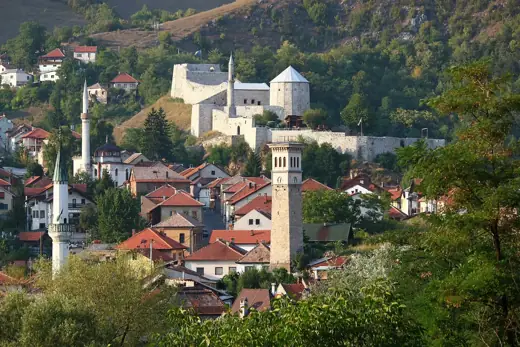
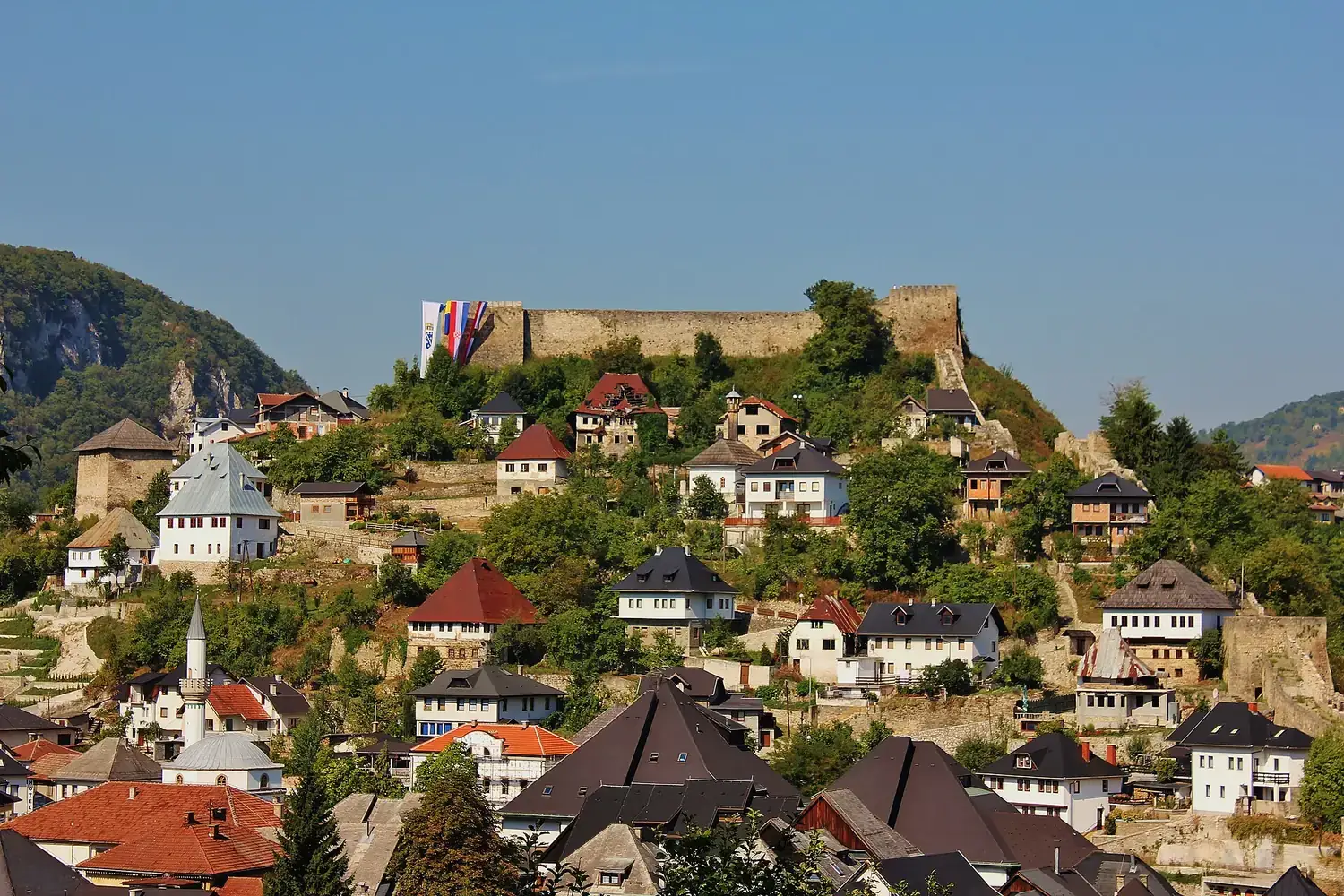
Above the falls the town climbs a steep, egg-shaped hill inside its walls: stone gates, a clock tower, a bell tower without a church, a temple to a Roman god, a church cut into the rock. At the top is the fortress of the Bosnian kings. The last of them, Stjepan Tomašević, surrendered at Ključ in 1463 and was brought here and executed, and the kingdom ended with him.

Nearly five centuries later the town made history again: in 1943, in a hall by the river, the wartime assembly that founded socialist Yugoslavia met here. For a place you can cross on foot in fifteen minutes, a great deal has happened in it.
Region
Central Bosnia
Rivers
Pliva and Vrbas
Height
380 m
Waterfall
About 22 m, in the town centre
Best months
May to October
Time needed
One day
From Sarajevo
About 160 km

From the falls to the fortress

  1. The waterfall22 mStart on the platform at its foot, with the spray in your face. The Pliva drops 22 metres into the Vrbas right beside you.
  2. The Travnik GateUp the steps, across the Pliva just above the drop, and in through the gate, as visitors have for six hundred years.
  3. The old townLanes of steep-roofed houses wind uphill past the clock tower and the bell tower of St Luke.
  4. The catacombsUndergroundUnder your feet: a church and crypt cut straight into the rock around 1400. Cold and dim, even in August.
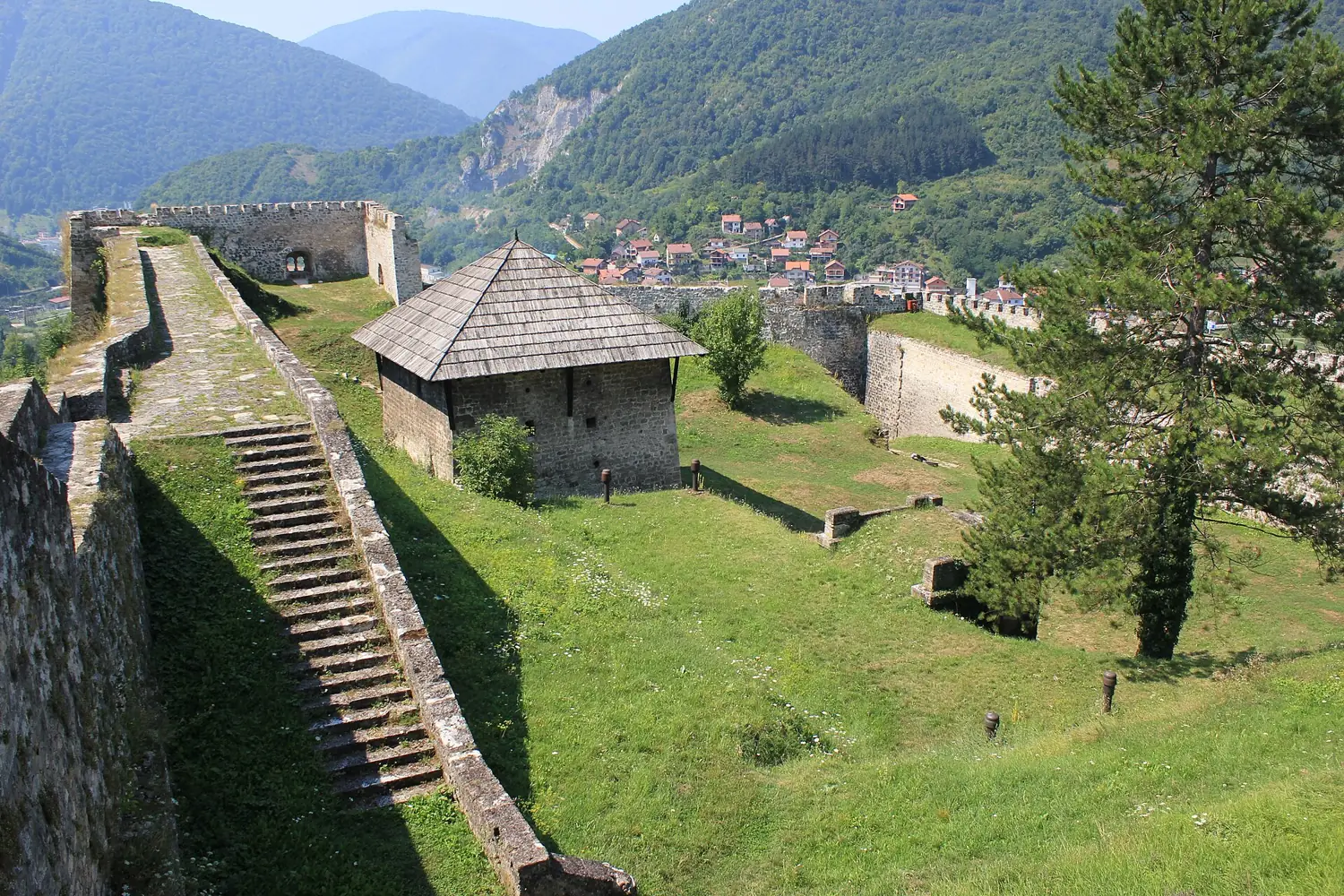
  5. The fortressThe houses stop and the walls begin. The royal coat of arms is still carved beside the gate.
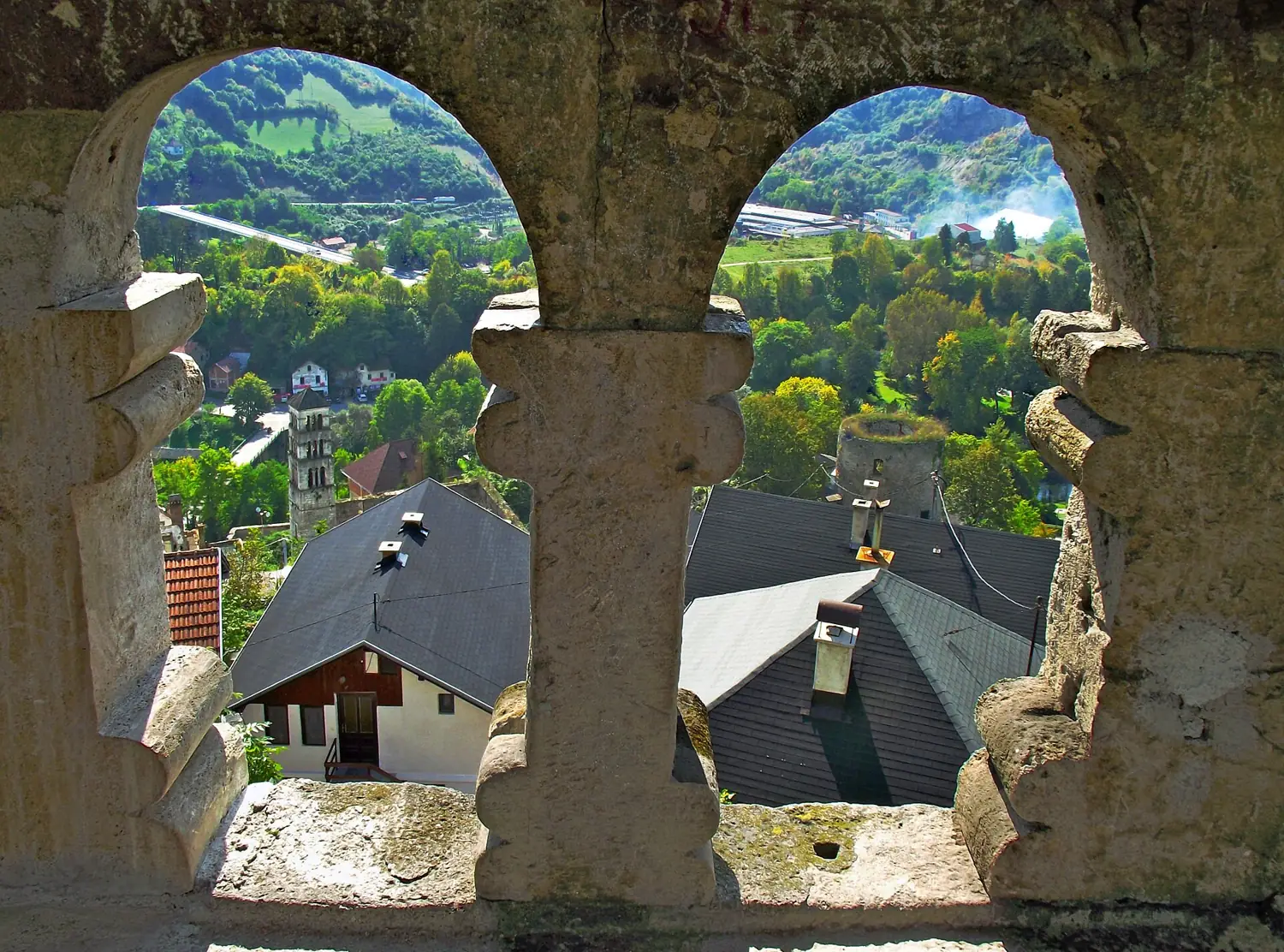
  6. The viewThe topFrom the ramparts you look down on every roof you have just climbed past, and out along both rivers.
What to see in Jajce

  • The Pliva waterfall

    The Pliva waterfall

    The town’s emblem. See it from the platform at its foot, then from the park across the Vrbas for the classic view with the old town above.

    Time needed
    30 minutes
    Platform open
    08:00–19:00 from May to September; 10:00–17:00 in October and November. Closed from December to February. For March and April, ask the town’s heritage agency.
    Entrance
    10 KM from May to September, 5 KM the rest of the year. Children under seven go in without a ticket.
  • Steps along the fortress wall

    The fortress

    The citadel of the Bosnian kings, on the crown of the hill. The royal coat of arms is still carved beside the gate. Inside is a grassy enclosure and the best view in town.

    Time needed
    45 minutes
    Open
    08:00–19:00 from May to September; 10:00–17:00 in October and November; 09:00–15:00 from December to February.
    Entrance
    5 KM from May to September, 2 KM the rest of the year.
  • The catacombs

    An underground church and crypt cut straight into the rock around 1400 for a local duke, Hrvoje Vukčić. Small, dark and unlike anything else in the country.

    Time needed
    20 minutes
    Open
    08:00–19:00 from May to September; 10:00–17:00 in October and November; 09:00–15:00 from December to February.
    Entrance
    5 KM from May to September, 2 KM the rest of the year.
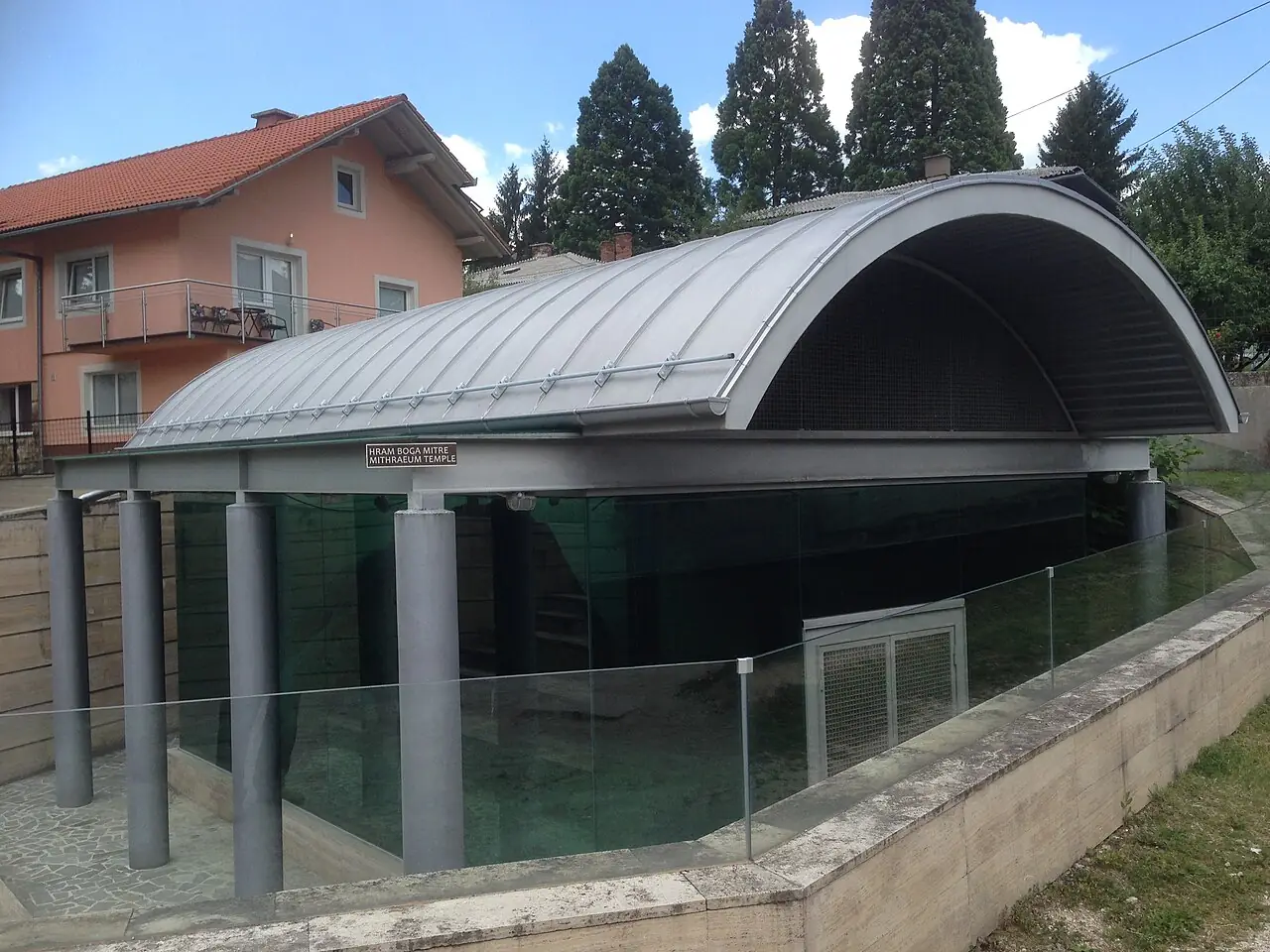
  • The glass pavilion that protects the Temple of Mithras

    The Temple of Mithras

    A Roman shrine from about the 4th century, with a carved relief of the god Mithras killing a bull. One of the best preserved in Europe. It is now enclosed in glass and seen from outside.

    Time needed
    15 minutes
    From the centre
    5 minutes on foot
    Entrance
    4 KM from May to September, 2 KM the rest of the year. From October to April it opens by arrangement with the heritage agency.
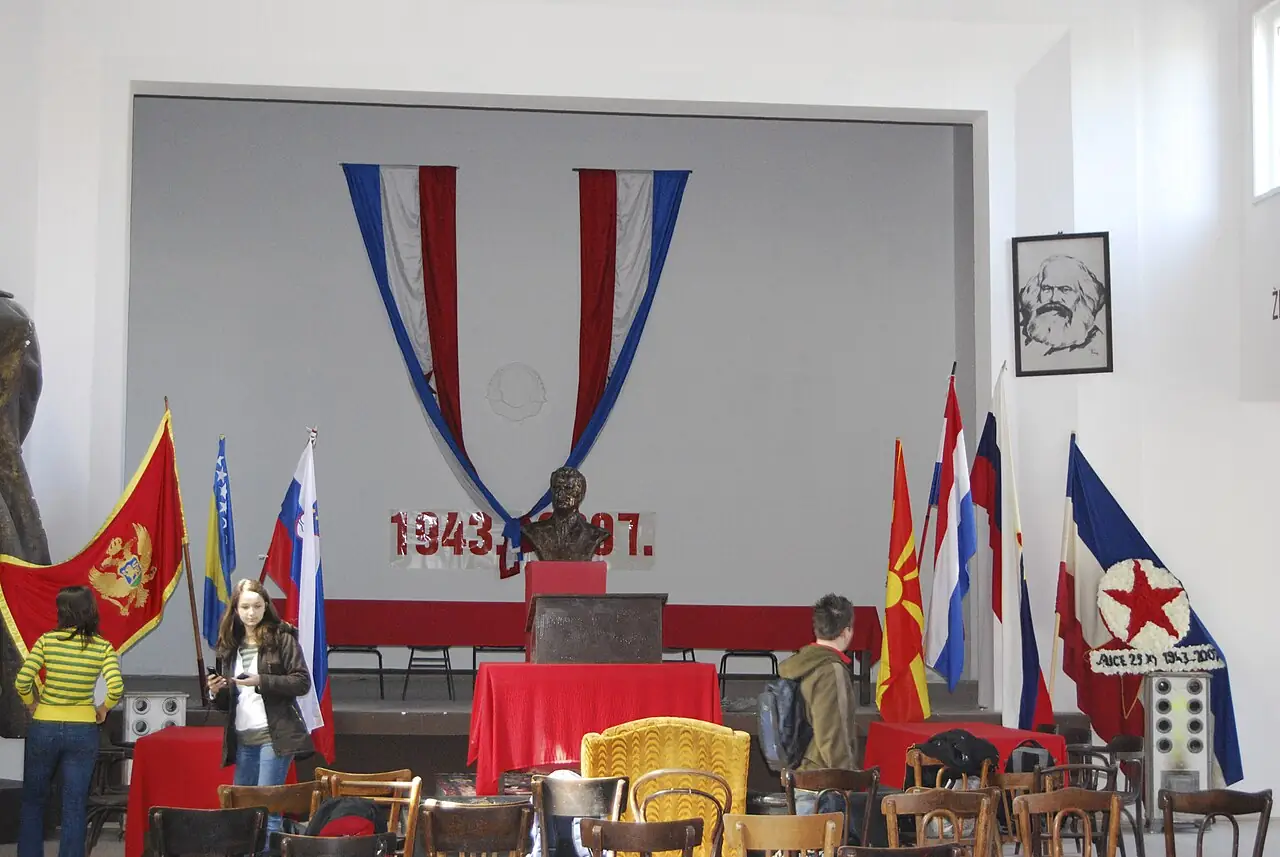
  • The hall of the AVNOJ Museum, with its flags and benches

    The AVNOJ Museum

    The hall where, in November 1943, the wartime assembly declared the new Yugoslavia. Kept much as it was that night.

    Time needed
    30 minutes
    From the centre
    By the river
    Entrance
    8 KM; 5 KM for citizens of Bosnia and Herzegovina. Students and pupils pay less.
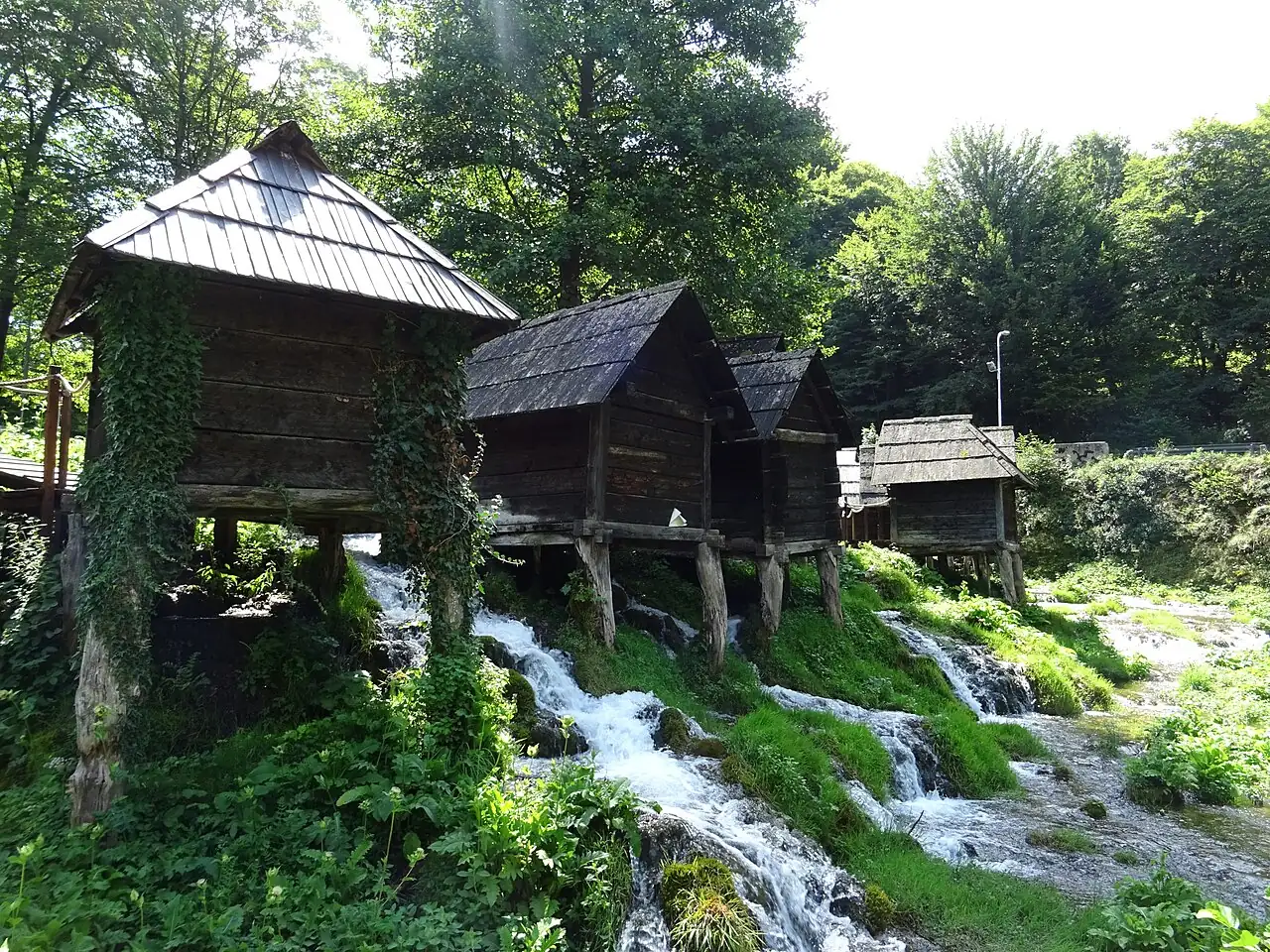
  • Small wooden watermills on stilts above cascades

    The Pliva lakes and watermills

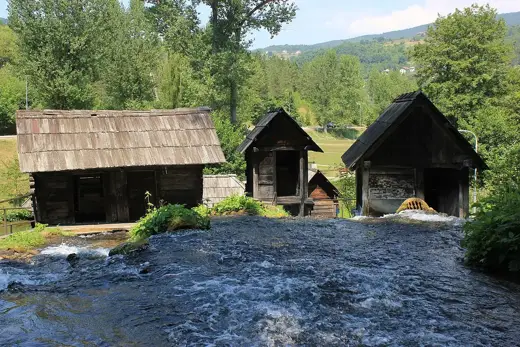
    Five kilometres upstream, the Pliva widens into two lakes. Between them stand about twenty tiny wooden watermills on stilts, each built over its own channel. Swim, hire a boat, or just walk among them.

    Time needed
    One to two hours
    From the centre
    5 km; drive or cycle
    Entrance
    The mills stand in an open park by the lake. Parking is beside the road, and you pay what is posted there.
The old town of Jajce climbing to its fortress
You hear it before you see it.

Good to know

On foot
The old town is small, steep and cobbled
Parking
Car parks sit below the old town, near the waterfall. Pay what is posted and walk up.
Opening hours
The waterfall, fortress and catacombs open 08:00–19:00 from May to September, 10:00–17:00 in October and November and 09:00–15:00 from December to February, when the waterfall platform is closed. Hours and prices are published by the town’s heritage agency at visitjajce.ba.
Tickets
Sold at each sight; summer prices are higher
Catacombs
Cold and dim. Bring a layer
Step-free access
The waterfall platform, partly; the old town, no
Swimming
At the Pliva lakes in summer, not at the waterfall
Tourist office
In the old town
Money
Convertible marks; carry some cash
In winter
Quiet, often snowy; some sights close early

Where it is

12345678

Outline from Natural Earth. Distances are by road and approximate.

Jajce sits in the middle of the country, on the main road between Banja Luka and Sarajevo.

Getting to Jajce

FromDistanceHowTime
SarajevoAbout 160 kmCar or bus, through Travnik2½ to 3 hours
Banja LukaAbout 70 kmCar or bus, down the Vrbas canyon1½ hours
TravnikAbout 65 kmCar or bus1 hour
BihaćAbout 160 kmCar3 hours
MostarAbout 170 kmCar3 hours

Buses link Jajce with Sarajevo, Banja Luka and Travnik. There is no railway. Distances and times are approximate.

One day in Jajce

  1. The waterfall

    Start at the foot of the falls, then cross the Vrbas for the view of the whole town.

  2. The old town

    Through the gate and uphill: the catacombs, the bell tower, the fortress.

  3. By the river

    Trout or grilled meat on a terrace near the Pliva.

  4. The watermills

    Out to the lakes for the mills, a swim or a boat, until the light goes.

Planning tips

Advice that comes up again and again from guides and regular visitors.

Where to stay and eat

Where to stay

Small hotels and guesthouses inside and just below the old town put you a few minutes from everything. In summer, the lakeside at Pliva has cabins and a campsite.

What to eat

River trout, grilled meats and pies from the bakeries. Travnik-style ćevapi have made it this far west, and the cafés by the Pliva are the place to sit in the evening.

Near Jajce

Jajce is a natural stop between the north-west and the capital.

Questions people ask

What is Jajce known for?

A 22-metre waterfall in the middle of the town, where the Pliva drops into the Vrbas, and the fortress of the last Bosnian kings. It is also where socialist Yugoslavia was founded in 1943.

Is Jajce worth visiting?

Yes. It packs a waterfall, a medieval fortress, a rock-cut church, a Roman temple and a lakeside of wooden watermills into a place you can see in a day.

How long do you need in Jajce?

One day. Allow a morning for the waterfall and the old town, and an afternoon for the Pliva lakes and watermills.

How high is the Jajce waterfall?

About 22 metres. It was higher, around 30 metres, before flooding and an earthquake changed the riverbed in the 20th century.

How do you get to Jajce from Sarajevo?

By car or bus, about 160 km through Travnik, in two and a half to three hours. Many people stop in Travnik on the way.

Can you swim at Jajce?

Not at the waterfall, but yes at the Pliva lakes, 5 km upstream, where there are beaches and boats in summer.

What are the Pliva watermills?

A cluster of about twenty small wooden mills on stilts, built between the two Pliva lakes. Local farmers used them to grind grain; they are now a protected monument.

When is the best time to visit Jajce?

May to October. The waterfall is fullest in spring, and the lakes are best in July and August.

Jajce is day two of the seven-day route across the country.

See the seven-day route

Photographs on this page

Photo credits

Jajce

PhotographPhotographerSource and licence
The waterfall and the town, main pictureNot named on the fileSupplied by Visit Bosnia and Herzegovina
The waterfallSee the home page creditsWikimedia Commons, CC BY-SA 3.0
The old townIgor TrkljaWikimedia Commons, CC BY-SA 3.0
The fortress wallJulian NyčaWikimedia Commons, CC BY-SA 3.0
Temple of Mithras pavilionZavičajacWikimedia Commons, CC BY-SA 4.0
AVNOJ Museum hallFlickr user, via Wikimedia CommonsCC BY 2.0
View from the fortressJocelyn Erskine-KellieWikimedia Commons, CC BY-SA 2.0
Nearby thumbnailsSee the home page creditsVarious

All credits for the site are on the photo credits page.

Menu