Tešanj
- Home
- Places
- Central Bosnia
- Tešanj
A big fortress on a crag, and a small old town tucked beneath it.
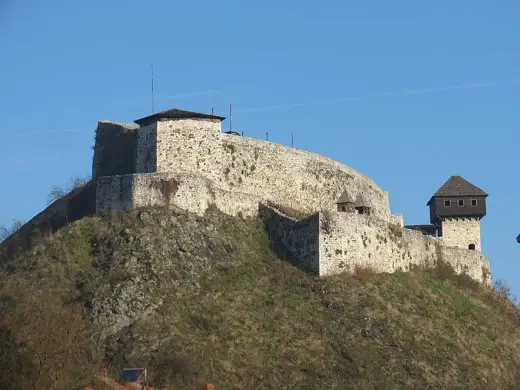
Tešanj in brief. Tešanj is a small town in northern Bosnia, at 230 metres on the river Tešanjka. It is dominated by its fortress, known as Gradina, which stands on a steep crag reachable from one side only and covers more than 6,000 square metres, making it one of the largest in the country. Below the walls are an old bazaar, a seventeenth-century clock tower that still keeps time, and a traditional house that serves as the town museum. Entry to the fortress is 3 KM. Allow two to three hours.
A town you would not find by accident
Tešanj lies away from the main motorway, among low hills. Its fortress and old town make a worthwhile stop for visitors travelling through northern Bosnia.
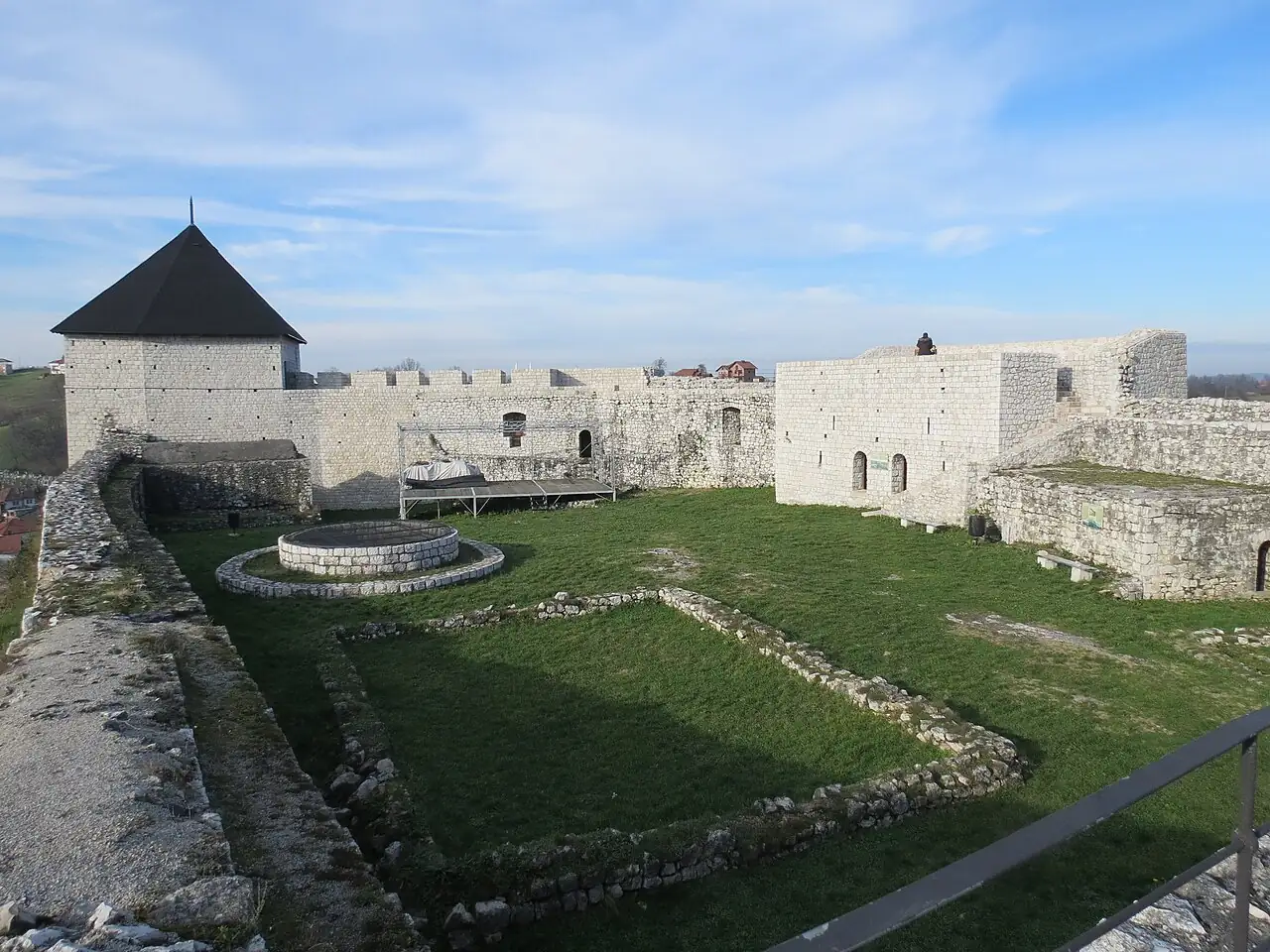
A crag rises straight out of the middle of it, and the fortress covers the whole top: an upper castle from the Middle Ages, and below it a broad walled enclosure the Ottomans added later. Soldiers were garrisoned here until 1840.
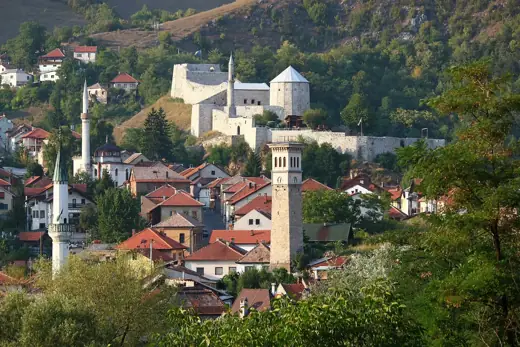
Round the foot of the rock are lanes of old shops, a mosque, wooden houses with overhanging upper floors, and a clock tower whose clock is still wound by hand every day.
- What it is
- A fortress town
- Height
- 230 m
- Fortress
- Over 6,000 sq m
- Clock tower
- 17th century; 18.5 m; still working
- Entry to the fortress
- 4 KM; 3 KM for children, students and pensioners
- Time needed
- Two to three hours
- Status
- National monument since 2003
Gradina
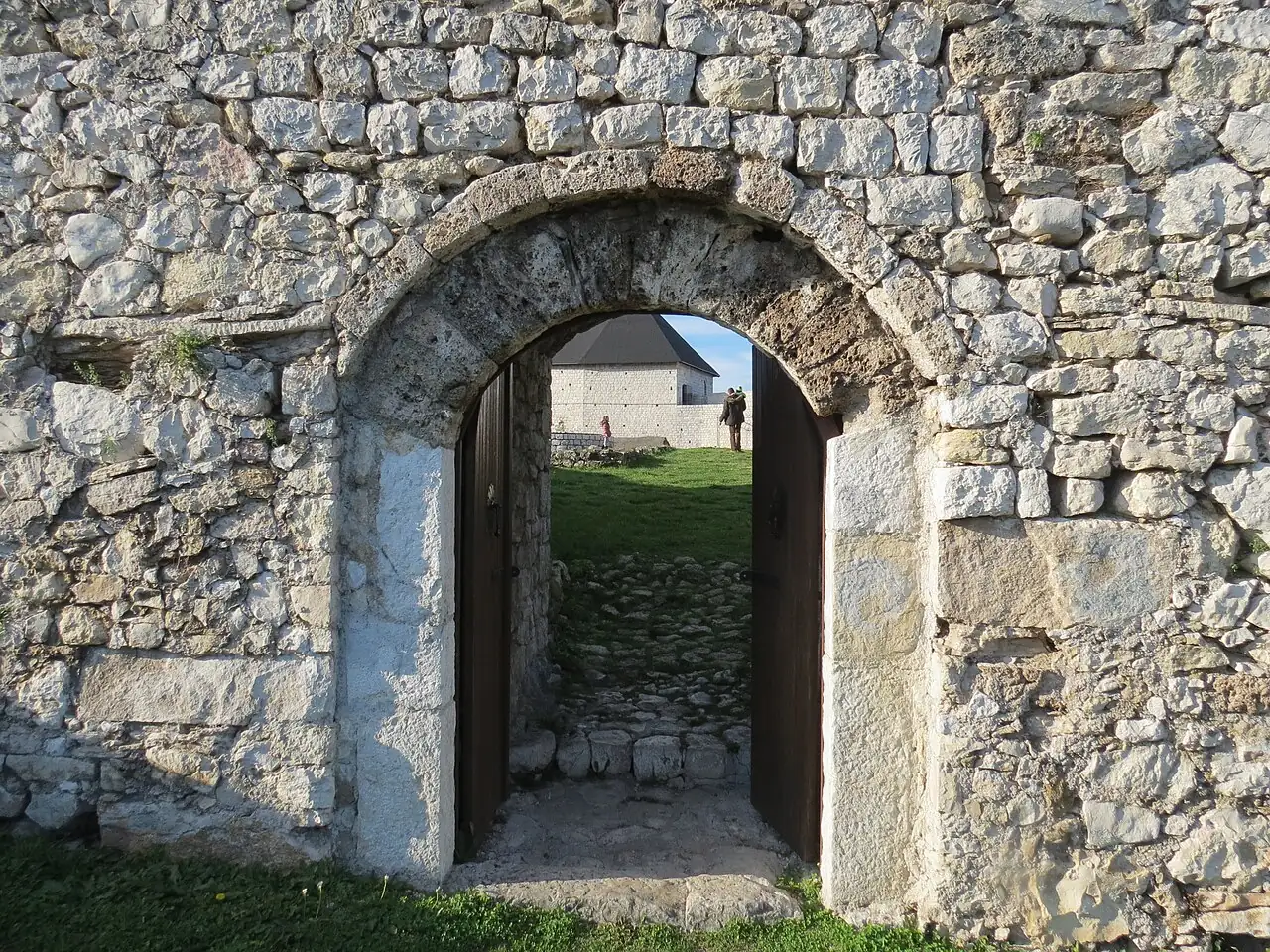
You reach the gate by walking up through the bazaar. Inside, the fortress opens into a wide, sloping lawn enclosed by walls, with the old castle on the highest point of the rock above.
There are two towers. The one named after the fortress’s commander was built in 1747 and now holds an exhibition on the town’s history, from prehistoric finds onward.
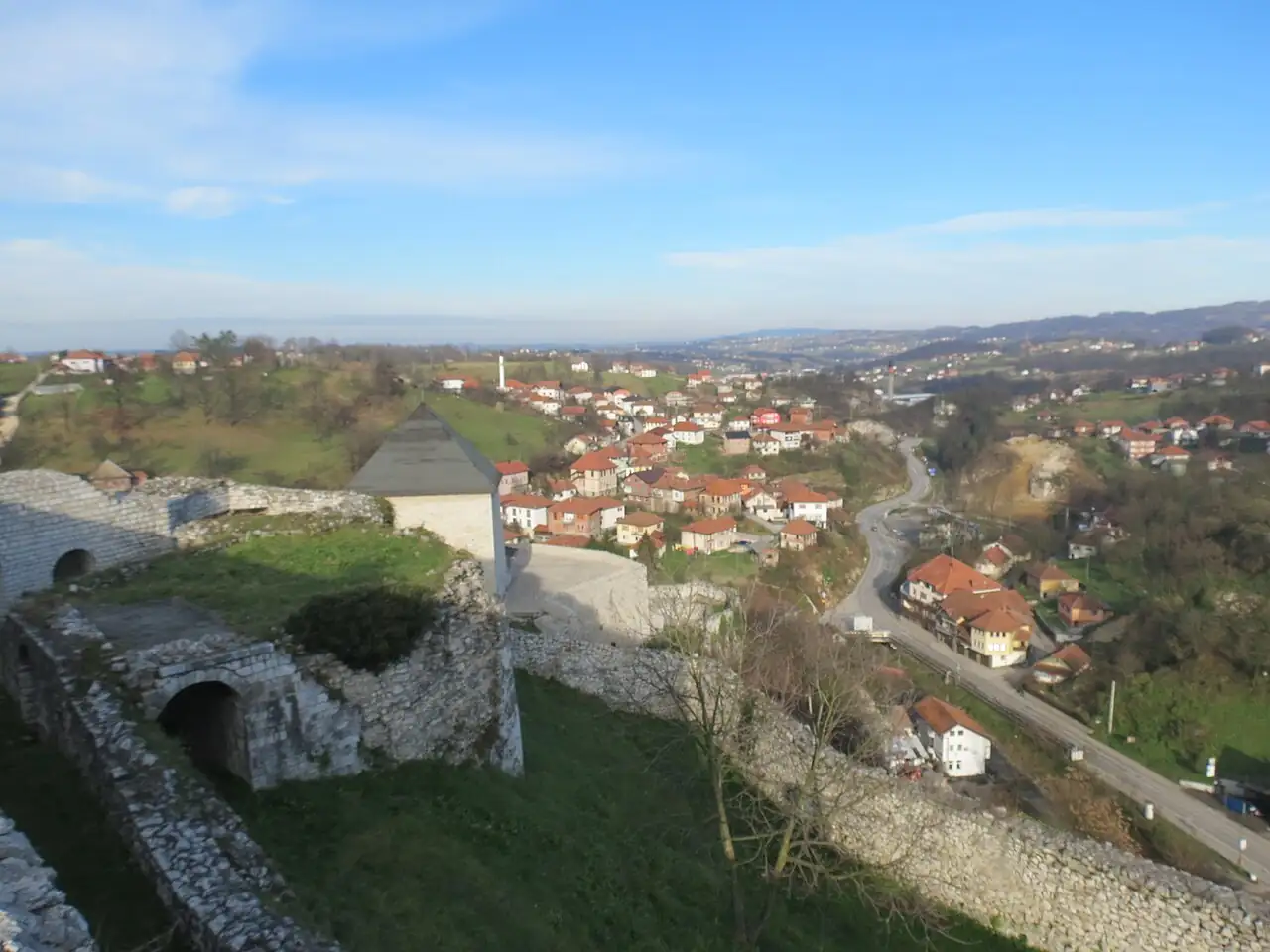
From the ramparts the whole of Tešanj is laid out below you: tiled roofs, minarets and the green hills closing in on every side.
- Area
- 6,296 sq m
- Reached
- From one side only
- Open
- Adult admission 4 KM; children under 15, students and pensioners 3 KM. Visits by arrangement daily 09:00–17:00.
What to see in Tešanj
The fortress
Walk the walls, climb to the upper castle and see the exhibition in the tower. There is a playground on the lawn, and benches with a view.
- Time needed
- An hour
- Entry
- 4 KM; 3 KM for children under 15, students and pensioners. Open daily 09:00–17:00; ring ahead so that someone is there with the key.
- Good for
- Children
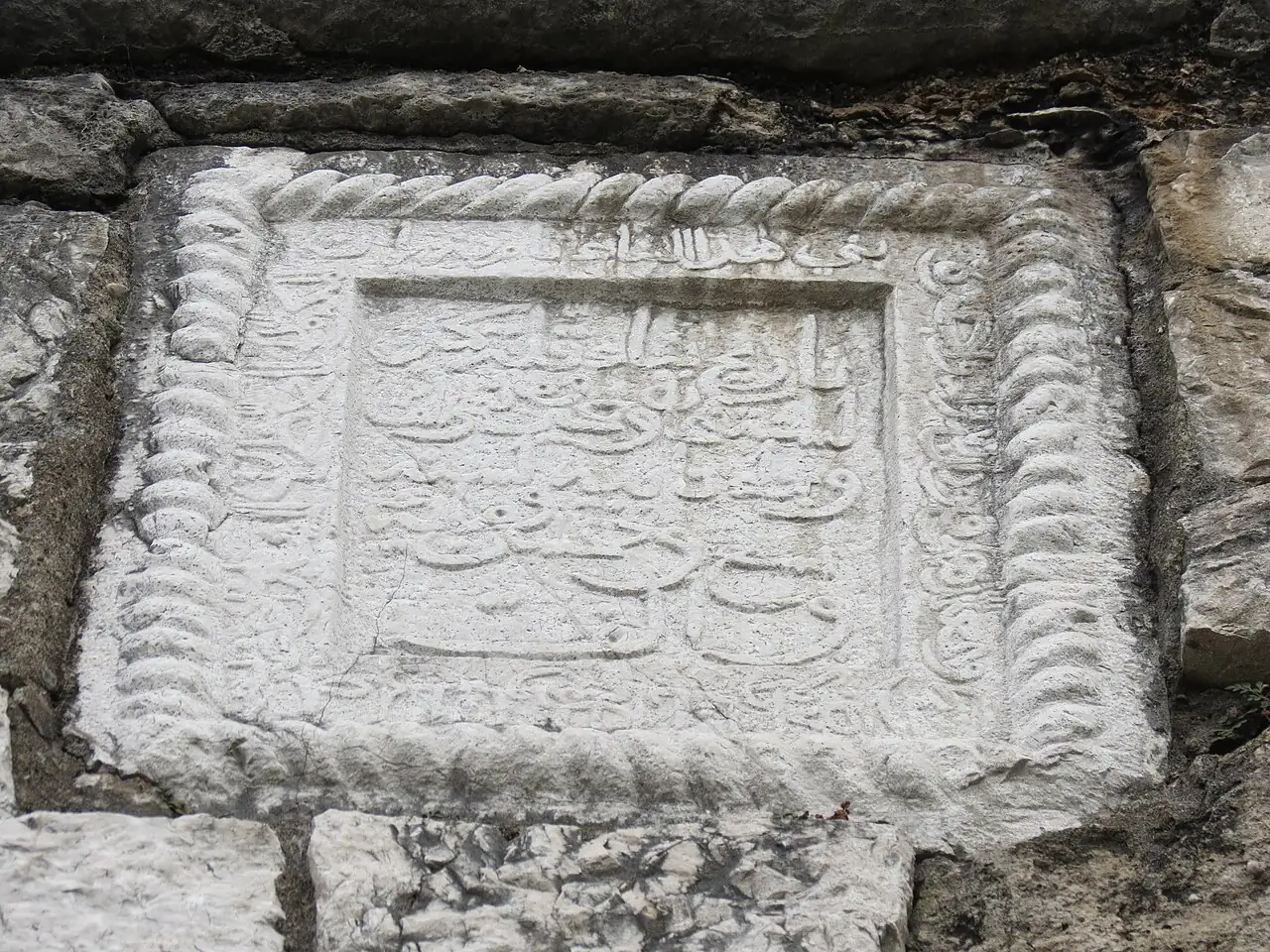
Look for the carved stones
Set into the walls are stone tablets with inscriptions from the Ottoman centuries, framed in carved rope and leaf patterns.
- Where
- By the gates
- Time needed
- 10 minutes
- Entry
- With the fortress
The clock tower
On the slope just below the fortress. Built in the seventeenth century, 18.5 metres tall, and still telling the time. Since 1890 it has shown European hours; before that it kept the old Ottoman reckoning, from sunset.
- Height
- 18.5 m
- Built
- 17th century
- Entrance
- Seen from outside
The Eminagić house
A large traditional town house with a stone ground floor and rooms above, now the town museum. Sources date it to the late seventeenth or to the nineteenth century.
- Time needed
- 30 minutes
- What it is
- The town museum
- Status
- National monument
The old bazaar
The lanes below the fortress, with small shops, a sixteenth-century mosque and cafés. Stroll, and stop for coffee.
- Time needed
- 45 minutes
- Best time
- Late afternoon
- Entrance
- Public streets, walked at any hour.
Tešanj in numbers
- 6,296m²the area inside the fortress walls
- 18.5mthe height of the clock tower
- 4of the country’s 21 clock towers that still keep time. This is one
- 3KMto go into the fortress
Good to know
- The fortress
- 4 KM; 3 KM for children under 15, students and pensioners. Daily 09:00–17:00, by arrangement
- On foot
- Everything is within ten minutes’ walk, uphill
- Getting there
- By car, off the main road between Doboj and Zenica
- Parking
- In the lower town; walk up
- Mosque
- Visitors welcome outside prayer times; dress modestly
- Time
- Half a day is plenty
Where it is
Outline from Natural Earth. Distances are by road and approximate.
Tešanj is in northern Bosnia, in the hills between Doboj and Zenica, a few kilometres off the main north to south road.
Getting to Tešanj
| From | Distance | How | Time |
|---|---|---|---|
| Doboj | About 25 km | Car or bus | 30 minutes |
| Zenica | About 70 km | Car | 1 hour |
| Sarajevo | About 150 km | Car | 2 hours |
Distances and times are approximate.
Where to stay and eat
Where to stay
There are a few small hotels and guesthouses in and around the town.
What to eat
Grills, pies and stews in the bazaar. The town is known across the country for its mineral water.
Near Tešanj
Tešanj is a natural stop on the road between Sarajevo and the north.
Questions people ask
What is Tešanj known for?
Its fortress, one of the largest in Bosnia and Herzegovina, and its well-preserved old town with a working seventeenth-century clock tower.
How big is Tešanj fortress?
It covers 6,296 square metres, which makes it one of the largest fortresses in the country.
How much does Tešanj fortress cost?
4 KM, or 3 KM for children under 15, students and pensioners. It is open all year, by arrangement.
How do you get to Tešanj?
By car. It is about 25 km from Doboj and about 150 km from Sarajevo, a few kilometres off the main road.
How long do you need in Tešanj?
Two to three hours for the fortress, the clock tower, the museum and the bazaar.
Tešanj is beyond the seven-day route, on the road north from Sarajevo.